Monday, June 11, 2018

Dividends on Putin's Investment

For anyone who asks why Putin helped Trump get elected, take a look at this G-7 Summit.

-- Ben Rhodes

This week's featured posts are "Who won the Masterpiece Cakeshop case?" and "Thoughts on Depression Sparked by Anthony Bourdain's Suicide". This morning, bad news broke on a voting rights case. I'll have to cover that next week.

This week everybody was talking about summit meetings

For the G-7 meeting in Quebec, Trump arrived late and left early, skipping sessions on trivialities like climate change. After leaving, he tweeted a denunciation of the host, Canadian Prime Minister Justin Trudeau, and instructed the remaining US representatives not to sign the meeting-concluding joint communique that he had previously agreed to. (That is so Trump: For all his apparent bluster, he can't handle face-to-face confrontation. He'll leave and then tweet something nasty from the road.)

Trump described the US as "the piggy bank that everybody's robbing", and threatened to cut off trade with the other G-7 countries entirely:

It’s going to stop. Or we’ll stop trading with them. And that’s a very profitable answer, if we have to do it.

There is so much wrong with this. First, remember who we're talking about here. These are our most trusted allies: Canada, Britain, Germany, France, Italy and Japan. If we want to solve any of our real trade problems (like getting China to respect our intellectual property), we'll need them on our side.

And second, Trump continues to display a child's understanding of international trade: If the US has a trade deficit with a country, he imagines that cutting off trade with them results in a "profit", as if everything stays the same except that we now have back all the money we would have spent in the other country.

As economists will happily explain to you, this is pre-Adam-Smith economics, a long-debunked theory known as mercantilism. A more likely outcome than "profit" is that the world economy (and ours) simply shrink. Matt Ygelsias explains, using the example of oil:

According to [the theory espoused by Trump's economic advisors], if the United States made it illegal to import oil, thus wiping $180 billion off the trade deficit, our GDP would rise by $180 billion. With labor constituting 44 percent of GDP, that would mean about $80 billion worth of higher wages for American workers. So why doesn’t Congress take this simple, easy step to boost growth and create jobs?

Well, because it’s ridiculous.

What would actually happen is that gasoline would become much more expensive, consumers would need to cut back spending on non-gasoline items, businesses would face a higher cost structure, and the overall economy would slow down with inflation-adjusted incomes falling.

Third, Trump has no power to cut off trade with other countries, and Congress isn't going to give it to him. Foreign leaders know that he's just blustering. To re-purpose a John Kelly insult: Empty barrels make the most noise.

John McCain tried to mitigate the damage:

To our allies: bipartisan majorities of Americans remain pro-free trade, pro-globalization & supportive of alliances based on 70 years of shared values. Americans stand with you, even if our president doesn’t.

And Paul Krugman said what we're all thinking:

He didn’t put America first; Russia first would be a better description. And he didn’t demand drastic policy changes from our allies; he demanded that they stop doing bad things they aren’t doing. This wasn’t a tough stance on behalf of American interests, it was a declaration of ignorance and policy insanity.

... Was there any strategy behind Trump’s behavior? Well, it was pretty much exactly what he would have done if he really is Putin’s puppet: yelling at friendly nations about sins they aren’t committing won’t bring back American jobs, but it’s exactly what someone who does want to break up the Western alliance would like to see.


BTW: Trump's proposal to let Putin back into the G-7 isn't just servile, it makes no sense (as Krugman points out): The G-7 is an economic forum of democratic countries. Russia is an autocracy and its economy is tiny; it never belonged in this group. If the G-7 wants to expand, Brazil and India are much better candidates. And if nobody cares about democracy any more, China should be there.


In a different column, Krugman points out something important: The more Trump insults other democratic countries and acts like he has the whip hand over them, the less those countries' leaders can offer him.

Real countries have real politics; they have pride; and their electorates really, really don’t like Trump. This means that even if their leaders might want to make concessions, their voters probably won’t allow it.

You can see this most clearly in Mexico: Trump is poison in Mexico. Any leader who refused to stand up to him would be committing political suicide.

Trump's tough talk, then, is purely for the consumption of his base. If he were really trying to negotiate something that would help American workers, he'd "speak softly and carry a big stick" when he dealt with other democratic leaders.


Trump is also spreading joy and happiness in Germany, where his new ambassador has said that he wants to "empower other conservatives throughout Europe". Diplomats typically do not visibly interfere in the politics of their host countries. The ambassador doubled down in the face of criticism: "I stand by my comments that we are experiencing an awakening from the silent majority - those who reject the elites & their bubble. Led by Trump." In Germany, the "elites" include Angela Merkel and her government.


Trump is on to Singapore, where he is scheduled to meet with North Korean Supreme Leader Kim Jong Un tomorrow morning.

and immigrant children

Since May 7, the Trump administration has been routinely separating children from their parents when they arrive at our southern border. Vox has a good article describing what's new about this and what isn't. The big thing that's new is that we're not even trying to claim that we're doing this for the children's own good. The policy is purely punitive; it's meant to discourage people from coming to America without a visa.

It's worth pointing out that people who come here seeking asylum are not breaking the law if they present themselves at an official border crossing. Trump has characterized our asylum laws, which require some kind of due process for asylum seekers, as a "loophole".

To me, it's the government that seems to be taking advantage of loopholes.

https://twitter.com/chrislhayes/status/1004860177143750657

and about cake

I cover the legal side of the Supreme Court's Masterpiece Cakeshop decision in a featured post.

I wanted that article to have a tone that is opinionated, but not abrasive. But here I want to get more argumentative: I think the media as a whole, and liberals in particular, have been way too soft on special-rights-seeking people who claim to be motivated by Christianity. We've been way too willing to grant their claims that their actions have something to do with Jesus, and are motivated by sincere religious faith rather than simple bigotry.

I want to assert a few things:

  • Wedding cakes do not have, and have never had, religious significance in the Christian tradition. For the wedding at Cana, Jesus did not turn water into cake. Or into flowers or photographs or catering. It is ridiculous to treat cakes for same-sex wedding receptions as if they were communion wafers for a Satanic black mass. (Gorsuch really does invoke a comparison to "sacramental bread".)
  • From the beginning of the Republic, civil marriage has been a separate institution from religious marriage. If your Christian religion says that people the state regards as married are not married in the eyes of God, you have the freedom to believe and proclaim that view. But you don't get to decide whether or not they're married in the eyes of the state, because that has nothing to do with Christianity or any other religion. And if a couple wants to hold a party to celebrate becoming married in the eyes of the state, that also has nothing to do with Christianity or any other religion.
  • In the Bible, marriage is not "between one man and one woman". Often it's between one man and several women. Example: Jacob and Leah and Rachel and their two handmaidens. If you don't support that kind of marriage today, then you don't believe in "Biblical" marriage. You also don't believe that an unchanging institution of marriage was established by God once and forever. (Justice Kennedy quotes the baker: "God’s intention for marriage from the beginning of history is that it is and should be the union of one man and one woman." The baker should tell that to whoever wrote Genesis.)
  • Most of the self-described Christians who refuse to serve same-sex couples are not acting out of sincere religious conviction; they're acting out of spite. Their side lost the same-sex marriage debate, they're pissed about it, and they want to take it out on somebody. There is nothing Christ-like about this set of motives. The New Testament does not record any examples of Jesus being a sore loser.

and healthcare

If you're an insurance company that doesn't want to cover people with pre-existing conditions, the Trump administration has your back.

Led by Texas, twenty Republican-dominated states are participating in a lawsuit asserting that the individual mandate portion of the Affordable Care Act (i.e., ObamaCare) will become unconstitutional in 2019, when the tax penalty that enforces it goes away. (That was part of last year's big tax cut bill.) That may sound harmless -- who cares if the courts eliminate something that was unpopular to begin with and isn't going to be enforced any more anyway? -- but there's a kicker: The suit claims that the whole ACA is inseparable from the individual mandate, so it all has to be struck down, including the popular parts like the guarantee of insurance to people with pre-existing conditions.

In other words: If you're a cancer survivor (like my wife), or have something else in your medical history that makes you a bad risk, you may not be able to get health insurance at all, and if you do it will be exorbitantly expensive.

This suit has been considered a long shot, but its shot got a little less long Thursday when the Justice Department announced that it won't defend the case in court. (Typically, the Justice Department defends the constitutionality of laws when they are challenged. But on rare occasions, an administration decides that a law is indefensible. That's what's happening here and what happened when the Obama Justice Department refused to defend the Defense of Marriage Act.) Democratic-controlled states like California are expected to step into the breech and lead the defense.

The brief filed by the Justice Department doesn't agree with Texas that the whole ACA is unconstitutional, but it does agree that two other parts of the ACA are inseparable from the individual mandate and so have to be struck down: guaranteed issue (insurance companies that offer coverage in an area have to offer it to everybody) and community rating (which says that all individuals of the same age in the same community have to be offered the same rate). Those are exactly the parts that protect people with pre-existing conditions.

It's worth pointing out the reason we're in this situation: Back in 2012, the Supreme Court decided 5-4 that Congress did not have the power under the Commerce Clause of the Constitution to require individuals to buy health insurance. This would have sunk the ACA then and there, but Justice Roberts reinterpreted the individual mandate as a tax. That allowed him to flip and vote for the constitutionality of the ACA, which survived 5-4.

But here's the interesting part: The idea that an individual mandate exceeded the range of the Commerce Clause was invented from whole cloth to create a pretext for striking down the ACA. Until it became part of the ACA, the mandate -- which was originally the brainchild of the conservative Heritage Foundation in the 1990s -- had never been considered constitutionally questionable.

So one conservative long-shot legal argument leads to another, and the upshot is that millions of Americans may lose their health insurance.

and leaks

The LA Times reports:

The former security director for the Senate Intelligence Committee was arrested Thursday on charges of lying to federal investigators probing a leak of information involving a former campaign aide to President Trump.

In the course of the investigation, the government seized several years worth of emails belonging to the staffer's girlfriend, who is a New York Times reporter. The case is making journalists nervous about how far the government is now willing to go to track down leaks.

and the NFL

Last Monday, the Super Bowl champion Philadelphia Eagles were disinvited from the White House visit scheduled for the next day, because not enough of them were going to show up to suit Trump. Instead he held a patriotic rally that seems to have been attended mainly by White House staffers and interns. During the ceremony, Trump appeared not to know the words to "God Bless America".


Trump has decided that portraying black football players as unpatriotic is a winning issue for him, so he's going to keep doing it. This has got to be a disappointment to the NFL owners, who changed their policy specifically to try to mollify the President. Under the new rules, players can stay in the locker room during the national anthem if they want, but if they come onto the field they have to stand at attention. Kneeling -- no matter how silently and respectfully it is done -- will result in a fine for the team, which may decide to pass that fine on to the player.

But Trump is not having that. "No escaping to locker rooms" he tweeted. Previously he had said:

You have to stand proudly for the national anthem. Or you shouldn’t be playing, you shouldn’t be there. Maybe you shouldn’t be in the country.

and you also might be interested in ...

Anybody who decided that it didn't matter whether Trump or Clinton won the presidency should take a look at the EPA. The headlines are all about Scott Pruitt's flagrant corruption, but the real damage is deeper. Thursday, the NYT described a change in how the EPA will evaluate possibly toxic or carcinogenic chemicals:

the E.P.A. has in most cases decided to exclude from its calculations any potential exposure caused by the substances’ presence in the air, the ground or water, according to more than 1,500 pages of documents released last week by the agency.

Instead, the agency will focus on possible harm caused by direct contact with a chemical in the workplace or elsewhere. The approach means that the improper disposal of chemicals — leading to the contamination of drinking water, for instance — will often not be a factor in deciding whether to restrict or ban them.

The big winner here is the chemical industry. The big losers are anybody who breathes air or drinks water and was hoping not to get cancer.


Here's an unforgettable exchange from Wednesday's Anderson Cooper 360:

Former Fox News military analyst Lt. Colonel Ralph Peters (retired): As a former military officer of the United States, I took an oath to support and defend the Constitution of the United States. And I saw, in my view, Fox -- particularly their prime time hosts -- attacking our constitutional order, the rule of law, the Justice Department, the FBI, Robert Mueller, and (oh, by the way) the intelligence agencies. And they're doing it for ratings and profit, and they're doing it knowingly -- in my view, doing a grave, grave disservice to our country.

Anderson Cooper: Do you think, some of the hosts in prime time, do they believe the stuff they're saying about the Deep State, what they're saying about the Department of Justice, about the FBI?

Lt. Colonel Peters: I suspect Sean Hannity really believes it. The others are smarter. They know what they're doing.


When somebody from the White House says some awful thing, it's hard to know whether to take the bait. If we ignore it, we normalize it. ("Oh yeah, public officials say shit like that. It's no big deal.") If we pay attention, we've let ourselves be distracted from the ongoing destruction of the environment, the decay of the rule of law, the plight of the Puerto Ricans, the alienation of America's allies, the mistreatment of families who come here looking for asylum under our laws, the opening of a misguided trade war, and lots of other more immediately consequential stuff.

But OK, Rudy Giuliani, I'm taking the bait this time.

In Israel, Giuliani went on to criticize Daniels’ credibility and allegation she had an affair with Trump because she is a porn star. “Look at his three wives. Beautiful women. Classy women. Women of great substance. Stormy Daniels?” Giuliani said while shaking his head. “I’m sorry I don’t respect a porn star the way I respect a career woman or a woman of substance or a woman who has great respect for herself as a woman and as a person and isn’t going to sell her body for sexual exploitation.” ...

On Thursday, Giuliani was asked to explain his comments. “So the point I made about her industry is, it's an industry in which you sell looks at your body for money. That's demeaning to women, the way I was brought up and the way I always believed the feminist movement has,” Giuliani said.

During the campaign, I objected to Trump critics trying to make an issue of Melania's nude photos, because they're irrelevant to how America is governed and "because I believe all of us have the right to display or not display our bodies as we see fit". But if the president's lawyer is going to claim there's some difference-of-kind between Melania and Stormy Daniels because Daniels sells looks at her body for money, I have to call him on it. (And point out that Trump himself has appeared in three porn films, though he was clothed at the time.)

And as for who is credible, based on their previous actions, let me point out a few things Stormy Daniels hasn't done:

  1. created a fake university that defrauded its students;
  2. molested more than a dozen women;
  3. laundered money for Russian oligarchs;
  4. lied to the American people several times each day.

So if it comes down Trump's word against a porn star's, I'll believe the porn star.

and let's close with something fun

"Happy as a dog in a ball crawl" needs to become a standard English phrase.

Monday, June 4, 2018

We Have to Believe

I want to be very clear about one thing: Americans remain our partners, friends, and allies. This is not about the American people. We have to believe that at some point their common sense will prevail. But we see no sign of that in this action today by the U.S. administration.

- Canadian Prime Minister Justin Trudeau

This week's featured post is "What is impeachment for?"

This week brought back everything that last week seemed to stop

A week ago, the North Korea summit was off and the trade war was "on hold". Now they're both back.

The summit is scheduled for a week from tomorrow in Singapore. Until Trump and Kim actually appear, though, who can say whether it will really happen? Originally, Trump implied that the meeting would signal North Korea's complete denuclearization, for which he should win a Nobel Peace Prize. Now it's just supposed to "start a process".

Back in March, Trump announced tariffs on imported steel and aluminum. Then he appeared to back down, temporarily exempting Canada, Mexico, and the European Union. The time limit on that exemption ran out Thursday without Trump getting the concessions he wanted, so the tariffs are back on.

The affected countries are retaliating. Canada seems particularly offended by the pretext for the tariffs: Trump is exercising powers the president has under a national security provision. Essentially he is saying that Canada can't be trusted to continue selling us metals we need for our defense industries.

Tariffs on Chinese goods were announced Tuesday, to take effect "shortly after" the complete list of goods affected is released on June 15. China also plans to retaliate.

For a guy whose book is called The Art of the Deal, Trump's negotiating style seems particularly artless: He makes threats and demands concessions. If other countries don't yield to his demands, he seems to have no Plan B.

and everyone was talking about jobs

The economy added 223K jobs in May. That number was fairly typical of job growth over the last five years, but the accumulation of good job creation over a long period has pushed the unemployment rate down to 3.8%, a number not seen since the end of the Clinton administration, and only briefly then.

and new claims of presidential power

A letter that Trump's lawyers wrote to Bob Mueller in January got leaked this week. The point of the letter is to argue against Mueller's need to interview Trump, and along the way it makes an amazing claim: Obstruction of justice laws simply don't apply to the president, because since he is the highest law-enforcement official "that would amount to obstructing himself". The President has complete authority to terminate investigations as he sees fit, and to pardon anybody he wants for any reason. The letter recognizes no exception for a president with corrupt intent.

Matt Yglesias draws an obvious conclusion:

Consider that if the memo is correct, there would be nothing wrong with Trump setting up a booth somewhere in Washington, DC, where wealthy individuals could hand checks to him, and in exchange, he would make whatever federal legal trouble they are in go away. You could call it “The Trump Hotel” and maybe bundle a room to stay in along with the legal impunity.

Trump (and his lawyer Rudy Guiliani) is also claiming that he could pardon himself. Strange that Nixon never thought of that.

and Roseanne

Roseanne Barr managed to get her hit sitcom revival Roseanne cancelled by ABC by tweeting a racist insult at former Obama advisor Valerie Jarrett.

Barr's defenders are using one of the standard conservative tactics: stripping away the context of the insult, making a simplistic comparison to things liberals have said, and then claiming a double standard. (How is claiming Jarrett is the child of apes different from, say, Bill Mahr suggesting Donald Trump was fathered by an orangutan?) As always, they are the victims.

Let me go back to the analysis I wrote in 2015: "Slurs, Who Can Say Them, When, and Why". (This isn't the Sift's most-viewed post because it never had a viral moment, but it is the most consistently popular. After three years, it still reliably gets a few hundred hits every week.) Then I was talking about words like nigger and honky, but the same ideas apply to images and metaphors, like comparing people to apes.

If you just look them up in a dictionary you might think they are equivalent: honky is a racial slur directed at whites, nigger at blacks. What’s the difference?

Usage.

Nigger has centuries of usage behind it, and the connotation of that usage is that blacks are a subhuman race. Nigger evokes a detailed stereotype — lazy, stupid, violent, lustful, dangerous — while honky just says you’re a white guy I don’t like. For centuries, niggers weren’t really people. There’s no equivalent word for whites, because whites have always been seen as people.

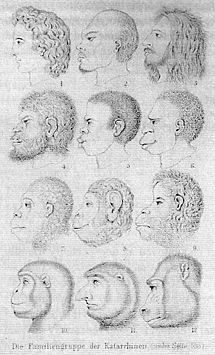
Whenever you use a word or an image or a metaphor, you're not just applying a dictionary meaning. You're invoking the whole history of the usage. For centuries, whites have compared blacks to apes -- sometimes literally claiming they are not a fully human species -- in order to portray them as a race of unintelligent subhumans. Barr's tweet evokes this history.

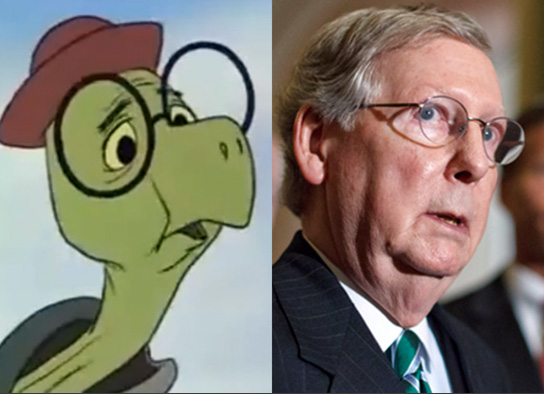
There is no comparable usage-history dehumanizing Trump's ancestors (Germans) by comparing them to orangutans, and Maher was not plugging into anything of that sort. Instead, he's applying a more general and much less toxic physical-resemblance-to-animals usage-history, such as when Mitch McConnell is compared to a turtle.

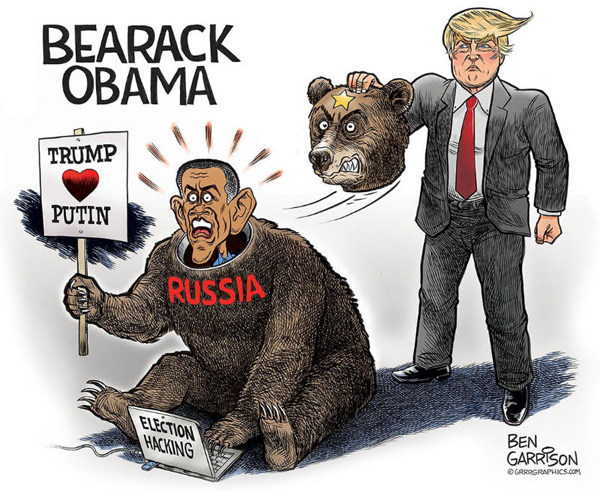
Given the history of black dehumanization, comparing blacks to animals is always tricky, but it can be done. For example, this cartoon of Obama dressed as a Russian bear does not strike me as racist, because bears are not typical dehumanizing symbols. But this photo-shopped image of Barack and Michelle as apes clearly is.


Trump couldn't leave this controversy alone, but he also couldn't condemn Barr's racism, since she and her racism are typical of an important segment of his base. So he portrayed himself and his daughter as the real victims.


About the Samantha Bee/Ivanka Trump thing: A key point in my "Slurs" analysis is that slurs-that-can-be-turned-around-on-the-slurrer are a completely different category than slurs-that-only-go-one-way.

The various disadvantaged communities are all debating whether or not it’s ever OK to use the slurs themselves. Some argue that when black rappers use nigger, they jam the stereotype rather than perpetuate it. Some women believe that saying bitch is liberating, because it shows the word doesn’t scare them. Others disagree, believing that any use of a slur promotes its stereotypes.

I think this: Those issues are for those communities to figure out. In the unlikely event that they ask my advice, I might give it. But until then, my opinion as a white guy doesn’t and shouldn’t matter.

Samanthan Bee calling Ivanka Trump a "feckless cunt" falls into this same category. Overwhelmingly, women who have commented on Bee's use of cunt have condemned it, which is their right. But men like me and Donald Trump should stay out of that discussion. The propriety of a woman saying cunt is not for us to decide.

but now we have a clearer notion of what Hurricane Maria did to Puerto Rico

According to a study in the current New England Journal of Medicine, Hurricane Maria resulted in about 4600 "excess deaths" in Puerto Rico between landfall (September 20) and December 31. That number includes not just people killed immediately in the storm, but also deaths due to "delays or interruptions in health care" caused by the storm and its subsequent island-wide power failure. It's also a statistical estimate, not a list of specific deaths. The official death toll is 64, a number which has been criticized by many sources.

Puerto Rican writer and podcast-host Julio Ricardo Varela wasn't surprised.

We knew. ... When funeral directors started telling people that they were burying way more bodies than usual, or when our family members told us about their neighbors dying in still-darkened rooms, or being buried outside their homes, we knew that the official death toll was much higher than the 64 people the government had eventually admitted to. When we heard the stories of people having no refrigeration for their insulin, that dialysis machines weren’t operational or that hospitals were still in the dark but had people on life support, we knew that it wasn't some small counting error.

This estimate of Maria's death toll on Puerto Rico is higher than the reported death tolls of 9/11 (2996) and Hurricane Katrina (1833), but it's not clear to me this is an apples-to-apples comparison. Both of those numbers also might rise in an excess-deaths analysis.

But that's quibbling: Thousands of American citizens died, many of them because of a slow and inadequate response. Aid was stuck at the port in San Juan, a Navy hospital ship was substantially underused, and about a third of the island's residents still had no electric power four months after the storm.

And yet, this has not become a scandal or prompted a national soul-searching like Katrina and 9/11 did. There is no blue-ribbon panel preparing a what-went-wrong report. Heads have not rolled in the agencies that bungled the response.

Is there any doubt why this is? Puerto Ricans are Spanish-speaking brown people, not "real Americans" like the Texans affected by Hurricane Harvey and Floridians hit by Hurricane Irma.

There's a lot of blame to spread around here, from Puerto Rico's pre-hurricane infrastructure to the local Puerto Rican officials to the federal government. But a big piece of it has to come back to Trump's inability to admit failure or fix mistakes. At a time when the full scope of the problem was starting to become clear, Trump could only congratulate himself on the low reported death numbers. When criticism began, he was the victim, not the lazy Puerto Ricans who "want everything done for them".

The Mayor of San Juan, who was very complimentary only a few days ago, has now been told by the Democrats that you must be nasty to Trump. Such poor leadership ability by the Mayor of San Juan, and others in Puerto Rico, who are not able to get their workers to help. They want everything to be done for them when it should be a community effort. 10,000 Federal workers now on Island doing a fantastic job.

During the Obama administration, conservatives proclaimed a series of events to be "Obama's Katrina". Well, Trump has presided over a natural-disaster screw-up that is arguably worse than Katrina, and no one seems to care.

and you also might be interested in ...

A very good Washington Post article about sexual abuse in evangelical churches centers on Rachael Denhollander, who was abused as a child in her church and then became one of the young gymnasts assaulted by Larry Nassar.

Today, Denhollander can see how her church, which has since shut down, failed to protect her. But as a child, all she knew from her parents was that her abuse had made their church mad and that she wasn’t able to play with some of her friends. She blamed herself — and resolved that, if anyone else ever abused her, she wouldn’t mention it.

And so when Larry Nassar used his prestige as a doctor for the USA Gymnastics program to sexually assault Denhollander, she held to her vow. She wouldn’t put her family through something like that again. Her church had made it clear: No one believes victims.

The Catholic Church's sexual-abuse problems have gotten a lot of attention, but similar forces are at work in evangelical churches:

When congregants believe that their church is the greatest good, they lack the framework to accept that something as awful as sexual abuse could occur within its walls; it is, in the words of Diane Langberg, a psychologist with 35 years of experience working with clergy members and trauma survivors, a “disruption.” In moments of crisis, Christians are forced to reconcile a cognitive dissonance: How can the church — often called “the hope of the world” in evangelical circles — also be an incubator for such evil?


Some good news on prospects for the climate: NetPower is building a small (50 MW) plant in Texas to prove that its revolutionary technology works. The plant will run on natural gas, but emit no air pollution and no waste heat. Carbon capture isn't an expensive separate unit bolted onto the end of the process; it's a normal part of the combustion cycle. The plant has achieved first fire, and should be generating power later this year.

Vox' environmental writer David Roberts is impressed.

So: more efficient power, with zero air pollution, virtually no water consumption, and pipeline-ready carbon dioxide capture built in ... for cheaper than today's best fossil fuel power plants. Quite a bold promise.

It works in an unusual way, which Roberts explains in more detail (and links to even more technical explanations): Natural gas is burned with pure oxygen, and the turbine is driven by supercritical carbon dioxide rather than steam. There's a pipe and the end of the cycle producing excess CO2, which can be sold or sequestered.

Theoretically, the process also would work with coal.

Roberts points out that "Combustion is only one part of the damage done by fossil fuels."

But it's best not to be shortsighted here. Even under the most optimistic scenarios, there are going to be hundreds of fossil fuel power plants built across the world in coming years. This is especially true of natural gas plants, which play an important role in "firming" the fluctuations in variable renewable energy (and could potentially be run in the future on renewable biogas).

If we could start right now making all those new coal and natural gas plants air-pollution-free, it would be a public health win of historic proportions, to say nothing of the regulatory and civic battles that could be avoided.

And capturing all that carbon rather than throwing it into the atmosphere might be enough to give the fight against climate change some much-needed breathing room.


While we're talking about fossil fuels ... a longtime Republican talking point has been that the government shouldn't be picking winners and losers, so it shouldn't subsidize renewable fuels over fossil fuels. I have argued against this (because it makes sense for the government to use taxes and subsidies to balance hidden fossil-fuel costs that the market externalizes, like the cost of cleaning up after hurricanes), but at least it's a coherent point of view.

But Friday Bloomberg broke the story that Trump is planning to pick winners and losers ... and the winners are coal and nuclear.

The Trump administration has been preparing to invoke emergency powers granted under Cold War-era legislation to order regional grid operators to buy electricity from ailing coal and nuclear power plants.

Think about that: Trump insists on wrecking the environment by burning coal, even if the market is against it.

If he genuinely believed the free-market principles he has been promoting for his entire career, Paul Ryan would be moving to stop this. But I'm not holding my breath.


Every congressional district is different. Here's how a Democrat tries to appeal to farmers as he runs against Iowa Republican Steve King, one of the most unabashed racists in Congress.


Elsewhere, the Southern Poverty Law Center says that eight explicitly white-supremacist and/or anti-Semitic candidates are running for office this year, including one (Arthur Jones) who has already gotten the Republican nomination for Congress in Illinois. (He's running in a Democratic district that mainstream Republicans didn't contest. The state GOP has denounced him.) MSNBC's Morgan Radford (who is part black and part Jewish) went to Illinois to interview Jones and to California to interview Senate candidate Patrick Little, who is running against Diane Feinstein on the slogan "End Jewish Supremacy". (His primary is tomorrow.)


Illinois voted to ratify the Equal Rights Amendment to the Constitution, which was approved by Congress in 1972. The deadline for ratification passed 36 years ago, but there's some dispute about whether that matters. If it doesn't, the ERA only needs to be ratified by one more state.


Congress and the Trump administration have been undoing the restrictions on financial companies that were put in place after the collapse of 2008. After the collapse, all the major banks were relying on federal dollars to stay solvent, so the government had enormous leverage, if it chose to use it. There were three basic theories of what to do:

  • The technocratic approach (favored by establishment Democrats and embodied in Dodd-Frank), in which the structure of the banking system remained fundamentally the same, but regulators got better information and more power to stop banks from doing foolish things.
  • The progressive approach, in which too-big-to-fail banks would get broken up into pieces too small to sink the system, and FDIC-insured banking would once again be walled off from riskier investment banking with a 21st-century Glass-Steagall Act.
  • The Republican approach, which would get federal institutions (like Fannie Mae) out of the mortgage business, and instill discipline in the market by making future bank bailouts almost impossible.

Now we're seeing the weakness of the technocratic approach: The public doesn't really understand the technical rules Dodd-Frank established, so undoing them doesn't set off alarm bells with the electorate.

Trump campaigned on some progressive banking proposals like Glass-Steagall, but once in office he has given the big banks whatever they want.

He has, instead, simply appointed industry insider figures to all the key positions and has them steadily working to twist every dial available in a more industry-friendly direction.

And the nature of bank regulation is that even when it’s done really, really poorly, the odds are overwhelming that on any given day, nothing bad is going to happen. As long as the economy is growing and asset prices are generally rising, a poorly supervised banking sector is just as good as a well-supervised one.

But when the music stops, and it always does, a poorly supervised banking sector can turn into a huge disaster. It’s only a question of when.


Everybody knows that old people are conservative, but now there's a new explanation why: Poor people tend to be liberal, and they die before they get old.

mortality among the poor increases during middle age — which is when citizens generally get more involved in politics. The premature disappearance of the poor, then, occurs precisely at the moment when they would be expected to reach their “participatory peak” in society. But they don’t live long enough to achieve that milestone.

and let's close with something

A town in Norway celebrates summer solstice each year by making a huge bonfire. The one it built last year holds the record for being the tallest bonfire ever.

Monday, May 28, 2018

Ritual Sacrifices

Every school shooter learned from the history of school shootings, mimicked the strategies, was in a sense acting out a ritual which has become deeply rooted in our culture.

- Josh Marshall

This week's featured posts are "Outlines of a Reading Project on Class" and "It's time to let Israel be a country."

These last three weeks, we learned a lot about Trump's corruption and abuse of power

It's hard to know which revelation to focus on:

  • Trump has begun actively intervening in the Department of Justice to undermine the Mueller investigation and harass his political enemies. He "demanded" a DoJ investigation into his made-up Spygate theory, and forced a meeting between DoJ officials and his allies in Congress in which classified details about the investigation into the Trump campaign were revealed. So far DoJ has been fending off Trump's demands with minimal (but still inappropriate) concessions, but this is banana-republic stuff. It's orders of magnitude beyond the improper suggestions Trump's been making since Day 1.
  • Trump's public fulminations against Amazon, whose founder Jeff Bezos also owns The Washington Post, have gone beyond just hostile tweets. On several occasions, he has pressured the Postmaster General to raise Amazon's shipping rates. (So far the PG has been resisting him.) This appears to be an attempt to punish Bezos for The Post publishing stories Trump doesn't like. Again, this is banana-republic stuff. There is no parallel in any post-Nixon administration of either party.
  • Trump dropped sanctions against a Chinese corporation and backed off of proposed tariffs aimed at China shortly after a Chinese-government-owned corporation invested half a billion dollars in a Trump-related project in Indonesia. There's no direct proof that this is a bribe, but we'll never know for sure. That's why we have the conflict-of-interest rules and norms that Trump has flouted.
  • Trump's personal lawyer Michael Cohen began selling access to the White House as soon as Trump was elected, collecting millions of dollars from companies seeking favors from the new administration. We don't know yet whether Cohen was just being opportunistic, or if some of the money passed through him to Trump or other members of the Trump family.
  • Trump fund raiser (and fellow Michael Cohen hush-money client) Elliott Broidy engaged in his own "campaign to alter U.S. policy in the Middle East and reap a fortune for himself".
  • Jared Kushner's family company is negotiating a deal in which Brookfield Properties, a company largely funded by Qatari interests, will buy a skyscraper the Kushners paid too much for and were having trouble refinancing. The Kushners had tried to get Qatar's sovereign wealth fund to invest in the property a year ago; shortly after that deal fell through, Jared played an important role in the Trump administration deciding to support Saudi Arabia and other Middle Eastern countries in boycotting Qatar.
  • In addition to the meeting with Russians that we knew about, Donald Jr. held another Trump Tower meeting to discuss his father's campaign getting help from powerful foreigners: princes from Saudi Arabia and the United Arab Emirates.

The scoops have been coming so fast and furious that I may have left some out. Looking at several of them also puts a different slant on Trump's rhetoric about "the Deep State": Officials like the Postmaster General and the Assistant Attorney General resist Trump's actions not because they belong to some sinister conspiracy, but because they believe in principles of American governance that he is trying to subvert.

and primaries

There are two theories of how Democrats can win more elections: Move to the center and appeal to the reasonable Republican voters Trump is alienating, or move to the left and raise turnout among people who don't vote because they have lost faith in both parties. Move-to-the-center has been the conventional political wisdom for a long time, and is still the approach the Democratic Party establishment supports.

I'm neutral in this debate. I can imagine that move-to-the-left could work, but I wish I could point to an example where a progressive Democrat had unseated a Republican in some high-profile race in a red or purple district. Sure, Bernie Sanders can win in a blue state like Vermont, but could a Bernie-ish candidate win in states like Missouri or West Virginia (where centrists like Claire McCaskill and Joe Manchin have won)?

Up until now, the party establishment has gotten its way in nearly all cases, so the only candidates who have made it to the general election in such races have been centrists. Sometimes they win (Doug Jones in Alabama) and sometimes they lose (Jon Ossoff in Georgia), but neither result answers the question of whether a more progressive candidate would have done better or worse.

The May primaries have guaranteed that the move-to-the-left theory will finally be tested in at least two cases: Kara Eastman won the Democratic primary for Nebraska's 2nd congressional district, and Stacey Abrams will be the Democratic candidate to be governor of Georgia. There are also plenty of centrist Democrats running in races of all sorts, so we should finally be able to make some comparisons.

and immigration

Two immigration stories have gotten attention recently:

  • When parents and their children are caught trying to enter the US without papers, the Trump administration has begun routinely separating them. Trump claims that this action is forced by laws that Democrats refuse to change, but that's simply not true.
  • HHS admitted that it has lost track of 1475 immigrant children that it put in foster homes.

A number of people have been connecting the two stories, implying that the government has lost children it separated from their parents. But so far that seems not to be the case. The 1475 are children who arrived at the border unaccompanied.

Still, there is a point to be made: If the government is going to take kids away from their parents, it had better keep better track of them than it has been keeping of the kids who show up at the border unaccompanied.

and deals about nuclear weapons

From Trump opining about his Nobel Peace Prize to canceling his summit with Kim Jong Un and announcing that there is no deal with North Korea was just 15 days. It turns out that getting a country to give up its nuclear program is really hard. Who knew?

The amazing thing to me is how many people were taken in by this whole charade. Trump's combination of threats, sanctions, and flattery was praised as masterful on the Right, and even publications that should know better, like The Atlantic, asked "What if Trump's North Korea bluster actually worked?" The NYT's David Brooks gave Trump credit for "lizard wisdom" through which he "understands the thug mind a whole lot better than the people who attended our prestigious Foreign Service academies".

Matt Yglesias' cynical view of Trump -- which I will sum up as "Bullshitters gonna bullshit" -- has once again proven prescient.

The factors that led to the collapse of the summit were there from the beginning. The only thing that ever seemed remotely promising about it was Trump’s say-so, but Trump’s say-so is meaningless. Not only is he a person who makes factual misstatements and lies, but he’s a person who has gotten ahead in life through extensive use of bullshit, leaving in his wake a trail of broken promises.

There was never any reason to believe that Kim was offering anything close to the complete denuclearization Trump said he was going to get out of this negotiation. That claim was always a castle-in-the-air for Trump's base to take pride in and give him credit for. Now that it has evaporated, expect a new castle-in-the-air somewhere else.

His supporters never learn, and have been saying "At least he tried." To which I respond: "He tried to bullshit us, you mean."

Now he's at it again, but whether ultimately there is a meeting or not, there's still no reason to believe anything will come of it. Trump and Kim remain miles apart.


Meanwhile, Trump has undone the hard work the Obama administration did to get Iran's nuclear program under control. Our European allies have been left in the lurch, trying to balance incompatible demands from Secretary of State Pompeo and Iran's Supreme Leader. Ordinarily, that choice would be a no-brainer, but Iran has been upholding its commitments to Europe while Trump has been breaking America's commitments.

“There’s little to no appetite in European capitals for the type of economic sanctions the U.S. is bringing back,” Ellie Geranmayeh, a senior fellow at the European Council on Foreign Relations, said in a telephone interview. “Following Pompeo’s demands there are a lot of eyes rolling and heads fuming.”

The kind of sanctions Trump is talking about are not just against Iran, but against companies in any country that do business with Iran. This is going to put us in direct conflict with Europe. The only country that wins from this is Russia; Putin has long wanted to separate the US from its NATO allies, a mission Trump is carrying out admirably.


With regard to both North Korea and Iran, Trump is betting on his ability to get the rest of the world to go along with economic sanctions so crippling that the regimes will have to either give in or be overthrown by a discontented populace. I think he overestimates his persuasiveness and power while underestimating the willingness of both countries' citizens to accept suffering.

Probably there are a lot of Iranians and Koreans who dislike their own country's government and yearn for more American-style rights and openness. But they still have national pride, and will endure a lot of hardship rather than knuckle under to a foreign bully. I suspect the pressure Trump applies will strengthen those governments' hold on power, not weaken it.

and trade

Something else that collapsed without a trace was Trump's trade war with China, which I already mentioned above in connection with the possibility that he took a bribe, or maybe that the whole point from the beginning was to extort a bribe.

When Trump announced tariffs in March, he tweeted:

When a country (USA) is losing many billions of dollars on trade with virtually every country it does business with, trade wars are good, and easy to win.

Then there was a back-and-forth of the US and China threatening tariffs against each other's goods, and China stopped buying US soybeans. Then a week ago Treasury Secretary Mnuchin announced that the trade war was "on hold" pending some nebulous future negotiations.

The joint statement that came out of Mnuchin's meeting with the Chinese is short and contains vague statements about China buying more American goods to lower the US/China trade deficit. It also mentions protecting intellectual property. (Stealing American technology without working out license agreements is a major complaint that US companies have against China.)

But it includes no specific commitments, ("The United States will send a team to China to work out the details.") so it's essentially meaningless. China's economy continues to grow rapidly, so of course it will "increase purchases of United States goods and services". And since the Chinese don't admit that they're stealing our intellectual property, it's easy for them to state that they "attach paramount importance to intellectual property protections".

A generous interpretation is that Trump surrendered on trade in order to get Chinese help dealing with North Korea. But there's also no progress with North Korea. So it sure looks like Trump backed down on his trade war without getting anything -- at least not for the United States.


One of Trump's chief boasts as a candidate was that he was the consummate deal-maker. He'd make "great deals" with other countries that would benefit both the economy and security of the United States.

So far, that hasn't happened. He has torn up a number of deals: TPP, the Paris Climate Accords, and the Iran nuclear deal. He is threatening to pull out of NAFTA. In every case, he has promised to negotiate a better deal than the one we already had. But he hasn't gotten those deals done. Again and again, he makes aggressive demands and other countries say no.

Jackson Diehl concludes:

[T]he past month has taught all sides a lesson about Trump, if they didn’t know it already: He’s not up to serious negotiation. He can’t be expected to seriously weigh costs and benefits, or make complex trade-offs. He’s good at bluster, hype and showy gestures, but little else. In short, he may be the worst presidential deal maker in modern history.


Fred Hiatt explains how to predict the "unpredictable" Trump:

Still, for a man who ran for office saying, “We have to be unpredictable,” Trump is proving not so hard to read. Look at whatever he has believed since the 1980s; ignore any evidence that has emerged since; and you can make a fairly educated guess where he will end up.

He operates according to his "gut feelings", but we know what those are:

What are these predispositions? Allied nations, and especially Japan, play the United States for a chump. Dictators are strong and decisive and therefore to be admired. Immigrants and people of color are suspect. Wealthy people usually know best, while intellectuals are not to be trusted. Trade deficits are the ultimate sign of national weakness, and manufacturing is the linchpin of any economy. Anything Barack Obama did should be undone.

yet another school shooting

This one at Santa Fe High School in Santa Fe, Texas. Ten people were killed and 13 wounded.

Josh Marshall reacted to MSNBC's Pete Williams describing the shooting as "a huge mystery" because there had so far been no signs of an extremist ideology that motivated the shooter. Marshall, very astutely in my opinion, says that school shootings have become their own cult; jihadism or white supremacy or rebellion against the Deep State or whatever else the claimed motive might be isn't a cause so much as a detail about how things play out.

Again, this happens all the time. The motive is pretty clear: angry and alienated young man, a late adolescent consumed with rage and alienation who lives in the United States and thus has become a devotee of the cult, the ideology of the redemptive school shooting atrocity. The ideology is really the cult of the mass shooting, in which the gun, with all its cultural and political omnipotence, plays a central role. Every school shooter learned from the history of school shootings, mimicked the strategies, was in a sense acting out a ritual which has become deeply rooted in our culture. We know the motive. We know the ideology: rage and alienation transmuted through mass gun violence.

Marshall's point of view was expressed more elaborately and in more detail by Malcolm Gladwell in The New Yorker in 2015. Gladwell interprets school shootings as an unfolding social process: Each one lowers the threshold for the next. He compares it to window-breaking during a riot. The first window is broken by somebody who has been itching to break windows, but eventually ordinary people start doing it.

If that's true (and the argument seems convincing), stopping the process is going to be more complicated than just gun control or spotting at-risk students.


The biggest obstacle to arming teachers seems to be insurance companies. I've written before about the dysfunctional thinking that I see at the root of most NRA arguments: They respond to fantastic scenarios of what could happen rather than to realistic threats. (Sci-fi author William Gibson: "People who feel safer with a gun than with guaranteed medical insurance don’t yet have a fully adult concept of scary.") So it makes sense that the NRA's natural enemy would be an industry whose profits depend accurately evaluating risks.

Kansas passed its law arming teachers in 2013, after the mass shooting the previous year in Newtown, Conn., where a gunman killed 20 children at Sandy Hook Elementary School. That immediately led EMC Insurance to announce it would rather exit the school insurance market than cover armed teachers and staff. Republican lawmakers were upset but couldn’t find another insurer willing to take on the policies.

and you also might be interested in ...

Memorial Day is a good time to re-read this James Fallows article. "We love the troops," he writes, "but we'd rather not think about them." Back in March, USA Today reminded us of all the dangerous places the US has troops. When four US soldiers died in Niger, I suspect the first reaction of most of us was "We have soldiers in Niger?"

The original purpose of Memorial Day was that we not forget the sacrifices made by soldiers in past wars. These days, though, we're having trouble staying aware of the sacrifices our soldiers are making right now.


Ireland voted overwhelmingly to repeal its constitutional ban on abortion, despite the opposition of the Catholic Church. The vote will allow the government to establish the boundaries of legal abortion, which it has pledged to do by the end of the year. A referendum in 2015 had legalized same-sex marriage, which the Church also opposed.

It's something of a mystery (at least to me) why Ireland is moving left at the same time that much of the rest of Europe is moving right. Italy, for example, voted for a coalition of populist parties that is anti-immigrant and anti-Europe. Whether they will be able to form a government is still up in the air.


Excessive rains have flooded Ellicott City, Maryland, which is about 15 miles from Baltimore.


Vox takes apart Trump's baseless "spygate" conspiracy theory. Separately, Republican Senator Marco Rubio explains:

What I have seen so far is an FBI effort to learn more about individuals with a history of bragging about links to Russia that pre-exist the campaign. If those people were operating near my office or my campaign, I’d want them investigated.


The NFL established a new policy about protests during the national anthem: Players can stay in the locker room during the anthem, but if they come out on the field they have to stand respectfully. If they don't the league will fine the team, which can then decide whether to fine the player.

There are all kinds of problems here: The owners did this on their own, with no player input. Forced reverence for the flag (or any other symbol) is the exact opposite of the freedom the flag is supposed to represent. It's hard to come up with a protest more respectful than kneeling silently. The original purpose of the protest (against police shootings of unarmed blacks and other examples of racism by public officials) has been entirely lost. Players identified with the protest (Colin Kaepernick and Eric Reid) seem to have been blackballed by the NFL; they are unemployed when players of lesser ability have jobs.


As someone who occasionally repurposes poetry himself, I can appreciate "The Incel Song of J. Alfred Prufrock".

and let's close with something

If you're looking for something meditative and beautiful, check out National Geographic's "5 Breathtaking Time-Lapses that are Perfect for Spring". Like this one.

Monday, May 7, 2018

Not All Appearances Are Deceiving

No Sift the next two weeks. New articles will appear May 28.
The bottom line — which will remain true no matter how much the Kochs spend trying to convince you otherwise — is that what looks like a big giveaway to wealthy investors is, in fact, a big giveaway to wealthy investors.
- Paul Krugman "Apple and the Fruits of Tax Cuts" (5-3-2018)
This week's featured post is "Speaking in Code: two phrases that no longer mean what they used to".

This week everybody was talking about lies

From the beginning I have resisted paying too much attention to the Stormy Daniels story -- or publishing pictures of her in low-cut tops -- because to the extent that it's about sex I just don't care. People who cared about Bill Clinton's affairs should have to explain why they don't care about Trump's. But I don't care about either one.

Increasingly, though, the Stormy story has come to exemplify other disturbing features of Trump and his administration: financial corner-cutting, and an approach towards lying that doesn't even seek deceive so much as destroy the idea of a knowable truth.

This week, Rudy Giulani began giving interviews in his role as Trump's new lawyer. He soon offered a new story of Trump's role in the $130K hush money Daniels was given by Michael Cohen, and then a new story after that, only to have Trump say that Giuliani didn't have his facts straight. By Sunday's interview with ABC's George Stephanopoulos, Giuliani was treating the simplest questions as deep philosophical mysteries. When did Trump know about the payment? Apparently the question is unfathomable.
It could have been recently, it could have been awhile back. Those are the facts that we’re still working on and that, you know, may be in a little bit of dispute. This is more rumor than anything else.
Remember: Giuliani is not a reporter dealing with a hostile source; he's a lawyer representing a client.
In general, it's getting harder and harder to get a straight story from anybody in the administration about much of anything. Vox compiled a timeline of the different things we've been told about the Daniels payoff: It didn't happen (January 12); Cohen paid it using his own money (February 13); Trump knew nothing about it (April 5); Cohen was representing Trump when he made the payment (April 26); Trump repaid Cohen (May 2). Since then we've heard that Trump repaid Cohen, but by paying a $35K monthly retainer without knowing what it was for. Or maybe he did know.
The latest version suggests that Cohen might have been running a deniable slush fund for the Trump campaign.

What never seems to happen, though, is that a person with knowledge walks us through the story from beginning to end, and takes responsibility for that story hanging together for the long haul.
Sarah Huckabee Sanders defended previously telling the press corps that Trump didn't know about the payment by saying "We’re giving you the best information that we’re going to have. Obviously the press team’s not going to be as read-in, maybe, as some other elements, at a given moment, on a variety of topics. But we relay the best and most accurate information that we have." Translation: Trump lied to her too.

My growing impression is that in TrumpWorld the concepts of truth and lie are meaningless. We are all told whatever will best placate us at the moment, by people who may not know any more than we do. If at some future moment we become agitated again, we'll be told something else.


Parkland survivor Cameron Kasky compared what Trump told the NRA Friday to what he told the Parkland families soon after the shooting.
If he's in front of families, he might say something in support of common sense gun reform. But then when he's at the NRA, he'll say something to get a big cheer.
Vox' Dara Lind recalls numerous moments when the press reported that Trump was considering some action -- changing his legal team, firing Rex Tillerson, firing H. R. McMaster -- Trump vociferously denounced the report as fake news, and then shortly thereafter he did the thing he had denied considering.
With their actions, Trump and his White House have forfeited the right to have any influence on which stories about the president should or should not be believed. If they have no scruples about when and about what to lie, the only responsible alternative is to assume, always, that their statements have no relationship whatsoever to the truth.

Then we get to the strange story of Trump's former doctor, Harold Bornstein, the one who signed a letter claiming that "If elected, Mr Trump, I can state unequivocally, will be the healthiest individual ever elected to the presidency."

He now tells us that Trump dictated that letter himself, and that Bornstein just signed it.

A few weeks after the inauguration, Bornstein claims, Trump sent a lawyer and his bodyguard to his office to take Trump's medical records by force, in what he characterized as a "raid" and Press Secretary Sarah Huckabee Sanders called "standard operating procedure". The BBC quotes Dr. Arthur Caplan, a professor of bio-ethics at NYU:
In the US, medical records are joint property. They do belong to the patient who can have a copy, but the doctor keeps one too because if an issue comes up about malpractice, they have to have the record. You can't just come in and take away everything.
The big question we're left with is: Do we actually know anything trustworthy about Trump's health? The report from his White House doctor, Ronny Jackson, also included an unprofessional level of flattery. ("He has incredibly good genes. ... If he had a healthier diet over the last 20 years he might live to be 200".) Jackson was then rewarded with a cabinet nomination, though he later had to withdraw.

and impeachment

Rep. Adam Schiff of California, the ranking Democrat on the House Judiciary Committee, wrote an op-ed in the NYT Friday urging Democrats not to "take the bait" on impeachment. He points out that impeachment is both a legal and a political process, and requires both a legal and a political justification:
while that political standard cannot be easily or uniformly defined, I think in the present context it means the following: Was the president’s conduct so incompatible with the office he holds that Democratic and Republican members of Congress can make the case to their constituents that they were obligated to remove him? ... This is a very high bar, and it should be.
If I were a Democrat running for Congress, I'd be talking about checks and balances rather than speculating about impeachment. The problem with the Republican Congress is that it doesn't want to know what Trump did or is doing. It tolerates Trump's blatant attempts to influence the Justice Department. It winks and nods at the various ways Trump is making money off the presidency. The House Intelligence Committee's investigation -- now concluded -- was more interested in harassing whistleblowers and intimidating investigators than in finding out whether anyone in the Trump campaign committed treason, or if Putin has some illicit hold on Trump himself.

At the same time, the evidence publicly available at this moment is more smoke than fire. It raises questions but does not by itself constitute proof of high crimes and misdemeanors, the constitutional standard for impeachment. The Mueller investigation may or may not have such evidence; that remains to be seen. But any Democrat who says, "Vote for me and I'll vote to impeach Trump" is going too far.

With regard to Trump, my recommended message would be: "Trump is not trustworthy, so we need a Democratic Congress to keep an eye on him and to make sure he fulfills his constitutional responsibility to faithfully execute the laws. We'll insist that he produce his tax returns, as every other recent president has. We'll investigate whether he's violating the Emoluments Clause of the Constitution. We'll protect the Mueller investigation from improper interference until it can produce a full report."

"Will that lead to impeachment? That will depend on facts we don't know yet. But if you ever want to know the facts, you have to elect a Democratic Congress, because Republicans have proved already that they are more loyal to Trump than they are to America. A Republican Congress will continue to cover for him and make excuses for him, rather than be the kind of watchdog the Founders intended Congress to be."

and the role of parties in primaries

At the end of April, The Intercept published an article about the Democratic Congressional Campaign Committee, the official Democratic group responsible for winning House elections. It is chaired by Minority Leader Steny Hoyer, who ranks just behind Nancy Pelosi among House Democrats.
The article centers on a tape of Hoyer trying to convince a progressive candidate to drop out of the race, clearing the primary for a moderate Democrat that Hoyer believes has a better chance to win the general election.

The article itself has a tone that suggests there is something illegitimate about this kind of pre-primary interference, that the national party ought to stay neutral and let the local voters decide for themselves. Some of the social media discussion this article provoked made that case more explicitly: The national party shouldn't be trying to "rig the primaries" by helping one candidate over another.

The contrary viewpoint was expressed by author Elaine Kamarck in Thursday's NYT. In her view, national parties in America are far less controlling than those in other democratic countries, and are already virtually abdicating their responsibility.
This is not to say that there is no role for primaries. But the pendulum between the party’s leaders choosing its candidates and primary voters choosing them has swung so far in the direction of the voters that even the smallest, most modest efforts to intervene in nomination races are deemed illegitimate.
Personally, I have trouble getting excited about this issue for a simple reason: If Steny Hoyer and a little money can stop you, then you're the revolutionary grass-roots candidate you claim to be. Look at what has happened on the Republican side: Trump-style populists like Roy Moore have repeatedly routed the more mainstream candidates Mitch McConnell tries to pre-select, to the point that it's not clear whether Mitch's endorsement helps more than it hurts.

Speaking of primaries and parties, Republicans are facing some strange dynamics.

Tomorrow is the West Virginia primary, where establishment Republicans are increasingly worried that coal baron Don Blankenship will win the Republican nomination for the Senate.

Blankenship's corner-cutting on safety regulations was the primary cause of the Upper Big Branch mine disaster, which killed 29 people in 2010. Blankenship escaped conviction on the biggest charges against him and spent a mere one year in prison, so he's ready for the Senate.

The Onion has it about right:
I’m Don Blankenship, and I’m proud to say that my vision and leadership created countless new job opportunities in the fields of search and rescue, emergency surgery, funeral services, and many more. From trauma specialists and morticians all the way down to the manufacturers of vigil candles, gravestones, and sympathy cards, I’m committed to putting West Virginians to work. I’ve even created 29 new coal mining jobs. Can Mitch McConnell say the same?
In California, Diane Feinstein may end up running against an explicit anti-Semite.
Aghast at the possibility of being represented by a Senate candidate whose platform calls for “limiting representation of Jews in the government” and making it U.S. policy that the Holocaust “is a Jewish war atrocity propaganda hoax that never happened,” California Republican leaders were quick to denounce Little.
“Mr. Little has never been an active member of our party. I do not know Mr. Little and I am not familiar with his positions,” Matt Fleming, a California Republican Party spokesman, said in a statement. “But in the strongest terms possible, we condemn anti-Semitism and any other form of religious bigotry, just as we do with racism, sexism or anything else that can be construed as a hateful point of view.”
Should they be rigging the primary like that?

but you should read this hard-to-pigeonhole article

"The Spy Who Came Home" in The New Yorker. Patrick Skinner was a CIA operative in Afghanistan and Iraq. Then he came home to be a beat cop in Savannah.
“We write these strategic white papers, saying things like ‘Get the local Sunni population on our side,’ ” Skinner said. “Cool. Got it. But, then, if I say, ‘Get the people who live at Thirty-eighth and Bulloch on our side,’ you realize, man, that’s fucking hard—and it’s just a city block. It sounds so stupid when you apply the rhetoric over here. Who’s the leader of the white community in Live Oak neighborhood? Or the poor community?” Skinner shook his head. “ ‘Leader of the Iraqi community.’ What the fuck does that mean?”
“We have to stop treating people like we’re in Fallujah,” he told me. “It doesn’t work. Just look what happened in Fallujah.”

and you also might be interested in ...

The videos coming out of Hawaii are amazing.

The deadline for re-affirming the Iran nuclear deal is Saturday. In the Boston Globe, Harvard Kennedy School professor Matthew Bunn offers suggestions for building new agreements on top of the existing one, but presents this warning about simply walking away from the existing agreement.
if Trump walks out of the deal on May 12, the United States will be isolated. Few others will join the US sanctions, diluting the pressure that could be brought to bear on Iran. And in Iran’s internal debates, the advocates for engagement with the West would be discredited, probably making any new or better deal impossible for years to come. Iran would be freed from the deal’s nuclear limits and could begin building up its capability to produce nuclear bomb material. That could leave Trump with few choices between accepting an Iran on the edge of nuclear weapons or launching yet another war in the Middle East.

The NYT warns that verifying compliance of any North Korean nuclear deal will be even harder than verifying the Iran deal.

The nomination of Gina Haspel to be CIA director will reach the Senate floor soon. The nomination is controversial because of the still-not-fully-explained role she played in torturing detainees and/or covering up that torture. Here's how Trump is framing that:
My highly respected nominee for CIA Director, Gina Haspel, has come under fire because she was too tough on Terrorists. Think of that, in these very dangerous times, we have the most qualified person, a woman, who Democrats want OUT because she is too tough on terror.
Think about that: She's under fire because of suspicion that she broke the law against torture, putting the US in violation of the Convention Against Torture that President Reagan signed and the Senate ratified. But in Trump's book, breaking the law is fine if you break it over the heads of the right people.

The Krugman quote at the top concerns Apple's announcement that it will buy back $100 billion of its own stock. This will benefit Apple's shareholders, but do virtually nothing to create jobs or grow the US economy.

This is turning out to be typical of how corporations are spending the windfall they got from the Trump tax cut. The political hype was that companies with big offshore profits would now bring that money back to the US to build new factories, hire more workers, and pay them higher wages. Several companies made happy headlines by announcing $1000 worker bonuses immediately after the tax bill passed. But such actions represent only a tiny fraction of the corporate tax-cut windfall.

Unemployment went below 4% last month, a number not seen since the end of the Clinton administration. Basically, the unimpressive but steady job growth that started under Obama has continued under Trump. Unemployment peaked at over 10% in October, 2009, and has been headed down since then. Looking at the Fed's graph, it's hard to spot the Obama/Trump changeover.

Iowa just passed a law banning abortions after a fetal heartbeat can be detected. That threshold is usually crossed at around 6 weeks, when many women do not even realize they are pregnant. So for most practical purposes abortion will have been banned in Iowa when the law takes effect on July 1.
Abortion-rights groups will ask courts to block the bill, but that seems to be the point: generating a legal case that will give the Supreme Court an opportunity to reverse Roe v Wade.

Liberals are often urged not to poke the bear with proposals that are unlikely to become law, but will validate conservative fears: sweeping gun bans, for example. For some reason, conservatives don't operate under the same restrictions.

The NYT's conservative columnist Bret Stephens makes the case for the US continuing as the world policeman.
The world learned on Sept. 1, 1939, where the mentality of every-country-for-itself leads. Our willful and politically wounded president is leading us there again. A warning to countries that have relied too long and lazily on the promises of Pax Americana: The policeman has checked out. You’re on your own again.

One standard feature of conservative health-care plans (at least for the conservatives who even bother to have a plan any more) is high-deductible insurance. The idea is that Americans will be less wasteful with their use of the healthcare system if they have what Paul Ryan calls "skin in the game".
High deductibles do decrease Americans' use of healthcare. However, sometimes the result is that people who need care forego it.
Women who had just learned they had breast cancer were more likely to delay getting care if their deductibles were high, the study showed. A review of several years of medical claims exposed a pattern: Women confronting such immediate expenses put off getting diagnostic imaging and biopsies, postponing treatment.
And they delayed beginning chemotherapy by an average of seven months, said Dr. J. Frank Wharam, a Harvard researcher and one of the authors of the study, published earlier this year in the Journal of Clinical Oncology.
The NYT article gives anecdotes of patients facing financial choices, but doesn't say whether the study documented the effect of income. I have to suspect that the delayed or neglected care centered mainly on poorer households.
While high-deductible plans are meant to encourage people to think twice about whether a test or treatment is necessary and if it can be done at a lower price, “it’s also frankly to impede their use of these services,” said Dr. Peter Bach, the director of the Center for Health Policy and Outcomes at Memorial Sloan Kettering Cancer Center.

Shortly after he took office, Trump issued a drain-the-swamp executive order that was supposed to prevent people who leave the administration from going straight into lobbying. ProPublica studied how well that is working. It looks like there are ways around the order, but that it's not totally useless either. Somebody who took Trump at his word will likely be disappointed, but since I thought the executive order was complete BS, I'm surprised in a mildly pleasant way.

Jared Kushner is still fixing errors in his financial disclosure forms.

and let's close with a song parody

No, not one of mine this time. It's "Confounds the Science" to the tune of "Sounds of Silence".