Monday, May 25, 2026

Like No One Has Ever Seen Before

The president is suing himself and compensating other people for legal claims that have not been identified from people that we don’t know. We just haven’t seen anything like that.

- Adam Zimmerman

This week's featured post is "Has Trump finally pushed Republicans too far?"

Ongoing stories

  • Trump's assault on American democracy. The fund to reward January 6 rioters for their crimes essentially makes Congress and the courts irrelevant. So bad as it is in itself, the precedent it sets is much worse.
  • Climate change. See the closing for a creative response to climate-change-related flooding in West London.
  • Iran war. Trump is always saying that he's close to an agreement with Iran, so I ignore those claims. But this weekend, some other sources were saying the same thing and laying out some sketchy details.
  • Ukraine. This week, Phillips O'Brien's update describes how Ukraine's medium-range strike ability is shutting down the main supply road for Russia's forces, while it's long-range strikes are targeting Russia's oil refineries.

This week's developments

This week everybody was reacting to Trump's "thug fund"
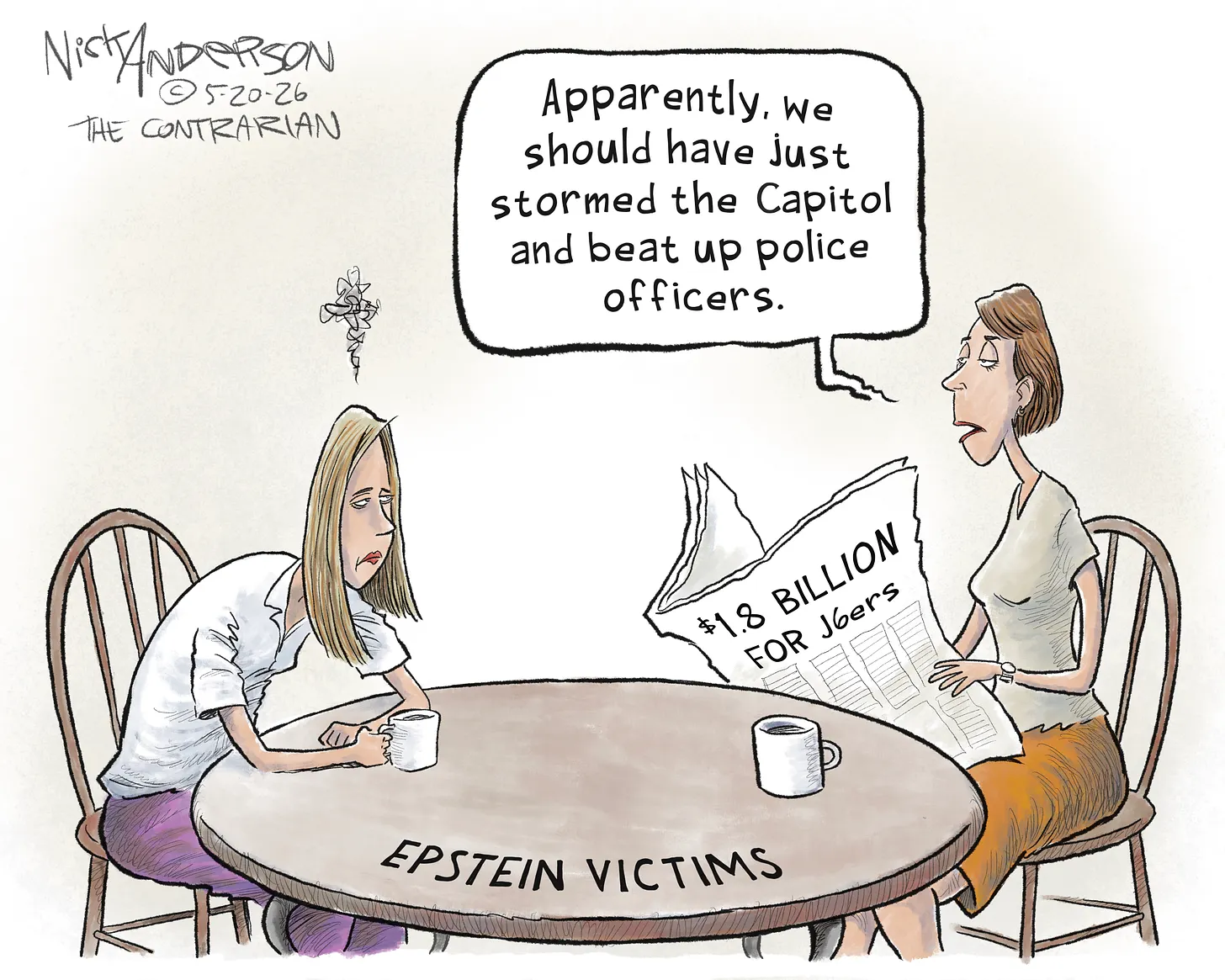
I talk about the political implications of this for Republicans in the featured post. But it's important to take a step back and just see it on its own terms. Trump has found a way to get the US Treasury to pay for his private army of brownshirts.

The striking thing about this "settlement" is that nobody who isn't answerable to Trump has anything to do with it. Trump's Justice Department negotiated the agreement with Trump's IRS, and avoided letting any judge oversee the result. The five commissioners who run the fund will be appointed by Trump, and can be removed by him at will. The fund has no obligation to reveal who it has given the money to.

So the upshot is that Trump, on his own, is removing $1.8 billion from the Treasury and doing whatever he wants with it.

and rumors of a deal with Iran

Maybe it's real this time, maybe not. The devil is in the details. One thing that seems clear: The terms are nothing close to the "unconditional surrender" Trump said he was aiming for. Axios reports:

The agreement the U.S. and Iran are close to signing involves a 60-day ceasefire extension during which the Strait of Hormuz would be reopened, Iran would be able to freely sell oil, and negotiations would be held on curbing Iran's nuclear program, according to a U.S. official.

The thing to watch for is whether Trump just gets back to the pre-war situation, if he falls short of that, or if he makes some gain. That will tell you who won the war. The Strait was open before the war started, and we were already negotiating about Iran's nuclear program. So if that's the deal, what did the war accomplish, beyond spending a lot of money, raising gas prices, and depleting our stock of weapons?

Jennifer Rubin:

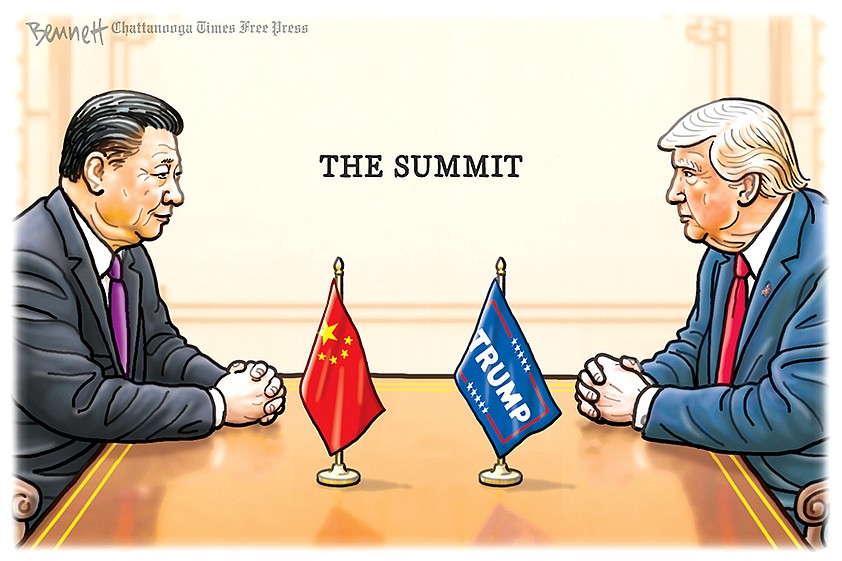
If this deal holds, there will be no question that Trump’s war amounted to a major strategic failure. Maybe we get an agreement similar to the JCPOA, which would have been in place had Trump not exited the deal. (Getting back in war something you already had is nothing to cheer about.) The agreement would leave the regime (perhaps more radical than ever) in place, deny Israel any permanent end to the Iranian threat, reveal the limits of U.S. influence and power in the region, and, by default, afford China (as evidenced by Trump’s pathetic showing at the summit) increased stature and confidence. Preventing a restart of a war no one wanted and an end to the energy shock Trump provoked can hardly been called “wins.”

But anyway, wait for real details before getting too excited one way or the other.

I have to laugh at the Republican senators warning that we can't trust Iran to negotiate in good faith. Why would anyone trust Trump to negotiate in good faith? The air attacks that killed most of Iran's ruling council happened while negotiations were underway in Geneva.

and the Democratic "autopsy"

It's common for a political party that loses an election to fund some kind of study about why it lost, in hopes that something can change before the next election.

The Democrats funded such a report after 2024, but then didn't release the results. Recently a partial report surfaced. It's 192 pages and I admit I have only skimmed small parts of it. It has drawn a lot of commentary, almost entirely negative. The main criticism repeated many times is that the report avoids a lot of significant issues:

  • Biden should have dropped out soon enough for there to be a real nomination process, rather than just a coronation of Harris.
  • The Israel/Gaza situation demoralized a lot of progressive voters.
  • Harris needed a response to the anti-trans message that Trump focused on in the closing weeks.

All the same, I'm not sure I would have focused on any of that if I had written a report, because it's not likely to matter as much in 2028. I mean, Biden isn't going to try to run again, we will have a nomination process, and the winning candidate will probably have a different message about Israel or trans rights (not that I know what it will be).

A lot of what is in the report sounds like platitudes: court rural votes better, for example. Or build up the state and local party operations. Great. Tell me how.

An interesting counterpoint to most of the chatter about the report comes from the Strength In Numbers blog, which focuses on data.

When we boot up the data, it’s obvious the main reason Harris lost — and the reason I am going to explore here, at this website, it being a data-driven website — is that 2024 simply had too much inflation-induced anti-incumbent sentiment for the incumbent party to overcome.

The author puts together a model for predicting how an incumbent party should do based on approval of the current president and public optimism/pessimism about the economy. That model predicts Harris should have done slightly worse than she actually did.

So maybe Harris wasn't such a bad candidate and didn't run such a bad campaign. Maybe all our 2024 autopsies are trying to analyze factors that made no difference.

and you also might be interested in ...

The Ebola outbreak in the Congo comes at a bad time. The Trump regime has cut way back on programs to track and mitigate diseases in Africa.


The only refugees the Trump regime is taking in any numbers are the white South Africans who feel oppressed by the Black-majority government. This week they announced plans for 10,000 more.

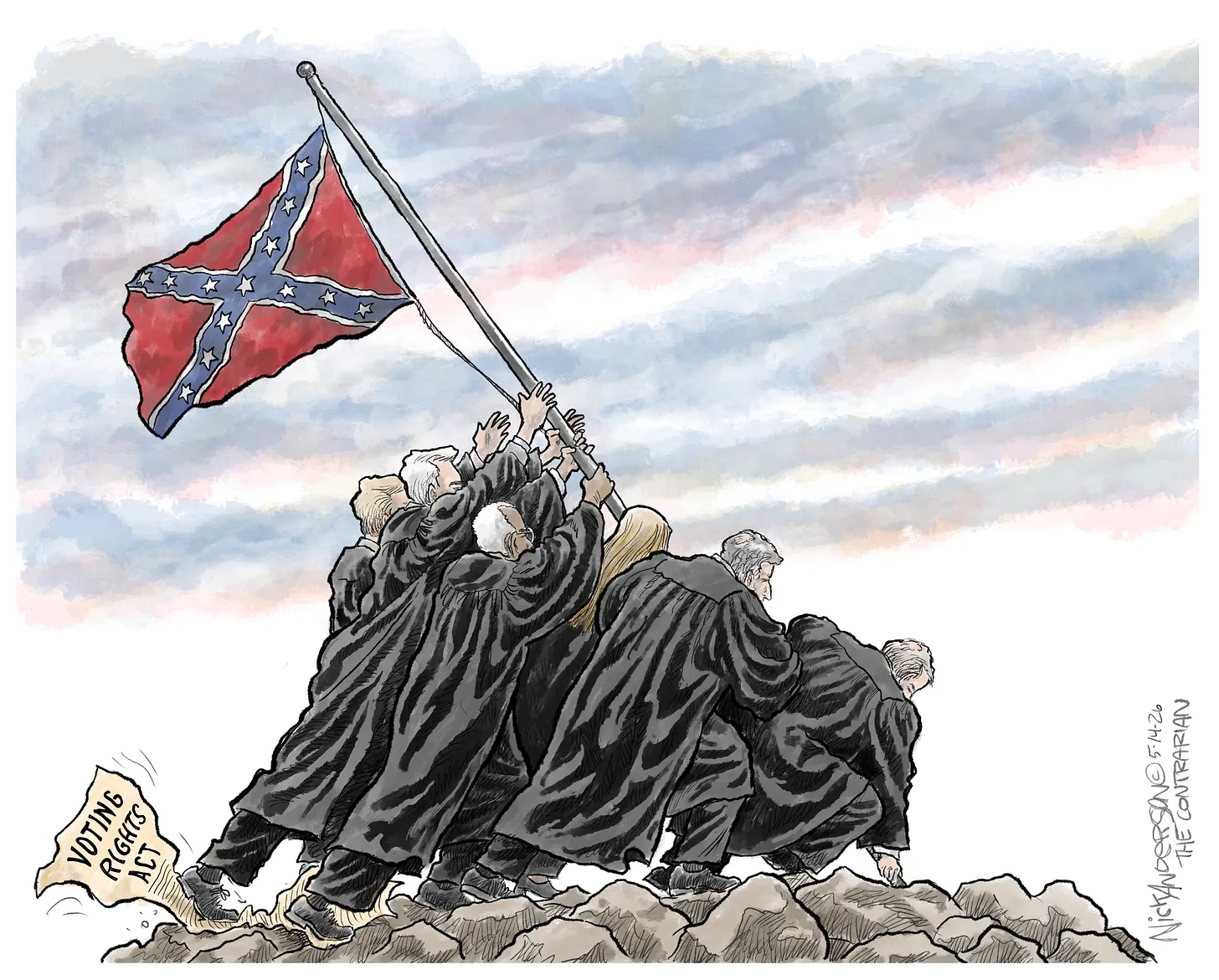
But racism is over in this country. John Roberts says so.


Wish I'd said that: Tom Tillis commented on Ken Paxton, who will probably be the Republican nominee for a senate seat in Texas now that he has Trump's endorsement:

To call Paxton 'ethically challenged' is to call Jeffrey Dahmer suffering from an eating disorder.


RIP Barney Frank. I was in the same room with Frank once, at a fund-raiser for another congressman. He predicted 2020 would be a 1964-scale Democratic landslide, which didn't happen. Biden's win was convincing, but not LBJ-like.


Trump missed Don Jr.'s wedding in the Bahamas Saturday. I just note the fact and refuse to speculate about the reason.


Tulsi Gabbard will resign as Director of National Intelligence at the end of June. Her stated reason is to support her husband, who has just been diagnosed with cancer. The rumor mill says that she's out because she can't get behind Trump's foreign wars.

It's tempting to be happy she's leaving, because she never should have had this position to begin with. But she's likely to be replaced with someone just as unqualified and less independent.


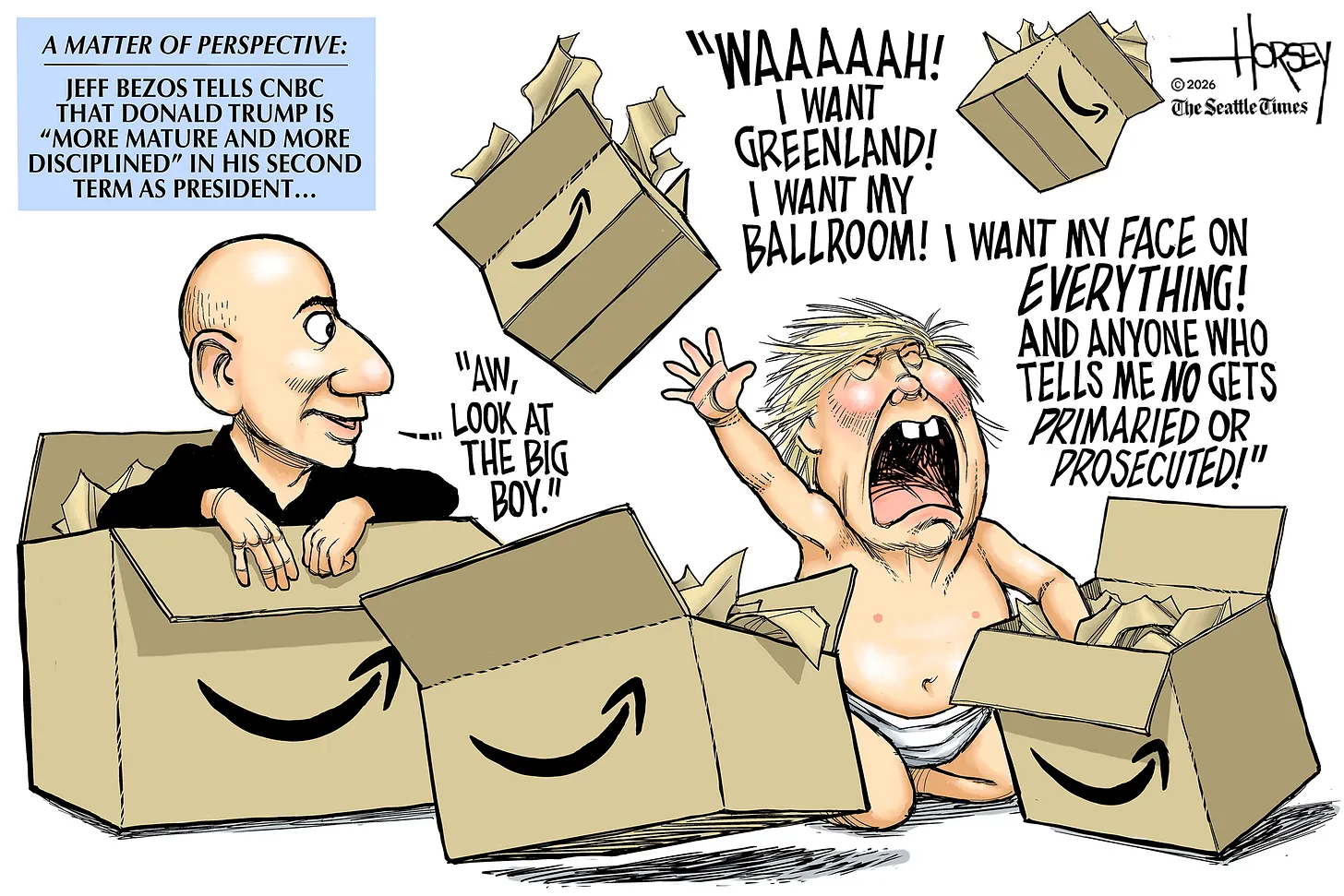
In a recent CNBC interview, Jeff Bezos said that Trump is "more mature, more disciplined" in his second term.

I have a theory about what has happened to Bezos lately: His first wife was his conscience. And now she's gone, so he's just another rich asshole. Meanwhile, she's using her divorce settlement to do all kinds of good.
and let's close with something creative

As the climate changes, London's famous fog and drizzle is more often turning into serious rain. So West London had a flooding problems that it could try to solve with expensive public works projects. Instead, it has brought in beavers, who had been virtually extinct in Britain.

In West London, conservationists got a government license to resettle a family of five beavers in a 20-acre urban park near the Greenford Tube station. It used to be a golf course, with a creek running through it. Within weeks, the beavers dammed up the creek, creating a pond that holds water and stops it from spilling into the city. They also diverted the creek's flow into smaller tributaries, creating a wetland that better absorbs heavy rainfall — mitigating the risk of flooding downstream.

"They effectively turned this site into a giant sponge that can take heavy rainfall and slowly release water back into the landscape, creating a lot more resilience for flooding," explains Sean McCormack, a local veterinarian who started the Ealing Beaver Project, named for the London borough of Ealing, where it's located.

Monday, May 18, 2026

Narrow Ideology

We are deeply concerned that what is really being rededicated is a nation to a very narrow and ideological part of the Christian faith that betrays our nation’s fundamental commitment to religious freedom.

- Rev. Adam Russell Taylor on Sunday's "Rededicate 250" rally

This week's featured post is "Is Corruption the Democrats' Unifying Theme?"

Ongoing stories

  • Trump's assault on American democracy. It just broke today: Trump's Justice Department established a $1.7 billion fund to pay "damages" the US owes to Trump's January 6 brownshirts for harassing them by convicting them of their crimes.
  • Climate change. I lost track of this issue this week. I'll do better.
  • Iran war. Announcing fake peace deals is getting old, so Trump issuing ominous threats again. The basic situation hasn't changed: Trump wants Iran to surrender, but he hasn't defeated them. He talks about a "deal", but an authentic deal has benefits for both sides.
  • Ukraine. The war is still a stalemate, but seems to be turning Ukraine's way. Both sides are pummeling each other with missile and drone attacks, but Ukraine is attacking strategic industries while Russia is terror-bombing civilian targets.

This week's developments

This week everybody was talking about Trump in China

I continue to wonder why media outlets cover what Trump says, given how often it turns out to be meaningless. Trump came out of China boasting of “fantastic trade deals”, but no one can get details and Chinese sources don't verify those deals.

I was surprised to hear Chinese leader Xi Jinping make a classical Greek reference I had to look up. He warned against a "Thucydides Trap", which is when a declining power feels that it has to fight a war to keep down a rising power. (Thucydides chronicled the Peloponnesian War between rising power Athens and declining power Sparta.)

The reference implicitly slammed the US as a declining power. Trump did not rise to the occasion.

and Black voting rights in the South

One fact to remember when you read articles about redistricting: Prior to the round that began with Texas, gerrymandering had pretty much balanced out. In 2024, Republican congressional candidates won a small majority in the popular vote, and they got a small majority in Congress.

Now, it's looking like the Republicans have given themselves a 10-15 seat advantage, which probably won't be enough to save their House majority in November.

and inflation

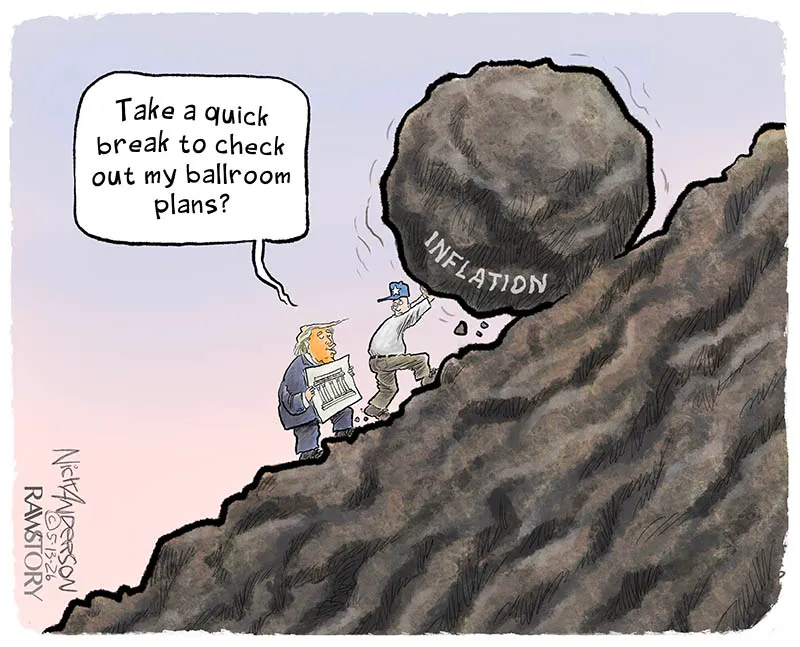
[Having just posted two Nick Anderson cartoons in a row, I feel obligated to recommend that you subscribe to his Substack or follow him through Raw Story.]

The inflation rate in April hit a 3.8% annual rate, which is higher than the 3% when Trump was inaugurated in January 2025.

and you also might be interested in ...

Trump's approval rating continues to sink: 37% in today's NYT/Siena poll, and 38% in the NYT's polling average. Only 30% think the Iran attack was a good decision.


Austin Ahlman is an independent running for Congress in Nebraska against a Republican incumbent and a Democratic challenger. I knew nothing about him yesterday, but today I know that he can make one hell of a campaign video.


Your tax dollars paid for a Christian nationalist rally on the National Mall Sunday. (Remember when the Trump regime was all about rooting out government waste?) "Rededicate 250" was part of Trump's one-sided celebration of the 250th anniversary of the Declaration of Independence. Religion Unplugged commented:

The Rev. Adam Russell Taylor, a Baptist minister who heads the progressive Christian organization Sojourners, noted: “We are deeply concerned that what is really being rededicated is a nation to a very narrow and ideological part of the Christian faith that betrays our nation’s fundamental commitment to religious freedom.”

The role of Christianity in early American history is complex and should be presented in a nuanced way: Yes, the vast majority of Americans in 1776 thought of themselves as Protestant Christians. (Catholics who buy into the idea that we were founded to be a Christian nation should be careful: The same argument would say that you also are a second-class citizen.) Patrick Henry, for one, would probably fit in well in an Evangelical church today.

However, a significant number of the Founders (Franklin, Jefferson) were essentially Deists, Thomas Paine was very close to being an atheist, and Washington's Christianity was vague at best. The Constitution does not mention God, which was a radical statement at the time. Contrast it with the Magna Carta, whose second paragraph begins:

KNOW THAT BEFORE GOD, for the health of our soul and those of our ancestors and heirs, to the honour of God, the exaltation of the holy Church, and the better ordering of our kingdom, at the advice of our reverend fathers ...

But the Constitution's only mentions of religion curb religious excess. ("no religious Test shall ever be required as a Qualification to any Office or public Trust under the United States"). The Founders were familiar with the destruction wrought over the centuries as various sects of Christians battled for control of the government of England. That's why they created a secular government for this country, regardless of any of their personal beliefs.

BTW: All the media accounts I've seen refer to "thousands" of people in attendance, which is not that big for an event like this. This picture from WaPo (during Marco Rubio's presentation) shows a lot empty chairs.


Whether you know it or not, somebody you care about is taking anti-depressant drugs under a prescription from their doctor. In their later years both of my parents did, and both described the effects as life-changing. My father in particular had reached the point of despair, but became himself again.

Our quack Secretary of HHS, RFK Jr., would like to change all that. Speaking from a vast wisdom that doesn't depend on mundane details like medical studies or other tangible evidence, Kennedy says prescribing anti-depressants is a form of "over-medicalization", which his fevered imagination pictures as a cause of addiction and even violence. He recommends doctors prescribe non-drug remedies like exercise. (Have you ever tried to get a depressed person to exercise?)

Stat News comments:

Kennedy’s willfully uninformed rhetoric on antidepressants is going to cost lives. The similarity to his anti-vaccine chatter is clear: When you bad-mouth effective, lifesaving vaccines, you end up driving people away from lifesaving medical care. Kennedy’s antidepressant rhetoric is not only based on bad science, it fuels distrust in mental health treatments at a time when adolescent depression, anxiety, and suicide rates are at record highs.


The Department of WarDefense has just released a trove of previously classified documents pertaining to UFOs.

I didn't consider that particularly interesting, but this piece from the WaPo "Awakenings" newsletter is: Belief in UFOs, religion professor Diana Walsh Pasulka notes, is taking on many of the roles traditionally played by religion.

It organizes communities of belief, creates narratives of revelation, offers cosmological meaning and establishes interpretive frameworks through which people understand mysterious experiences and humanity’s place in the universe. ... Mistrust of institutions has powered the rise of anti-institutional forms of belief. Religious impulses have migrated into new technological and media environments that bypass gatekeepers.


Historians have been upgrading their opinions of President Dwight Eisenhower. At the time he was often dismissed as a "do-nothing president" who presided over a boring era, providing a backdrop for a charismatic JFK presidency and the socially transformative Johnson presidency.

I wonder if the Trump presidency has raised historians' opinion of boring government. Yes, Ike didn't appear to be doing much. But among the things he didn't do: He didn't bail out the French after their defeat at Dien Bien Phu. He didn't roll back the New Deal. He didn't give in to the temptation to take advantage of our lead in nuclear weapons.

and let's close with something impressive

This peacock is yet another image from The Guardian's "Week in Wildlife".

Monday, May 11, 2026

Profoundly Wrong Things

Good people, people who go to church, people who love their families, people who believe they’re good have, throughout the history of this country, done deeply, profoundly wrong things to Black Americans, and they told themselves it was about something else. They told themselves that it was about economics, heritage, party, patriotism. It was never about something else. And today it’s not about something else.

- Tennessee State Senator Charlane Oliver

This week's featured post is a book review: "Phillips O'Brien's 'War and Power'".

Ongoing stories

  • Trump's assault on American democracy. With the Virginia Supreme Court throwing out the result of the state's redistricting referendum, and various southern states taking advantage of the Supreme Court's invitation to get rid of majority-minority districts, Republicans have now managed to tilt the playing field in their favor. Democrats will have to win the popular vote decisively in November to get a House majority.
  • Climate change. Early signs point to a strong El Nino effect this year, making weather events more extreme.
  • Iran. The pattern continues: Trump keeps announcing peace deals that the Iranians never agreed to. Nothing can change until Trump recognizes that he's going to wind up with a situation worse than the one at the start of the war. Trump can't admit that, so the Strait stays closed and gas prices keep rising.
  • Ukraine. Phillips O'Brien's weekly update discusses Putin's (realistic) fears that Ukraine could attack his Victory Day parade in Moscow with a long-range drone. Ukraine now hits Russia with more long-range drones than Russia uses against Ukraine. This must be very demoralizing for the Russian public, which (like Americans and Iran) has to wonder why it's in this war at all.

This week's developments

This week everybody was talking about the race to disenfranchise southern Blacks

The Virginia Supreme Court tossed out the results of the recent referendum. It's a 4-3 decision and highly questionable, but there's not a federal issue that would invite US Supreme Court intervention, even if we had an honest Supreme Court.

The Virginia redistricting was supposed to pick up four Democratic seats in Congress, and briefly looked like it put Democrats narrowly ahead in the redistricting wars. But not only has that been undone, but southern red states are wasting no time in using the Supreme Court's Callais decision to eliminate majority-Black districts. Tennessee has already eliminated its last such district by dividing the voters of Memphis among three districts that will now all have White Republican majorities.

The new map points to a 9-0 Republican advantage in the Tennessee delegation in the US House.

In one particularly outrageous moment, Democratic members of the Senate Judiciary Committee were kept out of the room where the redistricting proposal was being voted on, resulting in this soon-to-be-iconic photo of Justin Pearson and the sergeant-at-arms.

Louisiana, Alabama, and South Carolina are expected to follow suit this week with their own proposals to end Black representation in Congress.

and Trump's ballroom

I would hate to work for The Onion these days, because Trump keeps doing things that already sound like over-the-top parodies. Case in point: the proposed White House ballroom.

Originally, it wasn't supposed to cost the taxpayers anything (other than the cost of whatever favors Trump does for the private donors who funded it, plus the money lost to the tax deductions from these bribes gifts). That was the go-to response whenever anybody objected to Trump exceeding his authority by tearing down the East Wing without approval of Congress or buy-in from the appropriate DC architectural committees: It's free; be grateful.

But the ballroom kept getting bigger and glitzier. The price tag kept going up. And now We the People are getting the bill: $1 billion tucked into the omnibus bill Republicans are hoping to pass through reconciliation (i.e., without any Democratic votes).

So rich donors aren't building Trump's ballroom any more than Mexico has paid for Trump's wall. At a time when the government is saving money by kicking Americans off food stamps or refusing to subsidize their health insurance, it seems to have plenty of money to fight an unnecessary war and build a monument to Trump's vanity.

You and I will never see the inside of this ballroom, if it ever gets built. We'll just pay for it.


The ballroom issue is putting pressure on congressional Republicans, who face a choice between their constituents and the desires of He Who Must Be Obeyed.

One interesting political strategy: Democrats should make them own this. At some point in the reconciliation process, amendments will be possible. If Democrats propose to strip the ballroom funding out of the bill and then back that amendment, only a handful of Republican votes will be needed to pass it. That would let the vast majority of Republicans tell Trump they did their best, but tell their constituents that their bill doesn't pay for the ballroom.

But what if Democrats abstain on any anti-ballroom amendment? Then Republicans actually have to choose between voters and Their Lord and Master.

and Ka$h Patel

About a month ago, Atlantic reporter Sarah Fitzpatrick used a large number of anonymous sources within the FBI to verify that Director Kash Patel has a drinking problem -- something we all had to suspect after seeing the viral video of his alcohol-fueled celebration with the gold-medal-winning US Olympic hockey team.

On multiple occasions in the past year, members of his security detail had difficulty waking Patel because he was seemingly intoxicated, according to information supplied to Justice Department and White House officials. A request for “breaching equipment”—normally used by SWAT and hostage-rescue teams to quickly gain entry into buildings—was made last year because Patel had been unreachable behind locked doors, according to multiple people familiar with the request.

Patel responded with a $250-million defamation lawsuit, which (to begin with) assumes Patel ever had a reputation worth $250 million. Further, he would need to prove not just that the story is false, but that Atlantic either knew or should have known it was false, but published it anyway out of malice.

Simultaneously, Patel abused his position to open a leak investigation into Fitzpatrick's sources -- contradicting the implication that she didn't really have sources and just made the story up. (It's reminiscent of an old joke: A reporter writes that the president is a moron. He is prosecuted and goes to jail -- not for defamation, but for revealing a state secret.)

Well, Fitzpatrick and The Atlantic are so intimidated that they followed up:

After my story appeared, I heard from people in Patel’s orbit and people he has met at public functions, who told me that it is not unusual for him to travel with a supply of personalized branded bourbon. The bottles bear the imprint of the Kentucky distillery Woodford Reserve, and are engraved with the words “Kash Patel FBI Director,” as well as a rendering of an FBI shield. Surrounding the shield is a band of text featuring Patel’s director title and his favored spelling of his first name: Ka$h. An eagle holds the shield in its talons, along with the number 9, presumably a reference to Patel’s place in the history of FBI directors. In some cases, the 750-milliliter bottles bear Patel’s signature, with “#9” there as well. One such bottle popped up on an online auction site shortly after my story appeared, and The Atlantic later purchased it.

Why would anyone think that Ka$h has a problem, or that alcohol plays too large a role in his life?

and you also might be interested in ...

So far, the hantavirus doesn't seem worth panicking over. Still, it would be nice to have a trustworthy CDC right now.


So far, the rising price of gas, Trump's illegal tariffs, and other economic woes have not shown up in the job numbers. The April jobs report showed 115K more jobs and the unemployment rate holding steady at 4.3%.

However, it's worth pointing out that the government is running a $2 trillion annual debt to get those results. As soon as a Democrat becomes president, the national debt will become an existential emergency again.


On the surface, the results of Trump slashing funding to fight AIDS in Africa doesn't look bad: People previously diagnosed are continuing to get their drugs and are not dying in large numbers. The forward-looking projections are alarming, though. Funding has collapsed for testing, so new people are getting AIDS and spreading it undetected.


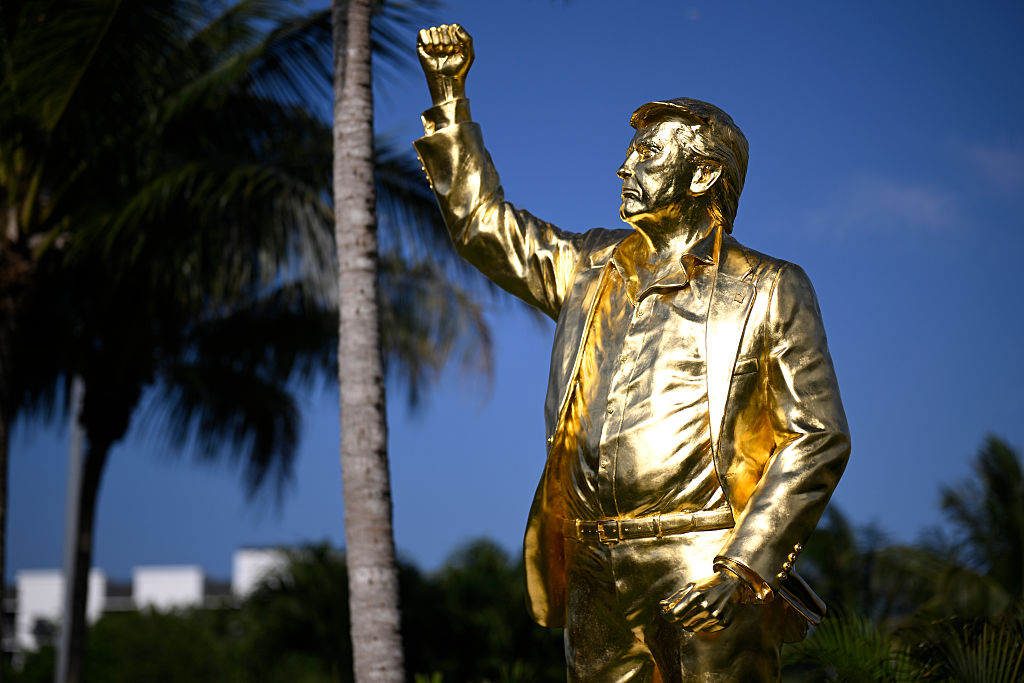
For those former Christians who have chosen to worship Trump instead of Jesus, his Doral golf course now provides an idol they can use: a 17-foot gold-leaf statue sitting on a five-foot pedestal.

It's yet another case where satire has a hard time staying ahead of the news. In the current (and concluding) season of Amazon Prime's "The Boys", the series' villain (the super-powered Homelander) is declaring himself to be God, challenging the loyalty of his Christian nationalist base.

We can only hope that actual MAGA "Christians" will feel similarly challenged. So far they don't seem to.


Add Rep. Max Miller (R-OH) to the list of current or former Trump staffers with multiple accusations of domestic abuse.


A. R. Moxon raises an interesting point, related to accepting ex-MAGA folks like Marjorie Taylor Greene or Tucker Carlson: It's one thing to try to meet people where they are. But it will never work to try to meet people where they think they are, when they're not really there.

If they will only meet us in a place where we will agree with them that their bigotries have justification, their awareness need no expansion, and their conviction needs no progression, then I would say we can’t meet them where they are, because even if we show up where they are, they won’t be there, and if we go to where they think they are, we won’t be where we need to be.

and let's close with something hopeful

If you're looking for some reason not to give up, check out LOLGOP's "The Case of Earl Warren".

It begins with a provocative set of questions:

[W]hat if good and evil—as concepts, as actual forces in the world—what if they exist? What if people—regular, flawed, embarrassing, complicated people—can actually be moved beyond the programming of their nervous system or algorithm or the combination of the two? What if it’s possible to change your mind, or someone else’s mind, or the collective mind of a country that has been, let’s say, unwell? And maybe, by making the case now, we can shape history in the coming years by beginning a process that might regenerate something we once called conscience?

After that Twilight Zone intro, I can almost hear Rod Serling say: "Case in point: Earl Warren, an ambitious state attorney general with his eye on the governor's mansion." In the 1942 campaign, Warren found his issue: Japanese Americans. They were all potential traitors and needed to be put away. So after he ascended to the governorship of California, he enthusiastically went along with the Japanese internment, one of the most shameful things America had done since slavery. Warren was, in other words, xenophobic, hateful, and willing to scapegoat an entire ethnic group of innocent people to advance his political career.

But somehow, by 1954, he had become chief justice of the Supreme Court that outlawed racial segregation in America's schools. Between 1953 and 1969, the Warren Court established previously unrecognized rights of minority groups both racial and religious. It expanded our notions of free speech and put limits on the ability of police to railroad defendants.

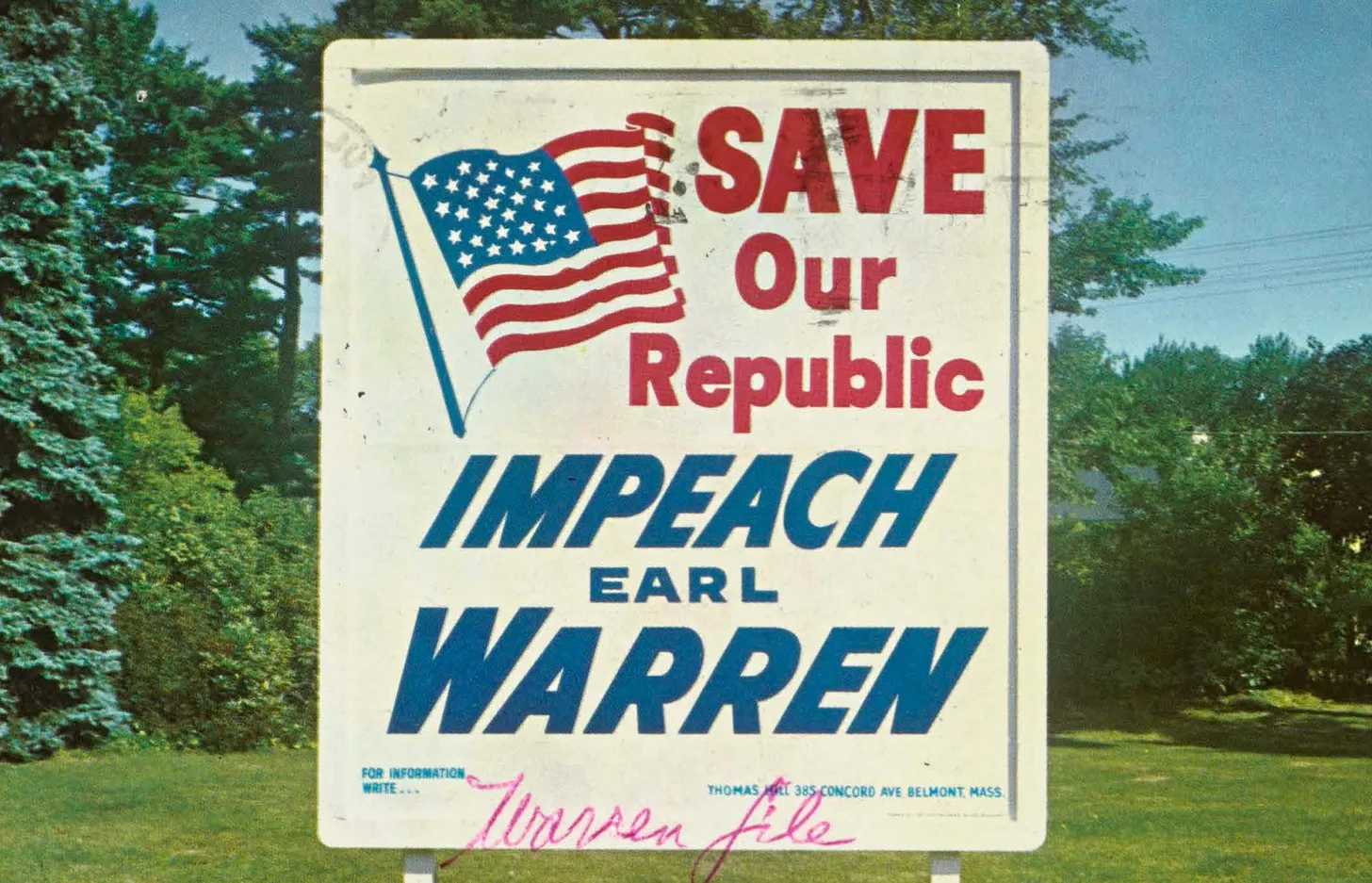
As someone who remembers the last chunk of that era, I can testify: Warren was not just going with the flow here. The Warren Court wasn't being pulled along by the trends of its era. In many cases it was leading the parade towards human rights. Far from trying to please the crowd, Warren was making himself unpopular. "Impeach Earl Warren" was the right-wing slogan of the day.

While Warren's conversion probably didn't happen overnight on Christmas Eve, and I have no reason to believe ghosts were involved, it was a transformation worthy of Dickens.

He became, by many accounts, a genuinely different person. Under different conditions, with different pressures, with enough exposure to the consequences of what he’d helped create—he changed.

I’m not telling you this to make you feel better. I’m not telling you this because the arc of the moral universe bends toward justice and all of that. I’m telling you because the conditions that produced Earl Warren in 1942—the organized fear, the nativist infrastructure, the information environment that made cruelty feel like common sense—those conditions are not so different in their structure from what’s producing the people who scare and exhaust us today.

Which means: they are not a different species. Which means: some of them can be moved. Which means: the work of figuring out how to move them is not naive.

Monday, May 4, 2026

Necessary Means

Our difficulty with the Court today rises not from the Court as an institution but from human beings within it. But we cannot yield our constitutional destiny to the personal judgement of a few men who, being fearful of the future, would deny us the necessary means of dealing with the present.

- Franklin Roosevelt, On "Court Packing"
March 9, 1937

This week's featured post is "What to do with a lawless Supreme Court?"

Ongoing stories

This week's developments

This week everybody was talking about voting rights

The Supreme Court's decision voiding the remainder of the Voting Rights Act is the topic of the featured post.

and abortion access

Friday, the Fifth Circuit Court of Appeals issued an order against mailing the abortion drug mifepristone. Today, the Supreme Court stayed that order for a week.

States that have outlawed abortion, like Louisiana, object to their citizens still having access to it via teleprescriptions and the mail. They allege that taking mifepristone at home is unsafe, though that seems to be a pretext.

It's not clear what the next step in this case is.

and the war

Nothing major seems to be happening, but it's hard to tell because of conflicting claims and counter-claims by the two sides. The US claims to have escorted two ships through the Strait of Hormuz. The Iranians claim to have hit a US warship.

The two sides' peace proposals continue to be far apart. Iran's 14 points are all about ending US attacks without any concessions on their part. US proposals want Iran to turn over its nuclear material and swear off future nuclear ambitions without any concessions on our part.

Meanwhile, oil remains around $114 per barrel. Paul Krugman keeps pointing to the physical constraints: The world is burning more oil than is being shipped. If this continues, the stockpiles will run out. At that point, if not before, the price will have to rise high enough that demand falls to equal supply.

and the Comey indictment

Nearly a year ago, James Comey photographed seashells arranged to spell out "86/47", which Trump and his loyalists exaggerated into a threat of assassination (86) against Trump (47). As soon as Comey heard this interpretation, he took the photo down and apologized.

Now he has been indicted for making a threat and transmitting it over social media. Each count carries a maximum sentence of ten years in prison.

The whole thing is absurd on many levels, and illustrates just how far the current Justice Department will go to harass people Trump views as his enemies.

  • 86 has a variety of meanings, and it's not clear that killing someone is even the most typical one.
  • We're not sure whether Comey arranged the shells himself, or just found someone else's arrangement on a beach.
  • Comey denies he intended the photo as a threat, and no evidence publicly available indicates otherwise.
  • It's not clear whether Comey is supposed to have intended to carry out this alleged threat himself, or was saying that someone should do it.
  • In all previous cases, statements like this unconnected to a specific plan aren't prosecuted under this statute. Simply saying "Somebody should kill this guy" is just free speech unless you are directly inciting somebody to do it. Ditto for "I'd like to kill this guy" if you have no specific plan to do so.

A judge will throw this out well before a jury hears it.

Isn't it wonderful that the US is so crime-free that the Justice Department has time to waste on stuff like this?

and you also might be interested in ...

The government owes billions in refunds to American businesses that paid Trump's illegal tariffs. The big corporations have lawyers and other specialists to navigate the refund process, so they'll probably get their money back. But small businesses probably won't.


The DHS funding shutdown is over, except for funding Trump's mass deportation programs. Republicans are preparing a reconciliation measure this summer to fund ICE and the border patrol through the end of Trump's term, presumably so that next year's Democratic Congress won't have any leverage over these rogue agencies.

Democrats objected to funding ICE and CBP without restrictions after the videotaped murders of Alex Pretti and Rene Good in Minneapolis in January. The agents who committed these crimes have faced no charges, and federal agencies have done everything they could to block Minnesota's investigations.


Democratic senators have been asking Trump's judicial nominees who won the 2020 election and whether Trump could run for a third term in 2028. They can't answer clearly, which should make everyone doubt their objectivity and resistance to Trump's intimidation.


On Star Wars Day, Paul Krugman compares the proposed Trump battleships to the Death Star. The difference: The Death Star actually got built.


Trump's new surgeon general nominee is yet another Fox News talking head, but at least this one has an active medical license. She says a lot of questionable things, but doesn't appear to be crazy.


60 Minutes correspondent Sharyn Alfonsi received the Ridenhour Courage Prize for standing up to CBS' management efforts to alter her piece on El Salvador's CECOT Prison, where the Trump administration had sent a number of migrants.

I’d be lying if I said I wasn’t scared. Fear is a funny thing – it can paralyze you, or it can point you to exactly what needs to be protected. Right now, our industry is afraid of the wrong things. We’re afraid of offending power. We’re afraid of losing access. We’re afraid of another baseless lawsuit. But what we should all be afraid of is silence. Because as I learned [at her first job as a waitress], there is a fine line between being a team player and being an accomplice.

The Ridenhour Prizes are named for Ron Ridenhour, who exposed the My Lai massacre. They've been awarded since 2004, with the first prize going to Daniel Ellsberg, who leaked the Pentagon Papers.

and let's close with something wild

If you want to get your mind off the news, The Guardian's "Week in Wildlife" gallery is a good choice. The squirrel above appears to be adjusting the camera.