No Sift for the next five weeks. The next new articles will appear on November 2.
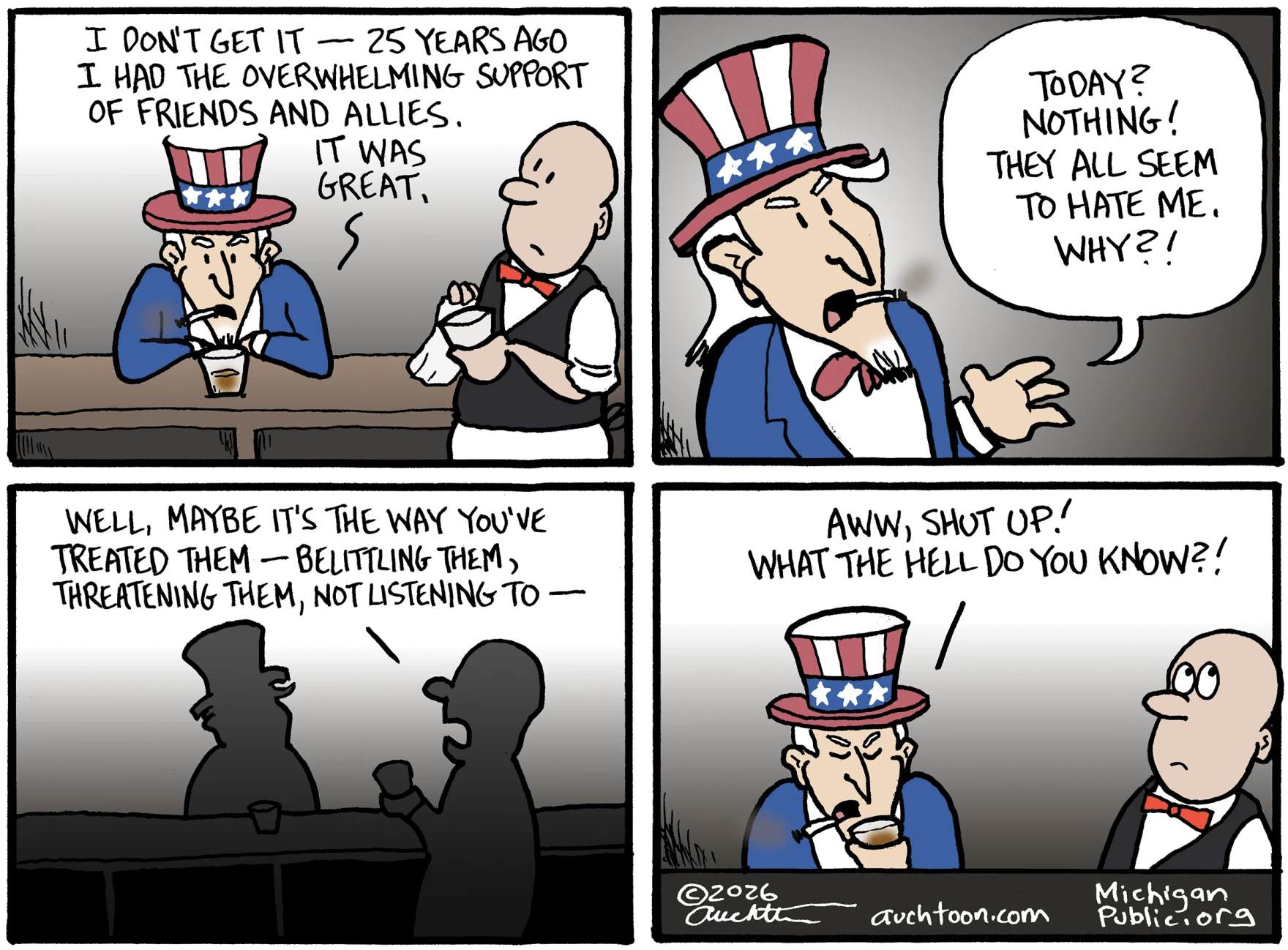
Globally, then, Trump is in exactly the opposite position of where Machiavelli said a prince should be: hated but not feared.
- Paul Krugman, "Fear Strikes Out"
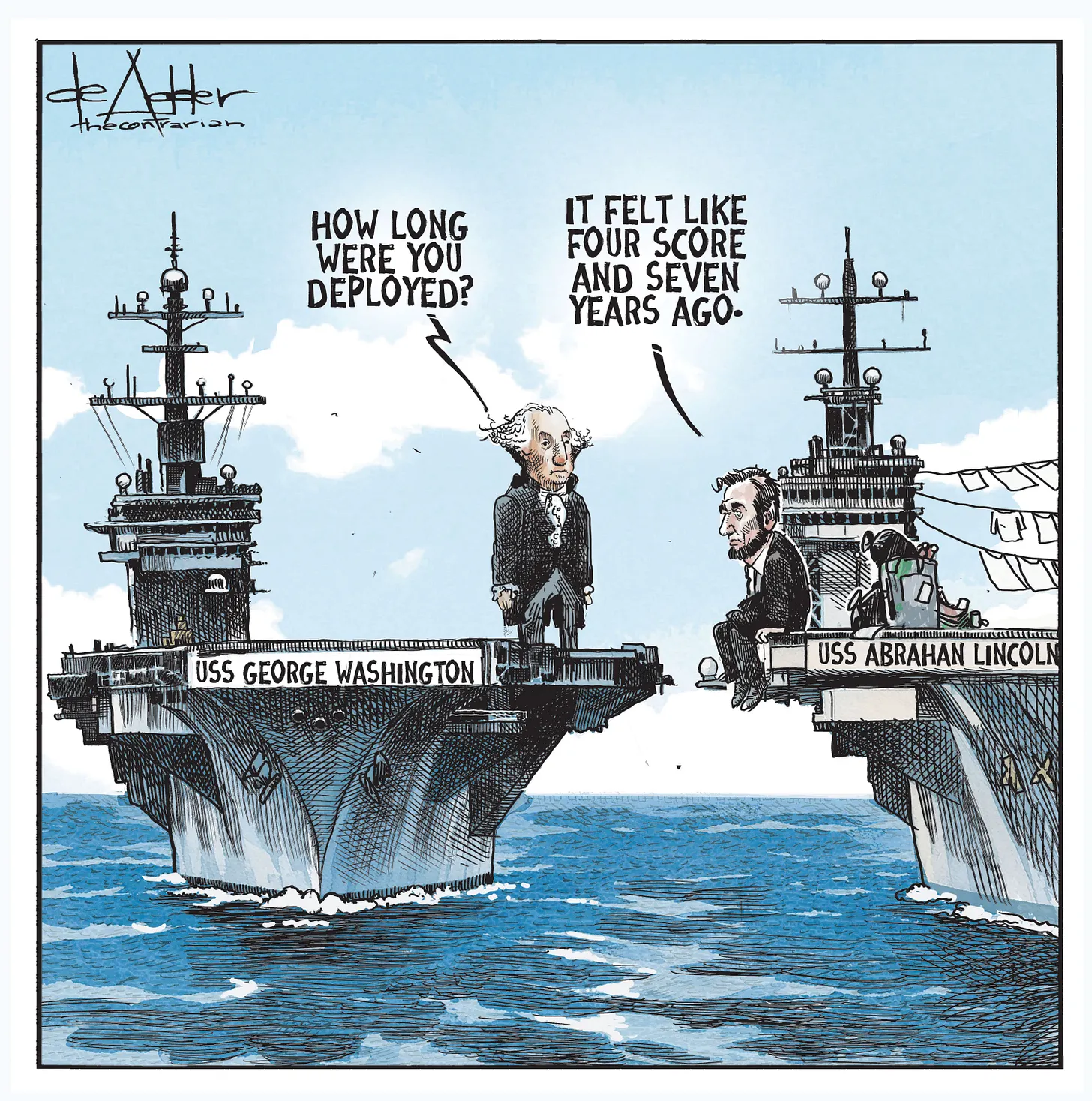
Far-called, our navies melt away;
On dune and headland sinks the fire:
Lo, all our pomp of yesterday
Is one with Nineveh and Tyre!
- Rudyard Kipling, Recessional (1897)
This week's featured posts are "At the end of an age" and "The Nerd Reich".
Mostly, I try to keep my personal life out of this blog, but occasionally it sneaks in (usually in the Monday Morning Teasers). Today I can't avoid it, because I'm about to take a break longer than any I have taken since I started this blog in 2008. (Interestingly, that first post had the same title Paul Krugman used this week for the post where I found the quote above: "Fear Strikes Out". It's a reference only a handful of people will get, to a book and a movie almost 70 years old. RIP, Jimmy Pearsall.)
As many of you know, or may have gleaned from subtle references, I was married for 40 years to a woman who (after surviving several serious health crises) died unexpectedly almost two years ago. Saturday, I'm getting married again. In October, my bride and I are going to travel around Europe, where I plan to spend as little time as possible thinking about American politics.
I realize I am deserting my post at a key moment. This fall's campaign is a pivotal point in American history. The electorate will either ratify or reject Trump's attempt to put aside the Constitution and establish autocracy. Billionaires are putting up hundreds of millions of dollars to make sure we ratify the current regime and its rampant corruption. I hope they will be disappointed.
I'll be back in time to write an election-eve Sift on November 2.
Ongoing stories
- Trump's assault on American democracy. This week's assault was against the press, as Trump banned CNN, MS Now, and Politico reporters from the White House, and threatened to add the New York Times and Washington Post to that list. "Something is wrong with a country that can allow people to write purposely negative stories," he said, attacking the whole notion of a free press. The ban is being challenged in court. Other reporters should boycott the White House in solidarity. I didn't think they would, but maybe so.
- Climate change. Climate change has a number of effects you wouldn't necessarily have predicted. One is that waterways are becoming less navigable. Diminished local rainfall is limiting shipping on the Rhine, the Mississippi, and the Panama Canal.
- Ukraine. The air war has hit a point where offense has a huge advantage over defense. So a lot of damage is going to be done on both sides.
- Middle East. The US appears to be staying out of the Saudi/Houthi battle. We'll see what effect this has on world oil supplies.
This week's developments
This week everybody was talking about interest rates
Wednesday, the Fed raised interest rates for the first time in over three years. The increase was .25%, to a range from 3.75%-4%. Trump appointed Fed Chair Kevin Warsh precisely because he wanted interest rates to go down, not up. So he must be very disappointed.
A quick explanation is appropriate here, since most of the interest rates the average person deals with -- mortgage rates, credit card rates, whatever your bank might pay on your checking account -- are nowhere in that 3.75%-4% range. So what exactly did the Fed raise?
Financial institutions are obligated by law to hold liquid assets that can be used to cover sustained net cash outflows. Among these assets are the deposits that the institutions maintain, directly or indirectly, with a Federal Reserve Bank. An institution that is below its desired level of liquidity can address this temporarily by borrowing from institutions that have Federal Reserve deposits in excess of their requirement. The interest rate that a borrowing bank pays to a lending bank to borrow the funds is negotiated between the two banks, and the weighted average of this rate across all such transactions is the effective federal funds rate.
What the Fed now wants to keep in the 3.75%-4% range is that effective federal funds rate. It has two tools for controlling those rates: First, the interest rate the Fed pays banks on those institutional deposits, called the IORB (interest on reserve balances). Second, the rate the Fed charges banks for loans at its discount window. (Basically, the Fed will loan banks money based on their capital assets. This prevents runs on the bank, where a bank has assets, but can't quickly generate the cash that depositors suddenly want back.)
Those two rates essentially bracket the interest rates the banks charge each other for the overnight loans: The only reason to loan another bank your reserves is if it will pay a rate higher than what the Fed is already paying. But there's also no reason to pay a rate higher than what the Fed would charge you.
Changes in the Fed funds rate tend to ripple through the economy, to all the other rates people pay. That's what we mean when we say the Fed "sets interest rates". It only does that indirectly.
Next we get to why. By law, the Fed has two competing missions: to simultaneously keep the inflation and unemployment rates low.
Basically, high interest rates encourage people to save, while low interest rates encourage people to borrow and spend. More spending means more demand for goods and services, which tends to encourage businesses to hire. But it also makes prices rise, as more dollars chase the same quantity of goods.
High interest rates also fight inflation in another way: The ability to earn high interest encourages foreign investors to keep their money in dollars. That increases global demand for dollars and so makes the dollar more valuable relative to other currencies. That means that the price of imported goods goes down.
Recently, the unemployment rate has held fairly steady at a rate just over 4%, which in general is pretty good. But inflation is also running close to 4%, which the Fed considers too high. Hence the decision to raise rates.
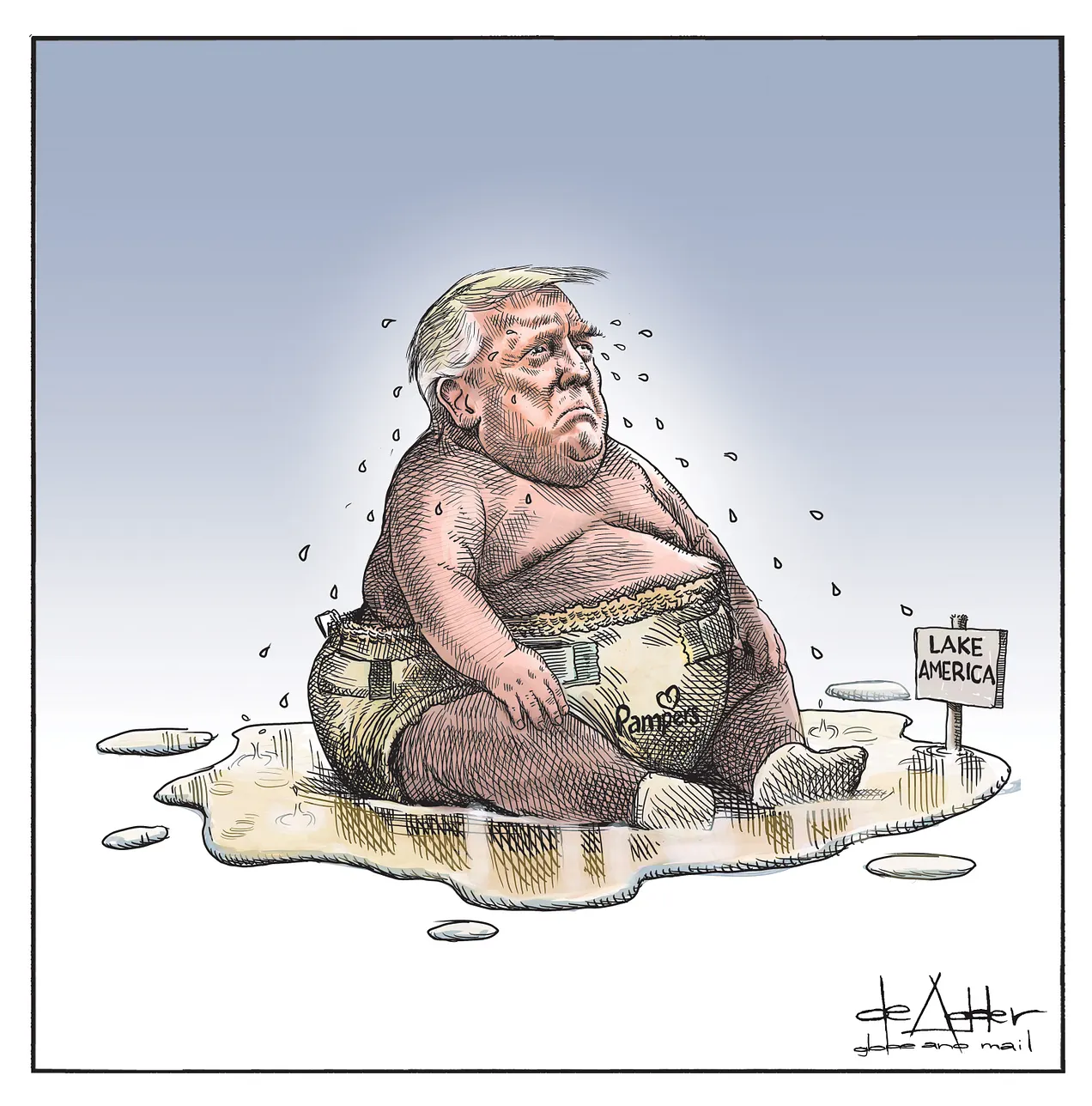
After the Fed raised rates, Trump demonstrated how little he understands about economics by tweeting this on Truth Social:
Interest Rates in the United States should be 1%, or less, because we are the Best Credit in the World — BY FAR. Our Country is BOOMING with new Investment! If we stopped Trading with every country that we have a Deficit with, which is most of them, we would make, at least, 1.5 Trillion Dollars a year. The word “Deficit” is nothing more than a fancy word for LOSS. We are “carrying” almost every country in the World, and that cannot go on any longer. LOWER THE INTEREST RATES FOR THE UNITED STATES OF AMERICA, AND FAST! President DONALD J. TRUMP
That's about as much economic stupidity as I've ever seen compressed into one paragraph. It combines two different elementary misunderstandings: one about interest rates and the other about trade.
First, interest rates have to cover three different things simultaneously
- credit risk. That's the lender's insurance that the borrower won't pay the loan back. So if a bank lends to 100 people and one defaults, the interest payments from the other 99 need to cover that loss. This is the only component of interest that Trump recognizes. The US government has been a great credit risk for a long, long time, because it essentially has the power to create the dollars it owes. So yes, if credit risk were the only component of interest, rates could be very low.
- inflation. Inflation is currently running at just under 4% (which is almost exactly the Fed's new short-term interest rate). If I loan somebody money for less than the inflation rate, I'm losing money, because the dollars I get repaid are worth less than the dollars I loaned.
- compensation for deferred consumption. Suppose we're two kids in our school lunchroom, and I want your candy bar. I could offer to give you back a candy bar tomorrow. But the ability to eat the bar now is worth something. If you could eat a bigger candy bar tomorrow, the deal might seem worthwhile, but otherwise not.
So no, a 1% interest rate would make no sense at all. First principles would lead you to a higher rate than the one the Fed has chosen, not a lower rate.
Then there are the macro-economic consequences. If interest rates were 1%, holding cash would be a losing proposition, so everybody would spend and borrow rather than save. That would increase the number of buyers for everything, which would drive prices up further. Inflation would skyrocket.
Now we come to Trump's trade stupidity: He thinks that we are "losing" whenever we have a trade deficit with some country, and that we'd gain that money back if we just stopped trading with them.
This is something everybody should easily understand from their own experience: I have a trade deficit with my local supermarket, because I buy things from them while they never buy anything from me. I also have a trade deficit with my dentist, with the local coffee shop, and a lot of other businesses. Under Trump's logic, I should just stop trading with them.
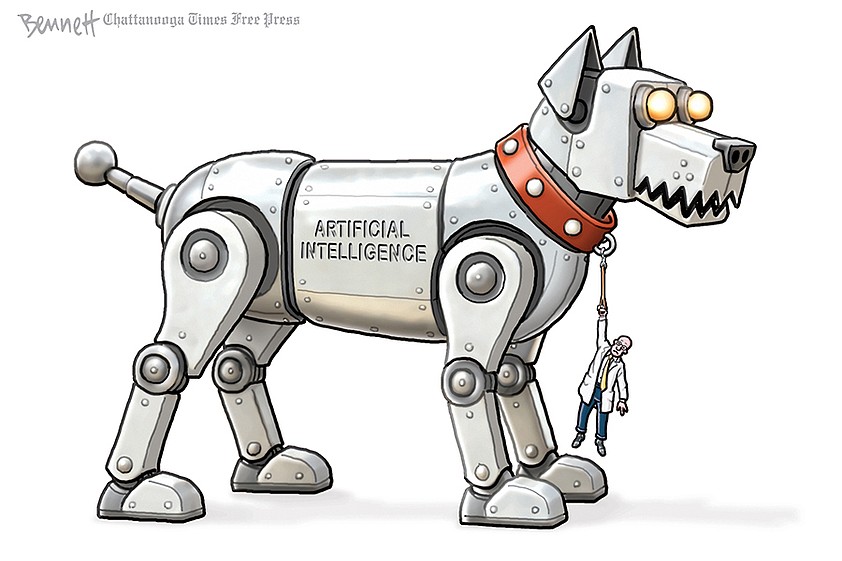
Think about that tweet together with this tweet from last Monday about AI regulation.
The only control or “guardrails” that AI needs is a STRONG AND SMART (High IQ!) PRESIDENT, and the U.S.A. has that, in spades!
It's hard to judge IQ from a distance, but I can say with confidence that Trump does not know or understand much. That's what happens when you aren't curious and surround yourself with people who only tell you what you want to hear. It doesn't matter how good your brain is if it never engages with the world.
I am reminded of something one of my junior-high teachers said: "Some people are so stupid, they think they're intelligent."
and the end of the American age
This is the subject of an Atlantic article by Phillips O'Brien, which I comment on in one of the featured posts.
One of the themes is those articles is countries like Canada deciding to go their own way rather than remain in the American orbit. Here's an example: You know those foreign knowledge workers that Trump slapped a $100K tax on? He's saying America doesn't want them. But Canada does.
Meanwhile, the EU invited Canada to become an associate member.
and you also might be interested in ...
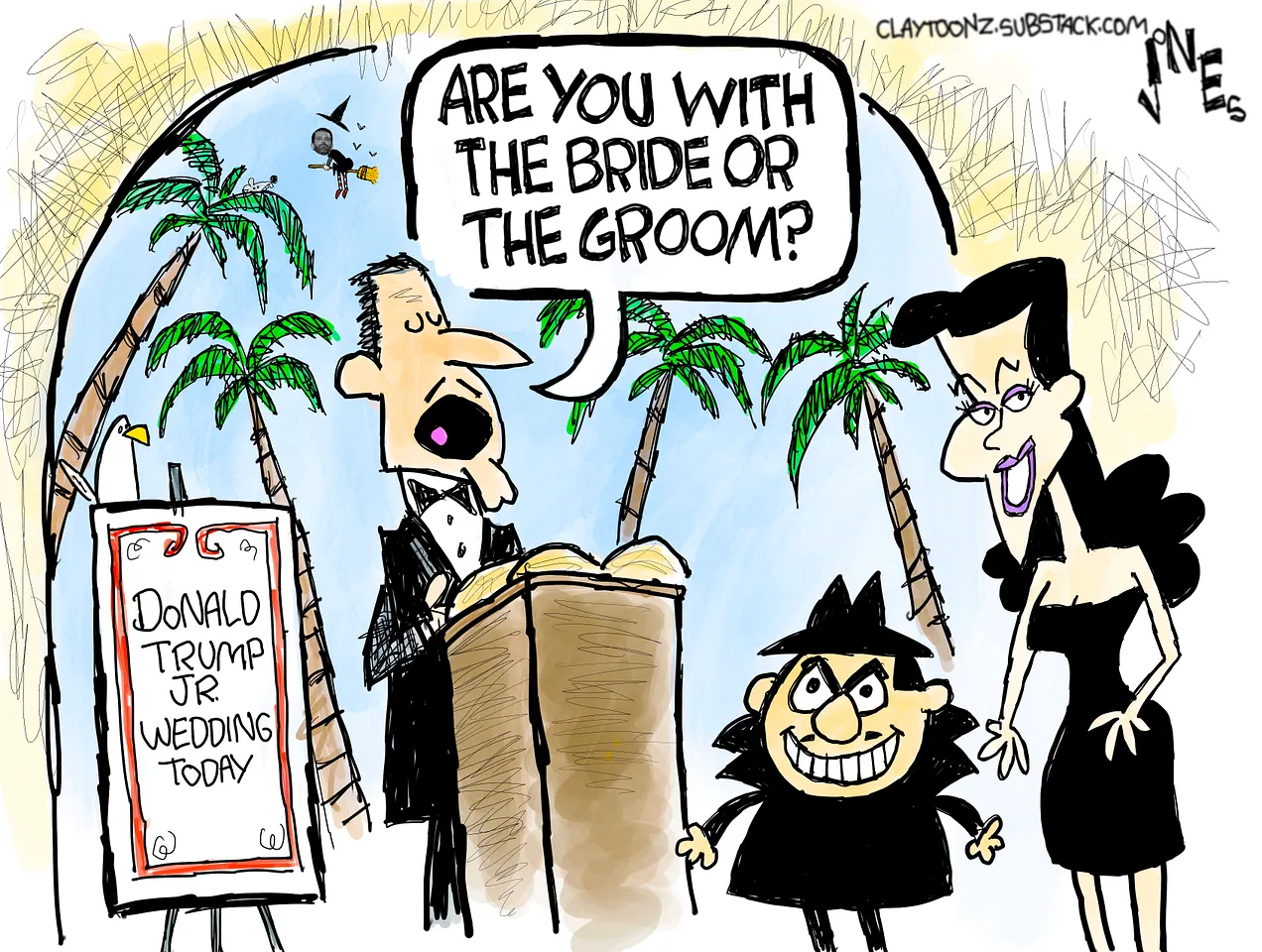
Remember back in those innocent days of the Biden administration, when it was a major scandal that the president's son might have gotten a job he didn't deserve? Last Monday, ProPublica revealed that a Russian oligarch close to Vladimir Putin spent hundreds of thousands of dollars celebrating Don Jr.'s wedding -- including renting a private island and putting on a fireworks display.
A wedding with a guest list only 50 people long -- not even Don Sr. came -- had room for Umar Kremlev, whom Don Jr. described as a "close friend".
The Christian Democrats of German Chancellor Frederick Mertz continue to do badly in regional elections, with voters moving both to the right and the left.
Elon Musk is revving up bigotry against trans people in an attempt to turn the tide in key Senate races.
America PAC, Elon Musk’s super PAC supporting conservative candidates and causes, is churning out dozens of digital ads vilifying transgender people and criticizing Democratic candidates over their past support for trans rights in the hopes of driving Republicans out to the polls in November. In less than a week, the group, initially created to support President Donald Trump’s 2024 reelection campaign, has released at least 38 social media ads claiming Democrats in competitive midterm Senate races would “put our daughters in danger” and prioritize a “radical trans agenda” if elected. Most of the group’s ads focus exclusively on trans people, according to a review of America PAC’s ads in the Meta and Google libraries.
Two of the ads feature people who are implied to be trans women; it is unclear if they are real actors or AI-generated amalgamations. ... The ads, which portray trans women as drag queens rather than as they are in day-to-day life, follow a recent pattern of AI-generated attack ads targeting Democratic candidates over their support for trans rights. It’s unclear whether these specific ads are AI-generated, but they fall in the uncanny valley of authenticity. At minimum, they present harmful stereotypes of trans women — that they are physically imposing and always wear overdone makeup — to an audience who may not have ever met a trans person.

Appealing to negative stereotypes is key to maintaining bigotry, whether it is Jewish caricatures with big noses or Black characters speaking in jive or plantation-era pidgin English.
Scapegoating is one of fascism's central strategies: Raise people's anger at trans folk or immigrants, and maybe they'll forget about gas prices, how expensive their healthcare is, and that our nation is fighting another pointless war.
Anti-trans, of course, is one of Musk's many bigotries, including racism and sexism. He has never accepted his trans daughter. If you want to see a real trans woman, she looks like this.
Musk is just the biggest example of a larger phenomenon: As other parts of Trump's coalition lose faith in him, billionaires are standing firm.
According to a recent analysis from the Financial Times, “More than a third of the $2.8 [billion] raised for the current 2025-26 election cycle comes from the 20 biggest mega-donors,” 16 of which have “plowed money” into the Republican midterm campaigns, a marked shift from prior cycles. ... A closer look at the donors themselves tells much of the story. The shift is driven primarily by Silicon Valley boodle—particularly money tied to concerns about the regulation of artificial intelligence—as well as special interests like crypto and gambling.
If you're not rich, and the richest people in the country are all putting their weight on one side of the scale, that's a good reason to put your weight on the other side.
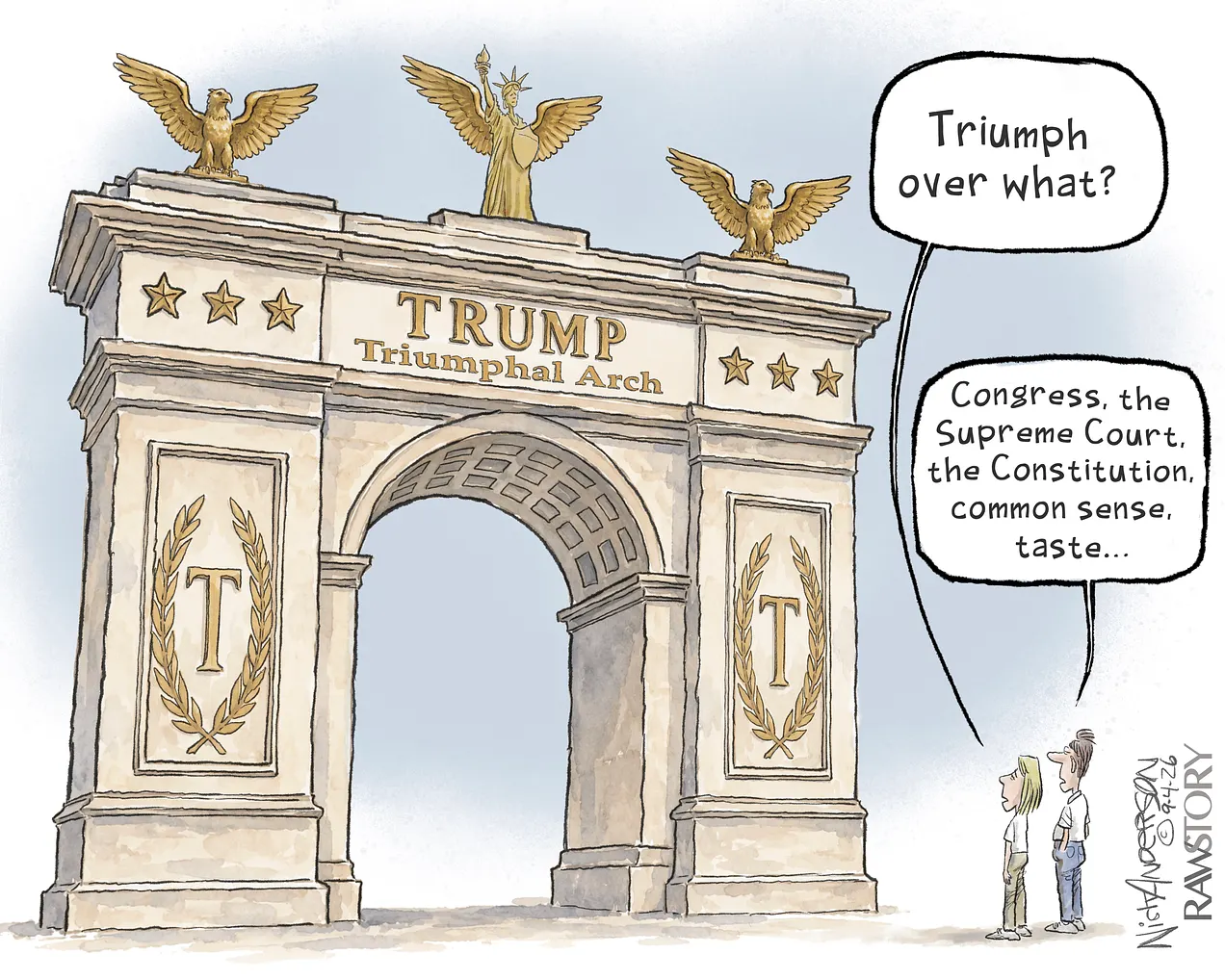
If the Kennedy Center story weren't happening in full public view, it would be hard to believe. First, Trump took over the board of the Center, which apparently is something all previous presidents could have done, but chose not to. He politicized the Center, alienating both the artist community that performs there and the Washington-area audience that attends. His hand-picked board added his name to the Center, in violation of the legislation that established it. When a court said no to this, his board tried various other schemes to attach Trump's name to the Center, which the court has also said no to. Then he started talking about tearing it down. He's been quite explicit about it: Put his name on the building or it won't survive.
If we’re going to save the Kennedy Center, I think the Trump administration should be given recognition for doing so.
I can't think of any comparable case for any previous president: Name this thing after me, or I'll tear it down.
Pundits are explaining this as childishness or petulance or some such. To me, it looks like mental illness.
Meredith Blake at The Contrarian has a good summary of the Ed Sheeran controversy. Sheeran himself is about as uncontroversial as a musician gets. But the opening act on his tour was the rapper Macklemore, who made pro-Palestinian statements during a recent concert. This brought down the wrath of the pro-Netanyahu Robert Kraft, who owns the New England Patriots and Gillette Stadium, one of the Sheeran tour venues. He organized resistance to Macklemore, who was then removed from Sheeran's tour by the promoter.
Sheeran has claimed that wasn't his decision, and that he doesn't make political statements. Then the other musicians opening for him then pulled out.
The debacle has thrown Sheeran’s tour into chaos and resulted in a rare PR crisis for a musician who is usually about as incendiary as a bowl of oatmeal. But it has demonstrated one thing: despite what Sheeran would like to believe, being apolitical is not really an option for an artist with a global platform in 2026. That’s because many of the artists who do opt to speak out in this climate, particularly on Gaza, face severe consequences, disproportionate backlash, and bad-faith allegations of antisemitism.
and let's close with something generic
Writing new English subtitles to Hitler's breakdown rant in "Downfall" is practically its own genre of political satire. Here's the latest Iran-war version.