So, how did we get here? Not because one party discovered a winning campaign slogan, a charismatic leader, or because of one presidential election. We arrived here because one political movement developed a deep understanding of how power operates within the American constitutional system.
- John F. Terzano, "The Long Game"
This week's featured post is "Power is more than just votes."
Ongoing stories
- Trump's assault on American democracy. Trump's social media company is proposing to formalize insider trading: For $100K, a bank can get early access to his Truth Social posts which often move markets.
- Climate change. Wildfires aren't completely out in France and Spain, but they've started now in Greece and Washington state.
- Iran War. We're back to Trump claiming he has restarted talks, but Iran saying they don't know what he's talking about. Maybe he's just running out of missiles.
- Ukraine. With the US providing no aid, Ukraine is unable to stop Russia ballistic missiles. Russia is targeting grain shipments from Odessa, essentially treating the world food supply the same way Iran is treating the world oil supply. Meanwhile, Russia is losing about 40,000 soldiers a month.
This week's developments
This week everybody was talking about the Iran War
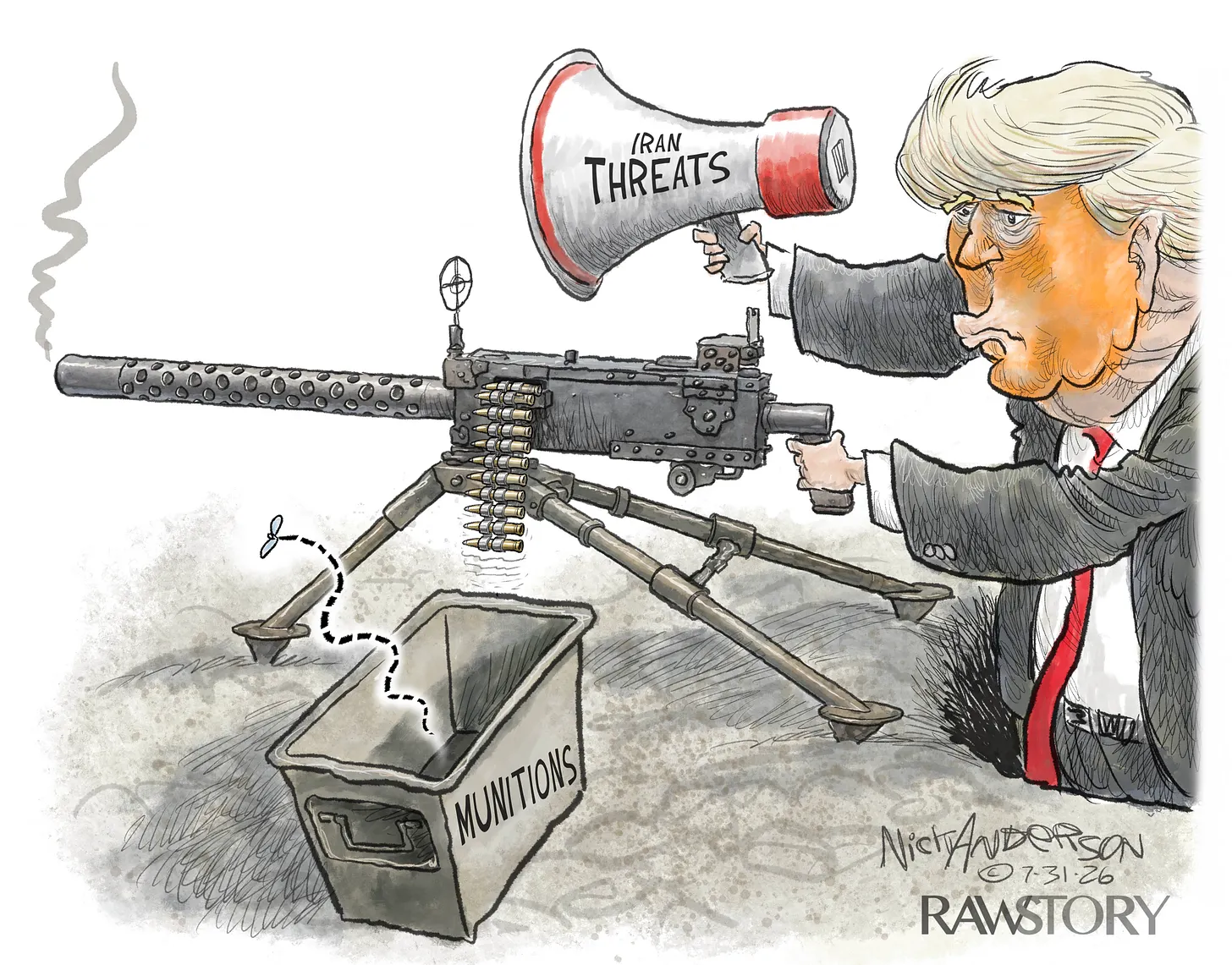
Early on, critics of the war in Iran pointed to the Trump regime's lack of any definition of victory or plan to get there. The prevailing strategy (if you can call it that) seemed to be that if we just killed enough people and blew up enough stuff, good things would happen. Most media talking heads found this unconvincing. But even those who couldn't see how we were going to win rarely raised the possibility that we might lose, or perhaps even were in the process of losing. Inside the MAGA echo chamber, that judgment is still viewed as heretical and perhaps even absurd. (How could we be losing? We're still the stronger power. We can hurt them much more than they can hurt us.)
Little by little, though, the idea that the US was losing began to break through. Center-left pundits breathed a sigh of relief when the memorandum of understanding was signed: Perhaps it would provide a face-saving way for Trump to end hostilities while quietly accepting an outcome placing the US and its allies in a somewhat worse position than before the war started -- which is what defeat really means.
But the vagueness in the MOU could not be resolved to both parties satisfaction, so once again missiles started flying and oil stopped flowing.
This time around, though, observers are being bolder in their assessments. Lately I've begun seeing not just admissions that Trump's war is lost, but analyses of why and how it was lost. Military thinkers like Phillips O'Brien have been saying this for a while. But that boldness has now begun to filter out to closer-to-the-mainstream pundits like Paul Krugman.
Krugman starts with a simple point: The US has lost wars before: Vietnam, Afghanistan, and arguably Iraq. But this loss seems different: The main problem isn't that the public is losing the will to keep fighting (though it is). This time there's a real military reason to sue for peace: We're running out of munitions -- so much so that our ability to fulfill our other military commitments is in doubt.
He points to this chart from the Center for Strategic and International Studies, which estimates that (even if we stop the war immediately) we won't fully replenish our supply of Patriot missiles until 2029.
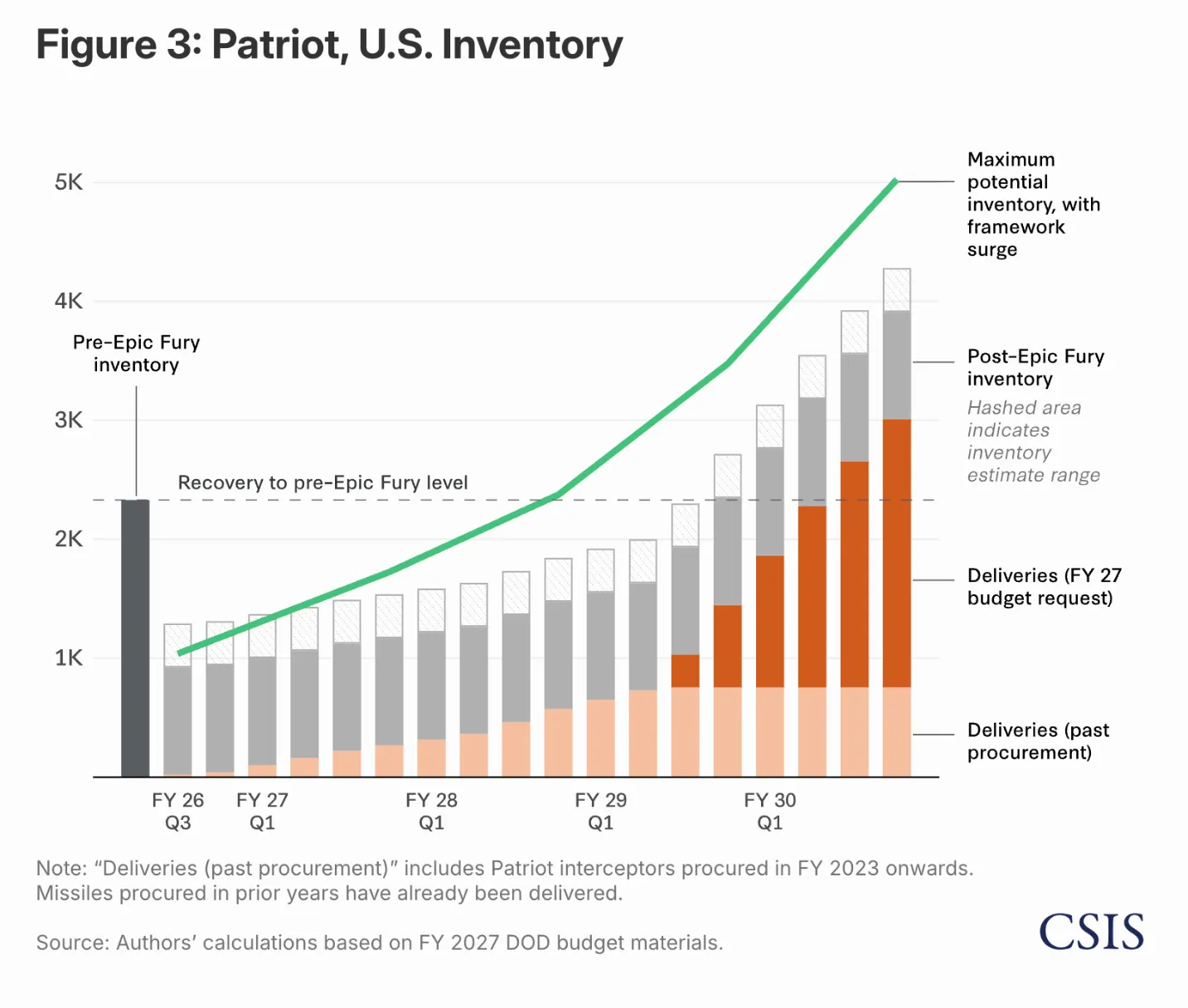
Imagine how you would look at that graph if you were Taiwan counting on the US to protect it from China, or our NATO ally Estonia evaluating a threat from Russia. Protect us with what? you might wonder.
The regime's response to this observation is to divert attention from it.
The administration’s response to such reports, exemplified by recent remarks by Mike Waltz, the US ambassador to the United Nations, is that
· Munitions aren’t depleted
· Anyone leaking the fact that they are depleted should go to jail
· It’s Joe Biden’s fault
Given the nature of Trump-speak, Waltz’s statement is in effect an admission that the U.S. military is now in deep trouble.
Krugman goes on to wonder how that happened, and locates the problem in Trump's fundamental unwillingness to face unpleasant facts, and his kill-the-messenger attitude when someone tries to make him do so: Defense Secretary Pete Hegseth doesn't want to tell Trump the bad news, the survivors of Hegseth's purge of the top generals and admirals are unwilling to tell Hegseth the bad news, and so on down the line.
In nutshell, this is the same problem that Vladimir Putin has faced in Ukraine. He keeps making mistakes because he doesn't get accurate information. And he keeps getting inaccurate information because he punishes people who try to make him recognize his past mistakes.
And there's another resemblance between the Trump Pentagon and Putin's military:
Pete Hegseth and Donald Trump began with an astonishingly stupid theory of war: the belief that performative masculinity is how you win. Hegseth literally believes that the secret of military might in an age of AI-enabled drones that can travel hundreds of miles is more testosterone. ... [T]he fixed belief that “lethality” is how you win surely led to basic inability to anticipate the blindingly obvious: that we have a limited supply of sophisticated weapons and that the Iranians would close the Straits of Hormuz.
and Todd Blanche
Apparently Blanche has made a deal with Republican Senators John Cornyn and Thom Tillis to save his nomination.
Acting US attorney general Todd Blanche issued a formal order late on Sunday terminating Donald Trump’s $1.8bn “anti-weaponization fund” to compensate his political allies, a move that follows weeks of negotiations with two Republican senators who were blocking his nomination to become attorney general.
Blanche has been claiming under oath that the fund was dead, but had refused until now to issue a formal order terminating it. President Trump still strongly supports the idea, so no one believed the fund wouldn't revive again as soon as Blanche was approved.
The document released by Blanche on Sunday night also limits the scope of another provision of the settlement that provided broad immunity for Trump and members of his family from tax audits. It clarifies that the tax audit immunity agreement “applies only retroactively” to claims open at the time of the settlement and does not protect the president from examination of future tax filings.
The Senate Judiciary Committee, where Cornyn and Tillis both are members, will vote on Blanche's nomination tomorrow.
The slush fund, which would reward Trump loyalists for beating up police officers on his behalf, was wildly unpopular and hasn't been implemented. But Trump continues to insist that the slush fund is a great idea. He describes the violent January 6 thugs as
the great American Patriots who were hunted down like dogs and whose lives were unfairly and illegally destroyed by the Crooked Joe Biden Administration. ... Perhaps there has never been a group of people treated so badly in our Nation’s history. They are suffering still, many ruined, and I felt that they should be given compensation for what has been done to them. ... I will always feel that these victims of government abuse should be paid back for what they were forced to endure
So look for them to get taxpayer money somehow, and don't be surprised when Blanche cooperates.
But I will be surprised if Blanche cooperates with anybody trying to bring Epstein conspirators to justice. New Mexico is investigating what happened at Epstein's Zorro Ranch near Santa Fe. But DoJ has not responded to state investigators' request for documents. Probably they'll have to sue.
and the climate
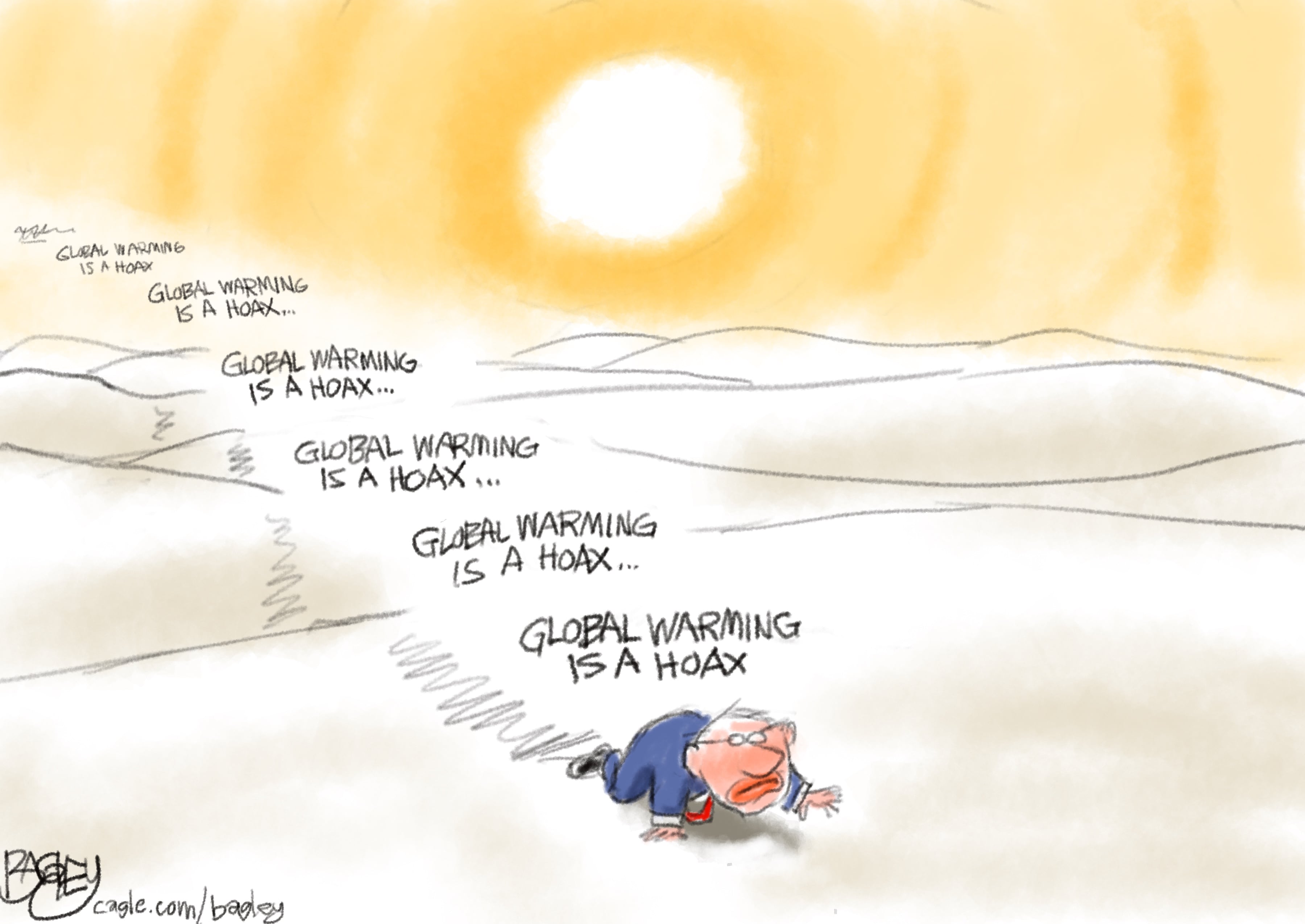
Alexander Hurst sees the French and Spanish wildfires as the result to environmental warfare by the United States, which is doing its worst to undermine the fight against climate change. The EU, he says, should retaliate economically.
there is something additional of consequence that we can do: use the power of the single market to make the world’s worst ecological actor change course, or at least make it pay to fund the global effort to adapt to the climate crisis. ... Let’s extend the EU’s emissions trading system (ETS) carbon market to all sectors, beef up the “carbon border tax” to protect against retaliation, slap tariffs on finished goods and services from the US that have easy substitutes and place export taxes on materials and intermediate components used in US-located production. All that cash could then be pooled, shared and earmarked for decarbonisation and adaptation.
and the Michigan Senate race
Abdul El-Sayed appears to have a commanding lead going into tomorrow's primary. He's supposed to be one of the "socialist" candidates (though he denies the label), while competitor Haley Stevens is the candidate of the Democratic establishment. So the usual "centrist" or "moderate" voices in the party are freaking out.
I'm not seeing it. Like any candidate, El-Sayed's statements can be cherry-picked for something that sounds radical, but when I listen to longer clips I don't get that vibe from him. El-Sayed is a Muslim, a child of immigrants from Egypt, and a critic of the Israeli war crimes in Gaza, while Stevens is backed by AIPAC, so some combination of Islamophobia and antisemitism is in the air, though the candidates haven't explicitly invoked it.
If El-Sayed does win, especially if he wins by a large margin, look for pundits to go wild about the socialist takeover of the Democratic Party. But I think Vox' Astead Herndon has the better frame: It’s not the left rising. It’s the center falling.
If you ask people what people like Bernie Sanders stand for, they'll tell you about Medicare for All and free college and all sorts of things. But mainstream Democrats seem (as Herndon says) "rudderless". They're not Trump, but what are they?
I don’t think the Democratic base agrees with every position articulated by successful left-wing candidates — like “all deportations are wrong” (as NYC’s Darializa Avila Chevalier told me) — or have suddenly become committed democratic socialists. But I do think the left is on the right side of the gateway issues the base is currently prioritizing: a working-class-led affordability agenda, a skepticism of artificial intelligence, and a moral opposition to President Donald Trump’s war against Iran and to Israel’s campaigns of violence in Lebanon and Gaza. Those issues, more than any others, have defined the Democratic Party’s internal battles since 2024. ...
Stevens, [Rep. James] Clyburn, and the party’s leadership would prefer to make this a referendum on the left — on the acceptability of its candidates and its media figures. But the base is communicating something else: a lack of confidence in the center, and in a version of establishment politics that prizes seniority and loyalty over voters’ values. Establishment collapse also explains the Democratic results that don’t fit neatly on the moderate vs. progressive binary: like Attorney General Phil Weiser’s victory in Colorado or whatever is happening in the Wisconsin governor’s race.
As I explained a few weeks ago, we're not talking about adopting a whole new economic system. We're just arguing about where to draw the line between the public and private sectors.
Here's the funny thing: After all the scare-talk about "Communists", it's the Trump administration that wants to own the means of production.
Critics of the Democratic Party keep telling us that nobody cares about democracy issues, and that instead the party's focus needs to be on affordability and other kitchen-table issues. Here, Pete Buttigieg shows how you make the connection:
Gerrymandering lets politicians choose their voters instead of the other way around. Until we end that, it will remain difficult to achieve the things most Americans already agree on: higher wages, lower household expenses, and better services that become possible when billionaires start paying their fair share in taxes.
Back in 2000, John McCain came from nowhere (polling below the margin of error) to be George W. Bush's main challenger in the Republican primaries. He did it by framing his central issue -- campaign finance reform -- exactly like that: No matter what you want out of our government, you won't be able to get it if we lose democracy.
and you also might be interested in ...

Felony charges against former Olympian David Hearn have been dropped.
Review: Trump's made a sweetheart deal with a contractor to renovate the Lincoln Memorial Reflecting Pool. The contractor screwed up, resulting in the pool lining peeling. Because Trump can't take responsibility for even the smallest mistake, he needed to blame someone else. So he announced that the pool had been vandalized. Under intense pressure to find a vandal, US Attorney Janet Pirro indicted Hearn.
Friday, Pirro dropped the case, citing new information that she got from the Interior Department about -- wait for it -- "flawed installation by the contractor". Pirro, a former Fox News host, is one of the most subservient US attorneys out there, but even she realized she could not go to court with the case she had.
Trump, of course, still is having none of it.
To me, it was a pure case of VANDALISM, that included the grass, which had a big 86 47 emblazoned in giant letters on it, and other elements of the surrounding area. There may have been some contractor difficulty, but the major damage was caused by VANDALS!
The Guardian tells the whole sad and sordid story from the beginning.
Luis Andrade was brought to the US when he was three, and became valedictorian of his 2024 high school class before entering TCU. He has now been deported to El Salvador.
Another way that ICE detention centers resemble concentration camps: ICE doctors have force-fed at least 10 detainees on hunger strikes.
Forcing medical procedures on detained hunger strikers is seen as torture by many human rights groups and medical organizations. According to medical ethicist Dr Matthew Wynia, the director of the center for bioethics and humanities at the University of Colorado, medical staff follow a code of ethics that respects patients’ bodily autonomy. ... “The idea of health professionals serving as agents of the state, rather than protectors of our patients, has a notorious history. And for the medical profession, we really don’t want to go down that path again,” Wynia added.
Back in March, ICE released a Haitian immigrant with mental-health issues. She was wearing summer clothes in Pittsburgh with temperatures in the 20s. She froze to death at a bus stop. Her family is now suing.
Not sure what to do with this factoid: Organic eggs from free-range hens have roughly twice the carbon footprint of factory-farm eggs. That sounds bad, but then you get to the reason why:
This is because organic free-range models need more chickens for the same number of eggs produced, as birds living in cages tend to be more efficient.
The frame here is that we're looking at living beings purely as factors of production. So this living being is less efficient than that living being. That attitude seems to me to be a big part of the problem. I can imagine a similar study pointing out the virtues of using slaves for farm labor.
The article goes on to note that the organic eggs might be better for the environment in other ways, like pesticide toxicity and biodiversity. Also, the study was based on data from 2009-2010, so it would not account for more recent changes in organic chicken-raising.
Steve Benen on Maddowblog examines a White House claim that Trump "does not bluff" and finds the exact opposite to be true.
The bottom line is unsettling but simple: The incumbent president often just … says stuff. Maybe he intends to do what he says, maybe he just enjoys making declarations that sound good in his mind, or maybe he tries to follow through but can’t find lawyers willing to go along with his weird schemes.
Given this context, I'm amazed how often Trump gets quoted in the media, and even moves markets with his meaningless words. I am reminded of a Shakespearian insult I recent heard repeated:
I wonder that you will still be talking, Signior Benedick, nobody marks you.
and let's close with something astronomical
So we've all seen sunrise and moonrise, and you've probably seen video astronauts have made of the Earth rising over the Moon. Well, this is like that, but rarer: Here's a video of Saturn rising over the Moon, taken through a ground-based telescope.

