Monday, October 3, 2016

Oily Opinions

It’s not that Trump is saying things he believes to be false. It’s that he doesn’t seem to have beliefs at all, not in the way people typically talk about beliefs — as mental constructs stable across time and context. Rather, his opinions dissolve and coalesce fluidly, as he’s talking, like oil on shallow water. That’s why he gives every indication of conviction, even when, say, denying that he has said something that is still posted on his Twitter feed, or denying that he said something that he in fact said on live television, in front of millions of people, just minutes earlier.

- David Roberts "The question of what Donald Trump 'really believes' has no answer"

This week's featured post is "Investigative Reporters and Donald Trump: The 9 Best Articles".

This week everybody was talking about the Clinton/Trump debate (and Miss Universe 1996)

A week ago, the polls looked like a dead heat, and the momentum was still with Trump. Last Monday's debate seems to have changed that dynamic. But not because we learned anything new about the candidates' philosophies or programs.

I'm not even sure it was the debate itself that moved the polls. Sure, Clinton did look sharper and Trump made mistakes. But the more serious problem for Trump came afterwards. He spent the rest of the week off-message, overcome by his inability to let go of any argument that he's not winning. All week he's been proving the truth of what Clinton said in her convention speech:

A man you can bait with a tweet is not a man we can trust with nuclear weapons.


First, there was the Miss Universe flap. Josh Marshall pointed out how easily Trump could have stepped around the whole issue.

Anyone with the most basic communications experience or simply a conscience knows there's a simple and solitary way to deal with something like this: "We quarreled years ago. I'm sorry we did. That's a long time ago. I wish her the best." Done and done.

But no. As with the Khan family, Trump took the attack personally and couldn't let it go. Someone had implied he did something wrong, and he never does anything wrong.

He was still fuming in the wee hours of Friday morning. Clinton described this as "unhinged, even for him. Really, who gets up at 3 o’clock in the morning to engage in a Twitter attack against a former Miss Universe?" And Elizabeth Warren chimed in, tweeting at Trump: "You never tweet at 3am with ways to create new jobs for workers or hold Wall Street accountable."

So does insulting a young woman 20 years ago mean Trump should never be president? No. It may not cast him in a positive light, but it's a minor event far in the past. Does his reaction this week prove Clinton's point that he is "temperamentally unfit" for the presidency? Yes it does. Ezra Klein did the best job of explaining why: Hillary set a trap for him and he has spent a week flailing in it. If he were president, ISIS and Russia and China could do the same thing.

The problem is that Trump is predictable and controllable. ... As unpredictable and uncontrollable as he is to his allies, he is exactly that predictable and controllable to his enemies, and to America’s enemies.


Trump made two other unforced errors: He said "That makes me smart" when Clinton suggested he hadn't paid any income tax. Ross Rosenfeld responded in The Hill:

I guess the rest of us are just stupid because we have to pay taxes. If only my daddy had left me a real estate empire, a host of political and financial connections, and no morals whatsoever — then I, too, could be "smart" like Donald Trump.

And on his own, Trump brought up his insults directed at Rosie O'Donnell, saying:

Somebody who’s been very vicious to me, Rosie O’Donnell, I said very tough things to her, and I think everybody would agree that she deserves it, and nobody feels sorry for her.

Lawrence O'Donnell said what I was thinking: "She deserves it. That is what every man guilty of spousal abuse always thinks." So what exactly did Rosie do to deserve being called "disgusting" and "a fat pig"? She made fun of Trump on TV ten years ago. He can't let it go.


The claim that Trump pays no taxes might be true, at least for a long stretch of years. The New York Times got hold of a few pages of Trump's state and local income tax returns from 1995. They show Trump declared a huge loss, presumably on the collapse of his Atlantic City casinos.

Tax experts hired by The Times to analyze Mr. Trump’s 1995 records said that tax rules especially advantageous to wealthy filers would have allowed Mr. Trump to use his $916 million loss to cancel out an equivalent amount of taxable income over an 18-year period.

I feel like this is half a story, and I hope we see the other half before we vote. Unanswered questions: Is that loss real, or the product of creative tax accounting? Did he in fact use it to pay no taxes in subsequent years?


Trump once again used that I-could-talk-about-your-mama-but-I-won't tactic that we all remember from fourth-grade recess. (Build your vocabulary: The technical name for this is apophasis.) Even more immature is that both he and his son Eric expect credit for not bringing up what they just brought up by talking about how they weren't going to bring it up.

If Trump starts the conversation about Bill Clinton's infidelity, here's how it ends: Chelsea Clinton explains on TV how grateful she is that her parents held their marriage together, so she didn't have to go through a divorce at age 7 like poor Eric Trump did.

and there were some unusual newspaper endorsements

The New York Times' endorsement of Clinton and denunciation of Trump really shouldn't have surprised anyone. That The Washington Post also dislikes Trump wasn't that big a shock either.

But The Arizona Republic had never endorsed a Democrat in its 126-year history, until Tuesday.

Clinton has the temperament and experience to be president. Donald Trump does not.

USA Today also has never endorsed a presidential candidate, and it still hasn't, exactly. But it did take a side. Its Editorial Board "does not have a consensus for a Clinton endorsement." But the Board could agree on this:

This year, the choice isn’t between two capable major party nominees who happen to have significant ideological differences. This year, one of the candidates — Republican nominee Donald Trump — is, by unanimous consensus of the Editorial Board, unfit for the presidency.

The Cincinnati Enquirer has "supported Republicans for president for almost a century", but this time it says

Clinton is a known commodity with a proven track record of governing. ... Trump is a clear and present danger to our country.

The Dallas Morning News last endorsed a Democrat for president "before World War II", but this time it says

There is only one serious candidate on the presidential ballot in November. We recommend Hillary Clinton.

Trump has not managed to get a single major newspaper endorsement (though the conservative Washington Times and Wall Street Journal have yet to commit themselves, and it's not hard to tell who The National Enquirer is rooting for). Even New Hampshire's conservative voice, The Union Leader, has defected to Libertarian Gary Johnson. So have The Chicago Tribune and The Detroit News (breaking a 143-year-old Republican tradition).


Along the same lines, the NYT's Ross Douthat also makes the conservative case against Trump:

Set aside for a moment Trump’s low character, his penchant for inflaming racial tensions, his personal corruptions. Assume for the sake of argument that all that can be folded into a “lesser of two evils” case.

What remains is this question: Can Donald Trump actually execute the basic duties of the presidency? Is there any way that his administration won’t be a flaming train wreck from the start? Is there any possibility that he’ll be levelheaded in a crisis — be it another 9/11 or financial meltdown, or any of the lesser-but-still-severe challenges that presidents reliably face?

I think we have seen enough from his campaign — up to and including his wretchedly stupid conduct since the first debate — to answer confidently, “No.” Trump’s zest for self-sabotage, his wild swings, his inability to delegate or take advice, are not mere flaws; they are defining characteristics. The burdens of the presidency will leave him permanently maddened, perpetually undone.

and Congress avoided another government shutdown

The new federal fiscal year began Saturday. Wednesday, Congress avoided a shutdown by passing a bill to fund operations through December 9. Republicans gave in to Democratic spending requests on issues that really shouldn't be controversial or partisan: Flint's water crisis, the Zika virus, and opiod addiction. Money related to the Louisiana floods was also in the bill. Democrats didn't get everything they wanted though: the SEC still can't take "action to increase transparency in public companies’ political spending".

Not so long ago, we all took for granted that Congress would figure out some way to keep the lights on. Now it's considered an accomplishment.

but Obama suffered his first veto override

This is kind of an odd story. Some families of 9-11 victims would like to sue Saudi Arabia for its alleged role in the attack. The problem is a legal principle known as sovereign immunity, which prevents people from suing foreign governments. Recently, Congress passed the Justice Against Sponsors of Terrorism bill to allow these suits. President Obama vetoed it, and Congress just overrode his veto, making the bill a law.

Overriding a veto takes a 2/3 votes in each house, so Republicans couldn't do this by themselves. Apparently, congressional Democrats decided that opposing 9-11 victims right before an election was too politically dangerous, so most of them supported the override.

The problem is that when you take some action against a foreign government, it can respond. So Saudi Arabia, or maybe other countries, might start allowing their citizens to sue the U.S. for the damages we cause. This could result in the kind of huge mess that sovereign immunity is supposed to avoid.

So now congressional leaders are having second thoughts about what they've done, and Republicans are blaming President Obama for reasons that really defy analysis. Mitch McConnell said:

Because everyone was aware who the potential beneficiaries were, but nobody focused on the potential downside in terms of our international relationships. And I just think it was a ball dropped. I wish the President -- and I hate to blame everything on him and I don't -- but it would have been helpful had ... we had a discussion about this much earlier than the last week.

Because expecting Congress to do its own research into the consequences of its actions is setting the bar way too high. And McConnell listens so well when Obama tries to tell him something.

and you also might be interested in

Shimon Peres died. At 93, Peres was described as the "last link to Israel's founding generation". Because of that symbolic role, the articles this week about his death and career often say as much about the author's attitude towards Israel and its current politics as about Peres.


David Roberts' article in Vox, "The question of what Donald Trump 'really believes' has no answer" doesn't meet the criteria for my "Investigative Reporters and Donald Trump: The 9 Best Articles" post, because it's analysis rather than reporting. But it's insightful and seems dead-on to me.

Roberts' claim is that people use language in two sometimes-conflicting ways: to communicate ideas and to position themselves in the social hierarchy. But Trump is almost always focused on the second purpose. The reason it is so frustrating to discuss the content of Trump's statements is that most of them were not intended to have content: They are pure maneuvers for dominance.

This point helps explain why Trump cannot ever admit a mistake or an error. He can only process accusations — of dishonesty, of cruelty — as social gambits, not as factual claims. To him, the demand that he apologize or admit error is nothing more than a dominance play. Apologizing is losing. ...

It helps explain why Trump has such a long and rich history of defrauding investors, refusing to pay contractors, using his charitable foundation as a piggybank, and declaring bankruptcy to escape debt. Contracts and promises are just plays in the game, not words that carry meanings or create obligations. You sign them or say them when you need to, to win whatever negotiation you are in, and then they are gone like smoke.


Rush Limbaugh warns: "Don't be fooled by fact-checkers."


Usually we only talk about needlessly aggressive police tactics when someone winds up dead, but here are two videos of the kinds of interactions that might be happening every day without making headlines.

Calling attention to stuff like this is sometimes labeled as "anti-police". But that's not it. There is good policing and bad policing. You can be against bad policing without being anti-police.

and believe it or not, I decided to cut Gary Johnson some slack

This week Libertarian candidate Gary Johnson had what he described as another "Aleppo moment": asked by Chris Matthews to name a foreign leader he admired, he couldn't come up with a name without the help of his VP, Bill Weld. It looked like he had no idea who else belongs to the world-leader club he wants to join.

I was ready to ridicule him over this, when I noticed that I can't list a lot of world leaders either. What's the name of the British woman who came into office after Brexit? Who's leading France? Spain? Italy? India? China? Iran? Iraq? Anywhere in Africa? Who's heads the junta that took over Egypt a few years ago? I'd have to look all that up.

If you're under 30, or maybe 40, you've lived your adult life in an era when the news media doesn't bother much with other countries, so you may take this kind of ignorance for granted. Maintaining a far-flung network of foreign correspondents is expensive, and the economics of the news business has gotten harsher, so for decades we've gradually gotten less and less international news. Most of the coverage we do get is shallower, the kind you can do by pulling video of some disaster off the internet and narrating it from New York or London.

It's all happened so gradually that the result is hard to notice, until something like the Johnson incident happens. But I'm about to turn 60, so I remember an era when the leaders of major countries were household names: Maggie Thatcher, Francois Mitterrand, Indira Gandhi, Willy Brandt, King (not Saddam) Hussein, Franco, Begin, Sadat, and so on. When I was a kid, Mad Magazine sometimes made fun of French President Charles de Gaulle, because of course their core audience of teens and tweens would know enough about him to get the joke.

As a society, we never talked it over and decided to become this ignorant of foreign affairs. It's just one of those self-reinforcing cycles market economies are prone to: The less you know, the less you wonder. It never occurs to us to ask why we don't know what we don't know.

and let's close with an ordinary person's act of kindness and courage

Would you pull a Coke can off the head of a skunk?

Monday, September 26, 2016

Tranquility or Justice?

It is not enough for me to stand before you tonight and condemn riots. It would be morally irresponsible for me to do that without, at the same time, condemning the contingent, intolerable conditions that exist in our society. These conditions are the things that cause individuals to feel that they have no other alternative than to engage in violent rebellions to get attention. And I must say tonight that a riot is the language of the unheard.

And what is it America has failed to hear? It has failed to hear that the plight of the negro poor has worsened over the last twelve or fifteen years. It has failed to hear that the promises of freedom and justice have not been met. And it has failed to hear that large segments of white society are more concerned about tranquility and the status quo than about justice and humanity.

- Martin Luther King, "The Other America" (March 14, 1968)

This week's featured posts are "The Skittles Analogy" and "The Asterisk in the Bill of Rights".

Some quick thoughts about the quote above: King gave this speech three weeks before his assassination, so it is very close to his last word on the subject. Such radical King quotes have largely been white-washed out of history. Instead, each January MLK Day is largely a celebration of color-blindness, as if the legacy of slavery and Jim Crow and sundown towns could just be waved off, and we could best move forward by pretending that none of it ever happened. King himself never held that view, as you will quickly see if you read entire speeches rather than a few carefully selected lines.

This week everybody was talking about Charlotte

Since the shooting of Keith Lamont Scott on Tuesday, Charlotte North Carolina has seen daily demonstrations. The demonstrations appear to have been mostly peaceful, but occasionally turned violent. One person was shot and eventually died, but police claim they didn't do it and no one seems to know who did. I haven't seen anything about whether the dead man was a protester.

To me, there seem to be two issues related to police killing blacks. First, the black community has no confidence in the investigative process, and I can understand why. Take the Freddie Gray case, for example. He was apparently healthy when Baltimore Police took him into custody, and then he died of a spinal chord injury. No one seems to be at fault; every charge has resulted in a not-guilty verdict. And in the wake of the Michael Brown shooting in Ferguson, the police seemed more interested in doing public relations for Officer Wilson than a neutral investigation.

There's at least a partial a solution to this part of the problem, and it's already law in Wisconsin: any police shooting requires an outside investigation; a police department can't be allowed to investigate its own officer.

Second, American police tactics are senselessly confrontational. Even in shootings that are judged to be justified, I'm often left wondering: "Did you really need to push it to that point?" Standard practice seems to be to start by barking orders, and then to keep escalating until either the orders are followed or the civilian is dead. That's what I see in the Scott video. In many other cases, people wind up dead because police don't understand they're dealing with someone who is deaf or mentally handicapped or otherwise incapable of understanding their demands.

Police in other countries don't behave that way, as this article about Scottish police tactics makes clear.


While we're talking about black lives not mattering, conservative columnist Glenn Reynolds tweeted "Run them down" in response to protesters who blocked an interstate in Charlotte. He then defended the tweet on his Instapundit blog. Twitter suspended his account for promoting violence, and USA Today suspended him as a columnist for a month.

If you think this isn't about race, imagine, say, white Catholics blocking a road leading to an abortion clinic. Would anybody suggest running over them?

and tonight's presidential debate

Like Frank Bruni, my main worry about the debate is that the bar for Trump has been set so low. If he makes it through the evening without calling Hillary a bitch or talking about his penis again, lots of people will be impressed by his performance. I remember the first 2000 debate, when Gore ran rings around Bush on substance, but the headlines the next morning were that Gore sighed too loudly.

One measure of what Hillary is up against is just how contradictory or constricting all the "expert" advice is: She shouldn't raise her voice or interrupt Trump. She should keep her answers short, but tell her own story and project a positive vision. Point out when he's lying but don't get mired in fact-checking. Show her intelligence and reveal his ignorance without sounding like a know-it-all. Either do or don't talk about the specifics of her plans for governing. And brush off his attacks as silly.

And then there's sexism. A woman can't possibly look "presidential", because the American people have no image of a woman being president. And I can guarantee that tomorrow morning Trump will not be criticized for shouting, frowning, interrupting, dressing wrong, blustering, not showing proper respect, or any of the things Clinton has to be on guard against. Anna Waters, a Northwestern student who debated in high school, outlines all the built-in disadvantages female debaters have to overcome. Another high school debater complains about the challenge of "trying to both confront stereotypes but at the same time being weirdly beholden to them".

and you might also be interested in

The National Museum of African-American History and Culture opened this week on the National Mall in Washington, DC.


Hottest summer ever.


John Oliver compares Hillary's scandals to Trump's in some detail, and then concludes:

This campaign has been dominated by scandals. But it is dangerous to think that there is an equal number on both sides. And you can be irritated by some of Hillary's; that is understandable. But you should then be f**king outraged by Trump's.


If you've been thinking that Libertarian presidential candidate Gary Johnson represents the "good" side of conservatism, you might want to think again. When he was running for president as a Republican in the 2012 cycle, he brushed off any concern about global warming, arguing that "In billions of years, the sun is going to actually grow and encompass the Earth, right? So global warming is in our future." He went on to call for building new coal-fired power plants.

In case the insanity of this remark isn't already obvious to you, imagine applying the logic to other issues: There's no point worrying about nuclear war, because the sun is eventually going to burn all our cities anyway. And after the solar catastrophe, who's going to care what our national debt was?


warren2

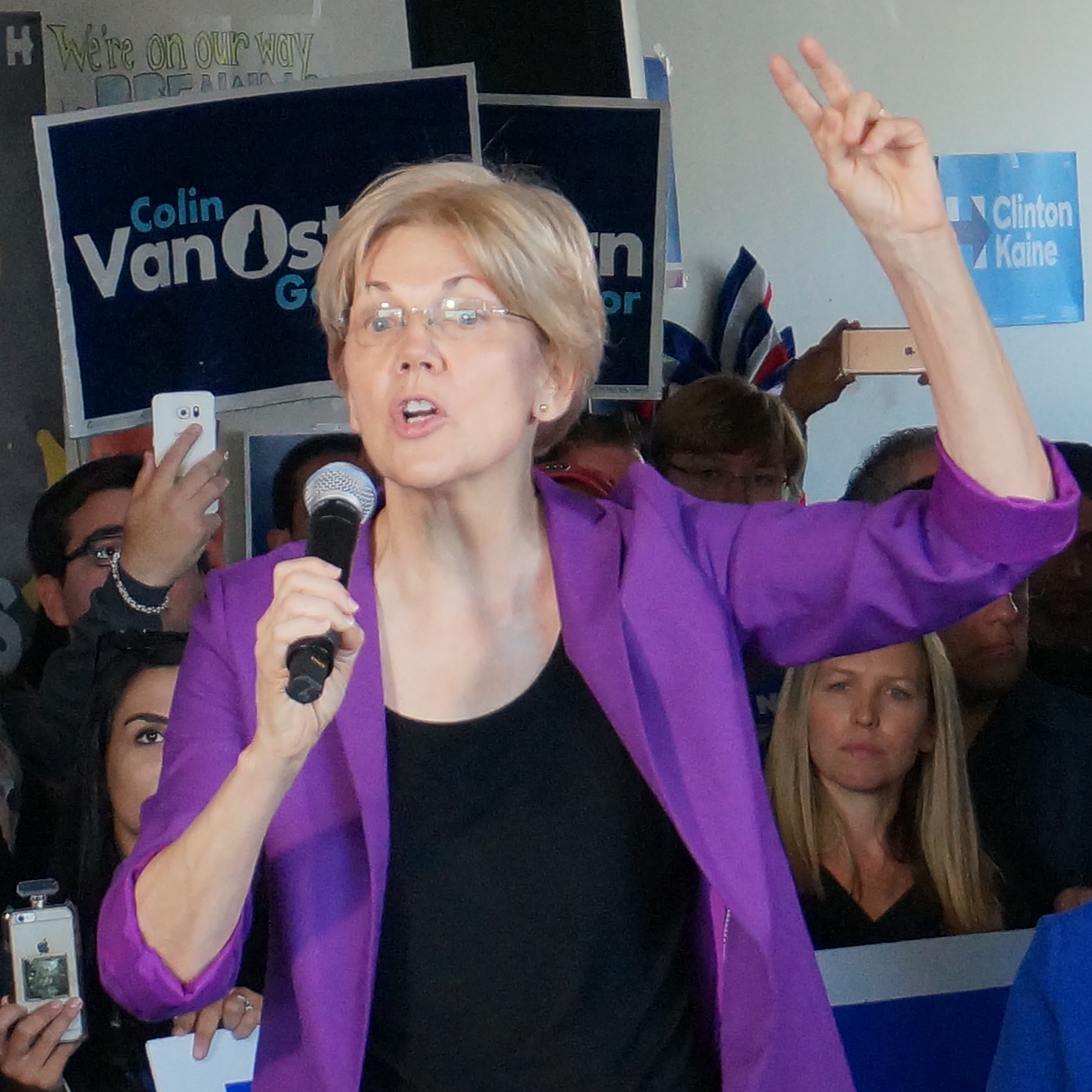
Elizabeth Warren crossed the border to Nashua Saturday morning to give a pep talk to the door-knockers and phone-bankers gathered at the local Democratic headquarters. I had a chance to snap this picture.

She said she was going to talk about three things that are in danger in this election, but then she added a forth. A Republican sweep in this election would result in

  • ending the Affordable Care Act and defunding Planned Parenthood
  • rolling back Dodd-Frank and the other Wall Street reforms that were passed after the 2008 collapse.
  • Donald Trump immediately appointing a Supreme Court justice.
  • "Donald Trump and the Republicans are making hate OK."

Her summary of Democratic values was

  • Every young person is entitled to get an education without being crushed by debt.
  • No one who works full-time should live in poverty.
  • After a lifetime of hard work, people are entitled to retire in dignity.
  • "Let me say something that is deeply controversial in Republican circles: We believe in science, that climate change is real, and we have a moral obligation to pass on a livable Earth."
  • Equal pay for equal work and a woman's right to choose.
  • When Wall Street CEOs break the rules, they should go to jail like anyone else.
  • Money should not own our government.

Two sports legends worth remembering today: Golfer Arnold Palmer died yesterday at 87. He was part of that first generation of athletes that TV made into icons.

And Dodgers broadcaster Vin Scully called his last game. Scully is 88, and has been announcing Dodger games on radio and TV since 1950, when they played in Brooklyn. The Dodgers gave him a great send-off: The final play he broadcast was a walk-off homer that clinched the division title.

and ... and ...

no, I just don't have a closing in me this week. Let's hope my sense of humor recovers soon.

Monday, September 19, 2016

The Snow Jobs of Yesteryear

Now, the engineers and managers believe with all their hearts the glorious things their forebears hired people to say about them. Yesterday's snow job becomes today's sermon.

Kurt Vonnegut, Player Piano (1952)

This week's featured post is "ISIS is losing, but what happens next?"

This week everybody was talking about where President Obama was born

Donald Trump's first foray into national politics was in 2011, when he was the leading voice in the Birther movement, which charged that President Obama was an illegitimate president, because he wasn't actually born in the United States. Trump often went even further, implying Obama's whole history was phony.

Our current president came out of nowhere. Came out of nowhere. In fact, I'll go a step further: the people that went to school with him, they never saw him, they don't know who he is. It's crazy.

As recently as Thursday, Trump still wouldn't admit that President Obama was born in the United States, but his campaign issued a statement giving him credit for

bring[ing] this ugly incident to its conclusion by successfully compelling President Obama to release his birth certificate. Mr. Trump did a great service to the President and the country by bringing closure to the issue that Hillary Clinton and her team first raised.

But Friday, Trump embraced that position himself:

President Barack Obama was born in the United States, period. ... Hillary Clinton and her campaign of 2008 started the birther controversy. I finished it.

In other words, he withdrew his lie about Obama (without apology), and substituted a new lie about Clinton: She started it.

Both Politifact and FactCheck.org looked at the Clinton-was-a-birther claim in 2015 and rated it false. This week ABC and Politico reviewed the evidence and agreed.

Neither Clinton herself or anyone connected with her campaign ever raised the issue in public (unlike Trump who talked about virtually nothing else for six weeks in 2011). Some 2008 Clinton supporters discussed it on the internet, but this was a far more tenuous connection than the current one between Trump and white supremacists like David Duke; you can't control who supports you or what they say. (Though you don't have to retweet their racist comments.)

The birther issue is -- rightly, I believe -- characterized as racist, because there was never any reason to raise it other than a desire to disqualify Obama. This tactic has a long history: As soon as blacks start applying for a position, qualifications that had never before been an issue require documentation that whites have never needed to produce, and whatever documentation blacks produce is always deemed suspicious or unacceptable for some invented reason.

It's disingenuous of Trump to take credit for the "closure" of Obama producing his birth certificate, when Trump himself continued to raise doubts after that. AP reports:

Trump repeatedly continued to question Obama's birth in the years after the president released his birth certificate. In August 2012, for example, Trump was pushing the issue on Twitter.

"An 'extremely credible source' has called my office and told me that @BarackObama's birth certificate is a fraud," he wrote.

Even in January of this year, Trump sounded skeptical when asked whether he now believed the president was a natural-born citizen.

"Who knows? Who cares right now? We're talking about something else, OK?" Trump said in a CNN interview. "I mean, I have my own theory on Obama. Someday I'll write a book."

This often-repeated lie has had its effect: An August poll showed that 72% of Republicans still either denied that Obama was born in America or refused to take a position. Previous polls had shown that Trump supporters were more likely to be birthers than other Republicans.

and the presidential race seems about even

Recent polls have Trump ahead in Ohio and Florida, and Nate Silver places Clinton's odds of victory at 60%, as low as that number has been since the conventions.


I wonder how many of you are experiencing the same psychological symptom I've noticed in myself. Sometimes when people repress an emotion, they start experiencing themselves as the object of the emotion rather than the subject. So if you're angry with somebody you don't want to be angry with, like a boss or spouse, you instead believe that they're angry with you. Jealous people imagine others are jealous of them, and so on. (The psychologists call this projection.)

The election is causing something similar in me: When I see evidence that large numbers of people are willing to make Trump our president, I feel deeply ashamed of my country and my fellow voters. But I try not to dwell on that, because what's the point? Later on, though, I'll notice that I'm feeling an excessive amount of shame for some comparatively trivial mistake of my own.

Anybody else noticing this? What kind of personal effect is the election having on you?


The first debate is just a week away. It will just be Clinton and Trump, since Jill Stein and Gary Johnson didn't qualify. The moderator will be Lester Holt of NBC. Here's the full calendar, with moderators.


Bernie:

This is not the time for a protest vote, in terms of a presidential campaign. I ran as a third-party candidate. I'm the longest-serving independent in the history of the United States Congress. I know more about third-party politics than anyone else in the Congress, okay? And if people want to run as third-party candidates, God bless them! Run for Congress. Run for governor. Run for state legislature. When we're talking about president of the United States, in my own personal view, this is not time for a protest vote. This is time to elect Hillary Clinton and then work after the election to mobilize millions of people to make sure she can be the most progressive president she can be.


Vox' Dara Lind describes how sexism impacts the Clinton campaign in "Nobody ever tells Donald Trump to smile".

For most of her career, Hillary Clinton’s been measured in comparison to men. She is less warm and authentic than her husband Bill Clinton or her 2016 opponent Bernie Sanders; she is less eloquent and transcendent than her 2008 opponent Barack Obama.

But in what way, precisely, is Hillary Clinton "less" than Donald Trump?

He frequently looks gruff and mean. He barely laughs at all, and never at himself. His speeches are frequently dark and angry. He shouts. He's condescending and never uplifting or inspirational. He brags.

If you actually subject Donald Trump to the same scrutiny Clinton receives, you’ll see that he doesn’t show any of the qualities that other politicians — and especially female politicians — are criticized for lacking.

And yet, while the content of his remarks is sometimes criticized, he escapes the constant style-heckling directed at Clinton.


The NYT's Timothy Egan comments on the vast public under-reaction to Trump's statement that we should have kept Iraq's oil, because "to the victor belong the spoils".

As with everything in Trump’s world, his solution is simple: loot and pilfer. “Take the oil,” said Trump. He was referring to Iraq, post-invasion. And how would he do this? There would be an open-ended occupation, as a sovereign nation’s oil was stolen from it. Of course, “you’d leave a certain group behind,” he said, to protect the petro thieves.

A certain group. Let’s be clear what he’s talking about: Under Trump’s plan, American men and women would die for oil, victims of endless rounds of lethal sabotage and terror strikes. That’s your certain group.

Another detail left out of Trump's idea: It's useless to take the oil unless you also control a corridor to the sea, so that you can export it. How big and how vulnerable would that occupation force be?


The story that Melania Trump came to America illegally seems to be based on bad reporting. I'm going to stop repeating it unless somebody comes up with better evidence, and I recommend the rest of you do the same.

but I decided to check in on the Islamic State

The featured post "ISIS is losing but what happens next?" reviews the military situation of the Islamic State, which is looking bad for them. But it also points out the limited goals that a military victory can win for us: As long as a disgruntled population feels alienated from a political solution, some of them are going to try force.

and the upbeat census report on income

For years, the story has been the same: The economy was growing, but wages -- and particularly wages for the poor and working class -- weren't budging. But Tuesday, the Census Bureau released its annual report on income and poverty, updating its numbers for 2015. NPR summarizes:

after a brutal economic recession and years of stagnation, real median household incomes rose from $53,718 in 2014 to $56,516 last year. That's a 5.2 percent rise — the first statistically significant increase since 2007.

That income statistic is still lower than it was in 2007, before the Great Recession, and its peak came in 1999, just before the Internet Bubble popped. But it least it seems headed in the right direction now. Also, poverty is down and more people have health insurance, particularly in the states that have expanded Medicaid the way the Affordable Care Act intended (until the Supreme Court struck that part down and gave states the option not to participate).

Matt Yglesias describes why he thinks the Census Bureau is measuring the wrong things, but thinks the ultimate result is that its report might be too pessimistic.

The ways in which the census’s data sets are flawed suggests the underlying reality might be even better than Tuesday’s rosy report suggested. But the uncertainty here should be acknowledged when we discuss the report.

Two of the flaws: Households are shrinking as more people live alone and there are fewer big families. So even a smaller household income might mean that individuals are doing better. (OTOH, if people want more children but can't afford them, per capita numbers might make them look more prosperous than they feel.) Also, the Census Bureau focuses on income as cash before taxes. So changes in your non-cash benefits or your taxes don't show up.

One resulting anomaly has been with us for decades: As the cost of health care rises, employers that provide health insurance see their cost-per-employee rise, but the employees don't see any comparable increase in income.

and you also might be interested in

Nearly three months after the Brexit vote, what it means is still unclear. The UK still hasn't invoked Article 50 of the EU charter, which would formally start a divorce process that must be over within two years. Prime Minister Theresa May -- remember, she took office after David Cameron staked his career on the Brexit vote and lost -- says that won't happen at least until after the new year.


The House Committee on Science, Space, and Technology is using its subpoena power to harass scientists whose results the Committee's Republican majority and Republican chairman don't like.

[Chairman Lamar] Smith’s subpoena-happy chairmanship hasn’t come out of nowhere. It apparently depends upon a conviction that the scientific community has a liberal agenda and that, if scientific results conflict with right-wing ideas, the scientists must be lying.

The new rules about House committees issuing subpoenas -- written by the Republican majority in 2015 -- make this kind of harassment easier.


The NRA is celebrating "a great day for freedom in Missouri": a new gun law, passed over Governor Nixon's veto, removes even the most common-sense restrictions:

  • Gun owners can carry concealed weapons anywhere that isn't specifically restricted, like court houses and jails. No permits or training programs will be necessary. Just buy your gun (federal background checks still apply), put it in your pocket, and go on with your day.
  • Local police lose much of their ability to deny gun permits to high-risk individuals, like, say, people with a long history of domestic violence or suicide attempts.
  • A new stand-your-ground provision applies in public places like parking lots. If you feel threatened, you don't have to retreat or otherwise avoid a confrontation. Just shoot your way out.

Kevin Ahlbrand, legislative director for the Missouri Fraternal Order of Police, raises a good question:

Our biggest fear is criminals who have not been convicted of a felony but are engaged in criminal activity will be legally carrying guns, and we’re now going to have to assume everyone is armed. When we show up to a scene and there are five guys with their guns out, what do we do?


An affordable medium-range electric car will be out later this year. It comes from one of those nimble, far-sighted little car companies -- General Motors.

"Affordable" in this case is relative, of course. The Chevy Bolt EV (not to be confused with the Chevy Volt, a plug-in hybrid that been around since 2011), will sell for $30,000 or so after a federal rebate and go 238 miles on a charge. That's still a significant chunk of change, but plug-in power is cheaper than gasoline, so the Bolt becomes a more reasonable investment after you factor in operating costs.

Electric-car pioneer Tesla also has a car coming out in the same cost range. It goes almost as far on a charge, but Tesla probably won't be able to make enough of them to satisfy demand. GM will.

200 miles has long been considered a breakthrough point on electric cars, because that range wouldn't crimp the style of the average American in day-to-day life. You're still not going to take a Bolt on a cross-country road trip, but you should be able to commute to work, go out to lunch, and run errands after you get home without worrying about how much charge you have left.


In other car-tech news, Uber is testing driverless cars in Pittsburgh. A NYT reporter tells of his ride.

If driverless vehicles get perfected and accepted, we'll see a new round of technological unemployment. I added up the employment numbers for the different types of drivers tracked by the Bureau of Labor Statistics and got about 3.8 million. The total number of people employed in the U.S. is around 151 million. So we're talking about 2.5% or so of all jobs. If you start thinking about people whose jobs depend on human drivers -- say they work at truck stops or at motels in the middle of nowhere -- the total goes higher.

That prospect got me reading Kurt Vonnegut's first novel, Player Piano, a 1952 dystopian vision of a low-employment society. That's where I found this week's opening quote.

and let's close with a sharp contrast

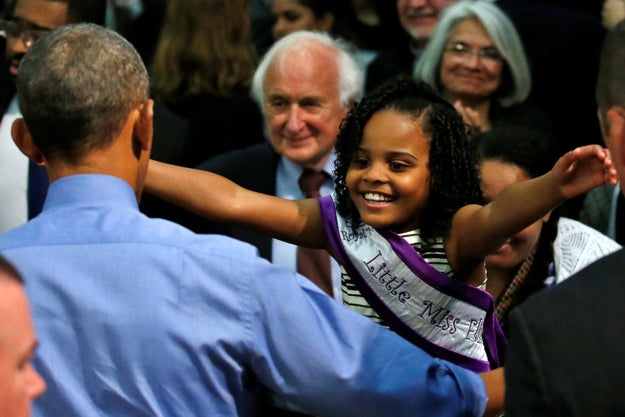
Here's Little Miss Flint's reaction to meeting President Obama.

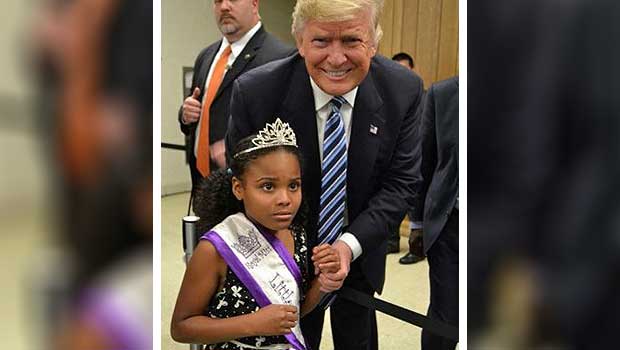
And here's her reaction to meeting Donald Trump.

Monday, September 12, 2016

So Clear

A mathematical theory is not to be considered complete until you have made it so clear that you can explain it to the first man whom you meet on the street.

David Hilbert

This week's featured post is "Instead of Dumbing Down". It's basically my explanation of how to explain things.

This week everybody was talking about the Commander in Chief Forum

This was supposed to be a preview of the presidential debates, with Clinton and Trump appearing on the same stage, one right after the other, and fielding questions from the same audience (military veterans on the aircraft carrier Intrepid, anchored in New York harbor) and moderator (Matt Lauer). If you missed it, you can watch the full video or read the transcript.

It's not obvious whether either candidate "won" the Forum, but the clear losers were Matt Lauer and the country. Each of the two interviews was terrible in its own way. Lauer opened Hillary's interview with a softball: "What is the most important characteristic that a commander-in-chief can possess?" But when her answer (steadiness) didn't give him the segue he wanted, Lauer badgered her into repeating the word judgment, which is the Trump-campaign codeword for a long list of stuff. That gave him his transition into a long discussion of her emails, leaving only a little time to talk about ISIS, and none at all for Russia, China, NATO, and a lot of other important matters.

Trump's interview consisted almost entirely of softballs, like "What kind of things are you reading as you prepare for the day in two months where you might be elected the next president of the United States?" When Trump repeated his predictable and easily refutable lie about being "totally against the war in Iraq", Lauer moved on without comment.


Josh Marshall believes that Lauer actually did Trump some damage by not challenging him:

he was a sort of Trump whisperer, nudging Trump on to expand on his ridiculous points. At various points he simply let Trump be Trump. And that turned out to be really bad for Trump.

He drew Trump into gobbledygook about his plan for fighting ISIS (which he either has had all along or is going to ask the generals for or is going to combine the two plans or something), into fawning over Vladimir Putin, into saying that rape in the military comes from putting "men and women together", into expressing his distrust of our current generals, into saying that we should have taken Iraq's oil, and so on.


Trump's valentine to Putin -- "he's been a leader, far more than our president has been a leader", admiration for his high approval rating (in a country where criticizing him can get you killed), and his "very strong control over a country" -- was subsequently echoed by Mike Pence and the Twitter followers of GOP public-opinion expert Frank Luntz.

Slate's Joshua Keating brings in the disturbing context:

Today’s Russia is a place where government officials are corrupt, life expectancy remains stubbornly low, young soldiers are sent to die in wars their government won’t even acknowledge, opposition politicians and critical journalists are murdered or arrested in alarming numbers, LGBTQ people are subject to state-sanctioned violence, and entire regions are run as the personal fiefdoms of despotic warlords.


Trump's evidence that he was against the Iraq War from the beginning (March, 2003) was an Esquire interview from August, 2004, as opposed to the interview before the war where he supported an invasion. But even to Esquire, he doesn't say what he would have done or not done, he just criticizes how the invasion has turned out. As National Review pointed out back in February:

In keeping with his penchant for playing all sides of every game, Donald Trump was silent on Iraq right up to the moment at which it turned nasty. He must not be allowed to pretend otherwise.

It's important to realize just how bizarre his re-remembering of history has been. In a Republican debate, he spun a wild fantasy about a delegation that came from the White House to "silence" him, because his criticism of the upcoming invasion was getting so much publicity in stories that no one can find now.


Combined with the continued tightening of the polls, the Forum "shocked and horrified" Jonathan Chait, who "had not taken seriously the possibility that Donald Trump could win the presidency" until witnessing this failure of journalism.

John Amato, though, wonders if the ultimate effect will be positive: The moderators of the debates must have been watching, and one hopes they will be trying not to make the same mistakes. This could be part of another turning: The Washington Post finally admits that "The Hillary Clinton Email Story is Out of Control".

In fact, Ms. Clinton’s emails have endured much more scrutiny than an ordinary person’s would have, and the criminal case against her was so thin that charging her would have been to treat her very differently. Ironically, even as the email issue consumed so much precious airtime, several pieces of news reported Wednesday should have taken some steam out of the story. ...

Imagine how history would judge today’s Americans if, looking back at this election, the record showed that voters empowered a dangerous man because of . . . a minor email scandal. There is no equivalence between Ms. Clinton’s wrongs and Mr. Trump’s manifest unfitness for office.

For what it's worth, the tightening in the polls may already have turned: Nate Silver's polls-plus model had its tightest spread on September 7, and has eased slightly since then.

and Hillary's health

Sunday, Clinton left a 9-11 anniversary event and had to be helped into an SUV; she looked like she was about to collapse. Later in the day, she was walking down a sidewalk, waving to people, and answering reporter's questions, saying she felt "great". Her doctor reports that she has been suffering from pneumonia, and got dehydrated.

The open question is how much mainstream cover this will give to all the wild conspiracy theories that have been spun about her health, including everything from seizures to brain damage.

and the "basket of deplorables"

At a fund-raiser Friday, Clinton separated Trump supporters into two baskets, which basically are the ones Democrats should be reaching out to and the ones we can't reach out to.

You know, just to be grossly generalistic, you could put half of Trump's supporters into what I call the basket of deplorables. They're racist, sexist, homophobic, xenophobic, Islamaphobic — you name it. And unfortunately there are people like that. And he has lifted them up. He has given voice to their websites that used to only have 11,000 people – now have 11 million. He tweets and retweets their offensive, hateful, mean-spirited rhetoric. Now some of these folks, they are irredeemable, but thankfully they are not America. But the other basket–and I know this because I see friends from all over America here–I see friends from Florida and Georgia and South Carolina and Texas–as well as, you know, New York and California–but that other basket of people are people who feel that the government has let them down, the economy has let them down, nobody cares about them, nobody worries about what happens to their lives and their futures, and they're just desperate for change. It doesn't really even matter where it comes from. They don't buy everything he says, but he seems to hold out some hope that their lives will be different. They won't wake up and see their jobs disappear, lose a kid to heroin, feel like they're in a dead end. Those are people we have to understand and empathize with as well.

Trump's people are trying to turn this into a gaffe comparable to Mitt Romney's 47% speech, but I'm not seeing it. The "deplorable" group -- the racists, sexists, homophobes, xenophobes, and Islamophobes -- is she wrong that they're deplorable? Is she wrong that they're united behind Trump, and that he is moving their rhetoric into the mainstream?

and the Kaepernick protest spreads

This weekend opened the NFL football regular season, and a number of players demonstrated in one way or another during the national anthem, by kneeling, raising fists, linking arms as a group, and so on. There's no telling where this goes from here. In the meantime, I'll yield the floor to the Liberal Redneck.

but there was good news from North Dakota

The Keystone XL Pipeline (rejected by the Obama administration last November) got all the headlines, but it's far from the only pipeline project. More recently, Native American groups have united to fight the Dakota Access Pipeline in North Dakota. Friday, it looked like they had lost, when a court rejected the request for an injunction stopping the project. But within hours, the Obama administration stepped in with a temporary halt until the Army Corps of Engineers could reevaluate.

and let's close with something adorable

Sometimes a lullaby just works.

Monday, September 5, 2016

Sure Signs

Official acceptance is the one unmistakable symptom that salvation is beaten again, and is the one surest sign of fatal misunderstanding, and is the kiss of Judas.

- James Agee, Let Us Now Praise Famous Men (1939)

This week's featured post is "Trump Voters: Where they're coming from, where they're going"

This week everybody was talking about the tightening polls ... or not

It's been a weird week to read political horse-race articles. On the one hand, a series of polls painted the presidential race as much closer than it was a few weeks ago, and one -- the USC/LA Times poll that has consistently been the poll most favorable to Trump -- even had Trump leading.

Simultaneously, I'm still seeing predictions of a Clinton landslide, or of a Republican "wipe-out" in the Senate, or even Democrats retaking the House.

What I think is going on is a confluence of several factors:

  • Clinton made the strategic decision to spend August building up her campaign in ways other than making public appearances. So she raised an incredible $143 million in August and continued to prepare an impressive get-out-the-vote infrastructure, both areas where she has a big advantage over Trump. But her voice all but vanished from the news shows.
  • To the extent that she got news coverage, it was all about nebulous pseudo-scandals (more about that below). None of the stories identified any specific wrong-doing, but they contributed to an atmosphere of suspicion. Meanwhile, what seem to me to be far more serious questions about Trump -- did he bribe that state attorney general or not? -- go virtually uncovered.
  • Trump managed to have it both ways on a number of issues, appearing to both soften and remain steadfast. I doubt that is sustainable.

I think Clinton continues to have a significant advantage, but the tightening polls makes it more likely that Trump will maneuver his way out of the debates. When he was far behind, the debates looked like his only chance to turn things around. But I find it unlikely that he will do well one-on-one against Clinton, because she knows her stuff and he doesn't. If he thinks he has a non-debate path to victory, he might find some excuse to skip them.

What Clinton really needs now is a positive turn, one that draws attention to her agenda and how it will help working people. I keep hearing Republicans say that Trump loses if the election is about him, but Clinton loses if the election is about her. I think there's a third path: Clinton wins if the election is about the country.

and Trump's Mexico trip

He talked nicely to the Mexicans while he was there, then came back here and gave a hard-line speech.

So far, he's managed to create a fog around what he would really do about immigration, other than build a fabulously expensive wall that Mexico really will not pay for, and which will not solve the immigration problem.

Sometimes he's just talking about deporting undocumented criminals, and "working with" the rest at some point in the future -- which is not far off from what President Obama is doing now. At other times he throws around numbers like 2 million deportations, which bear no resemblance to the actual number of criminals, unless you think all 11 million are criminals just for being here.


On the cost of the wall, BBC observes:

The 650 miles of fencing already put up has cost the government more than $7 billion, and none of it could be described, even charitably, as impenetrable, physical, tall, powerful, or beautiful.

It also doesn't cover the most difficult or remote terrain, where construction costs would be much higher. Recasting the existing fence as a wall, then adding 1000 miles more of it, would cost much, much more. (An engineer estimated $17 billion just for materials, excluding the cost of design, machinery, labor, or maintenance.)


The Hill makes an interesting point I haven't heard anywhere else: One reason we haven't had attacks by terrorists coming over the Mexican border is that Mexican and U.S. intelligence services are working together. If President Trump would alienate the Mexican government, that cooperation might go away.


One of Trump's regular themes is to highlight examples of violent crimes committed by undocumented immigrants and talk about the lives would be saved if we got rid of them. As many people have pointed out, the problem with this line of thought is that undocumented immigrants as a group commit fewer violent crimes than the rest of us.

I think pundits have been missing the obvious conclusion to draw from these facts: We should deport everybody, all 325 million residents of the United States. That would reduce crime within our borders to zero. Think of how many lives such a total-deportation policy would save.

and media coverage

A few big issues are interweaving, and I should probably do a long post on them soon. This CNN panel discussion is a good place to start:


A long time ago, Jay Rosen outlined the problems of the media's habits of campaign coverage, particularly its desire to "balance" stories by making them fit a both-sides-do-it, he-said-she-said narrative.

So you wind up with what Soledad O'Brien describes in this video: Clinton gives a detailed, well-reasoned speech outlining how Trump has invited white supremacists into the mainstream of American politics, and Trump calls Clinton "a bigot" without any supporting evidence whatsoever. The day's coverage is about how the candidates "traded charges" of racism, as if both statements are of equal merit.

Even worse this week was how hard major news outlets worked to find some sinister new story in the Clinton Foundation (when there just wasn't one), or in the release of the FBI's report on Clinton's email use (which Kevin Drum thinks "almost completely" vindicates her), all the while ignoring much more serious sets of facts about Trump: He gave a $25,000 contribution to the Florida attorney general, who then dropped an investigation of fraud complaints against Trump University. (Worse, the money came from his foundation, which cannot legally make political contributions, which then lied about it in its reports. Trump paid a penalty to the IRS for that violation.) Also, Trump Model Management illegally used foreign models on tourist visas, something Melania Trump has also been accused of.

and still Colin Kaepernick

One point I've seen in several places this week: When black protests disrupted neighborhoods in Ferguson, Baltimore, and Milwaukee, and especially when they turned violent, the chorus from the Right was that this was not an appropriate way for activists to make their point. But now that someone has found a completely silent, non-violent way to protest, that's not appropriate either. So what is the right way to make the point that racism is still with us and something needs to be done about it?

This discussion underlines the point I was making last year in "Why BLM Protesters Can't Behave": If you ever find yourself protesting something, and the Powers That Be pat you on the head and say, "Well done, that's the right way to protest" you can be 100% certain that you are wasting your time. Whatever you're doing will have no effect. As James Agee wrote nearly 80 years ago:

Every fury on earth has been absorbed, in time, as art, or as religion, or as authority in one form or another. The deadliest blow the enemy of the human soul can strike is to do fury honor. Swift, Blake, Beethoven, Christ, Joyce, Kafka, name me a one who has not been thus castrated. Official acceptance is the one unmistakable symptom that salvation is beaten again, and is the one surest sign of fatal misunderstanding, and is the kiss of Judas.


A few people asked the same question I raised last week: Why do we sing the national anthem at sports events anyway? Buzzfeed's Matt Soniak did the research:

After America's entrance into World War I, Major League Baseball games often featured patriotic rituals, such as players marching in formation during pregame military drills and bands playing patriotic songs. During the seventh-inning stretch of game one of the 1918 World Series, the band erupted into "The Star-Spangled Banner."...

After the war (and after the song was made the national anthem by a congressional resolution in 1931), the song continued to be played at baseball games, but only on special occasions like opening day, national holidays and World Series games.

During World War II, baseball games again became venues for large-scale displays of patriotism, and technological advances in public address systems allowed songs to be played without a band. "The Star-Spangled Banner" was played before games throughout the course of the war, and by the time the war was over, the pregame singing of the national anthem had become cemented as a baseball ritual, after which it spread to other sports.

Vox' Zack Beauchamp points out that it isn't Kaepernick who is bringing politics into football; the NFL is already doing that by playing the anthem in the first place.

Inserting the national anthem into sports events can never be “apolitical,” because patriotism isn’t apolitical. Remember, bringing politics into the event was explicitly the point back in World War I and II — they were trying to drum up support for a war effort.

He also comments that honoring America isn't the point any more, if it ever was; branding the NFL as patriotic is the point. The anthem-singing ritual doesn't promote patriotism, it exploits patriotism.

and you might also be interested in

Positive trends don't as much press as signs of the Apocalypse, but this one should:

There are 42 percent fewer teen births now than just seven years ago. In 2007, 4.2 percent of teenage girls in the United States gave birth. In 2014, the rate was 2.4 percent.

The reason seems to be increased use of contraceptives during a period in which teen sexual activity remained fairly constant. Abortion rates are also down.

This is an area in which liberals and conservatives made diametrically opposed predictions, and the liberal one came true. Liberals have argued that getting teens to use contraceptives would lead to fewer pregnancies and fewer abortions. Conservatives argued we should teach teens to say no to sex, and that teaching them about contraceptives would encourage teen sex and perversely lead to more pregnancies and more abortions.

I have long argued that the real reason social conservatives oppose abortion isn't because they really believe zygotes have souls, but because they're against female promiscuity, which God punishes via unwanted pregnancies. As it becomes clearer and clearer that effective contraception prevents abortions, teaching kids about contraception would seem to be a moral imperative for anyone who believes abortion is murder, even if it does circumvent the penalty for the comparatively minor sin of promiscuity. But I have yet to meet a social conservative willing to follow that logic.


Back to signs of the Apocalypse: Hermine is unlike any storm we've seen in modern times. Not that it's the strongest or most destructive, it's just weird. It's an ex-hurricane that might soon be a hurricane again, even though in any other year it would be too far north to pick up new strength. In the meantime it's sort of like a nor'easter, which is supposed to be a different kind of storm. And it's expected to sit in one spot in the Atlantic for about a week.


The Roger Ailes story got seedier and more sensational: Gretchen Carlson will get an 8-figure settlement because she had been taping her interactions with Ailes for more than a year.


Great report on how ISIS uses the "deep web" for propaganda.


That Stanford swimmer convicted of assault with attempt to rape, the one whose six-month sentence seemed so outrageously light three months ago -- he's free. He got out early for good behavior.

This case is depressing for a lot of reasons. Rape and sexual assault are usually hard charges to prove, because often the physical evidence could be explained by consensual sex and there aren't any corroborating witnesses. (In cases like this, where the woman was unconscious or nearly unconscious, even she may not be a convincing witness.) But this one time justice got lucky: Two good samaritans interrupted the crime, captured the guy, delivered him to police, and testified at the trial. So unlike the majority of guys who do things like this, he got tried and convicted ... and served three months. I'm sure that totally ruined his summer.

When a type of criminal is hard to catch or convict, the law can maintain deterrence by increasing penalties. ("You may think you'll get away with this, but if you're wrong ...") That's why, for example, horse-stealing was a hanging offense in the old West. But if you're unlikely to get convicted, and even if you do you'll barely be punished, what kind of deterrence is that?


training video for dealing with white fragility in the workplace. Do your white employees and co-workers face the trauma of being called racists just because they do something racist? Or the embarrassment of seeing evidence of their white privilege? Some simple understanding and compassion from non-whites could prevent this suffering.


and let's close with a reminder that spelling is important