In a time of universal deceit, telling the truth becomes a revolutionary act.
– commonly attributed to George Orwell
What did we learn from the Holocaust? We have to act and we have to resist. If I’m not going to act and resist now, then I shouldn’t call myself a rabbi and I can’t be a proud Jew.
- Rabbi Diane Tracht,
explaining why she joined the hundreds of faith leaders
who came to Minneapolis this week
This week's featured post is "Turning Point or Tipping Point?".
Ongoing stories
- Trump's assault on American democracy. For the second week in a row, I'm ignoring all the other ongoing stories. I'll get back to them as soon as the regime stops murdering people in the streets.
This week's developments
This week everybody was talking about Minneapolis
That's the subject of the featured post.
The Contrarian makes a list of reforms Senate Democrats might demand in exchange for passing DHS funding:
In the short run, Democrats can advance a batch of proposals, for example, to cut off funds to the Minneapolis deployment absent a request from the governor; limit CBP operations to the border (as used to be the case); require body cameras, immediate suspension of any agent after firing his/her weapon, and full cooperation with local and state authorities; eliminate masks; install an Inspector General to review all DHS actions and recommend policy and personnel changes; and ban arrests without a judicial warrant.
Minnesota's Department of Corrections has gotten involved in a different kind of correction: pointing out disinformation coming from DHS. Here's an example:
DOC quickly identified 68 cases in which individuals were lawfully transferred from Minnesota Department of Corrections custody directly to ICE, only for DHS officials to falsely claim these same individuals were “arrested” by waves of federal agents deployed into Minnesota communities.
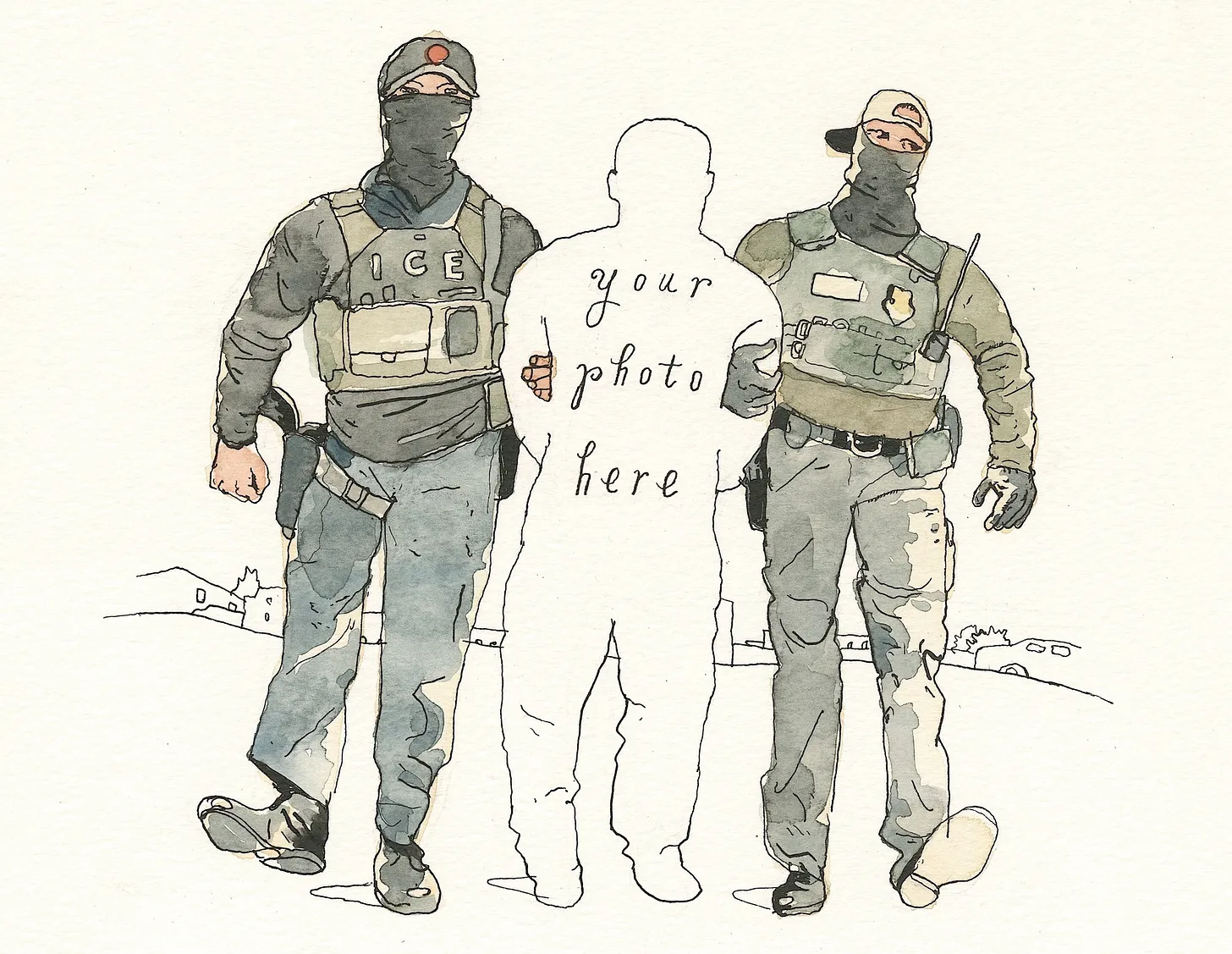
The new ICE surge is underway in Maine.
and TACO Trump retreats on Greenland
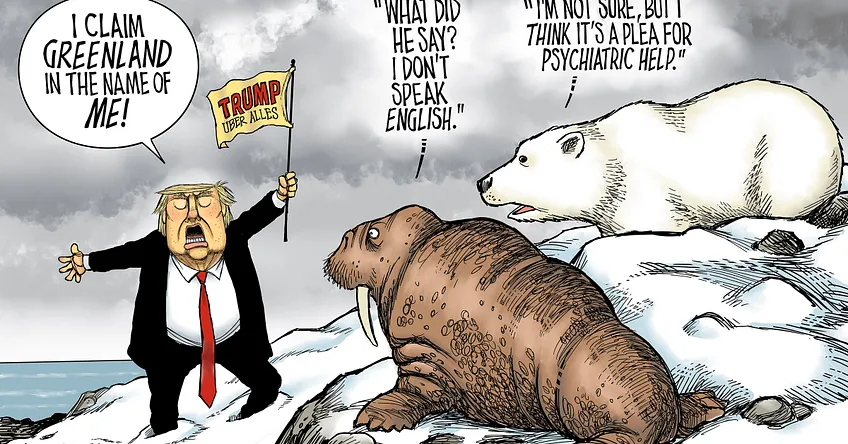
This week European leaders proved something children have known for centuries: Fundamentally, bullies are cowards. If you give them what they want, they'll demand more. But if you convince them you're going to stand up for yourself, they'll back down.
For months, Trump has been bullying Europe. Just a few months ago, the EU agreed to a 15% American tariff on their exports while maintaining a zero tariff on American imports. European leaders have tried to placate Trump with praise and flattery.
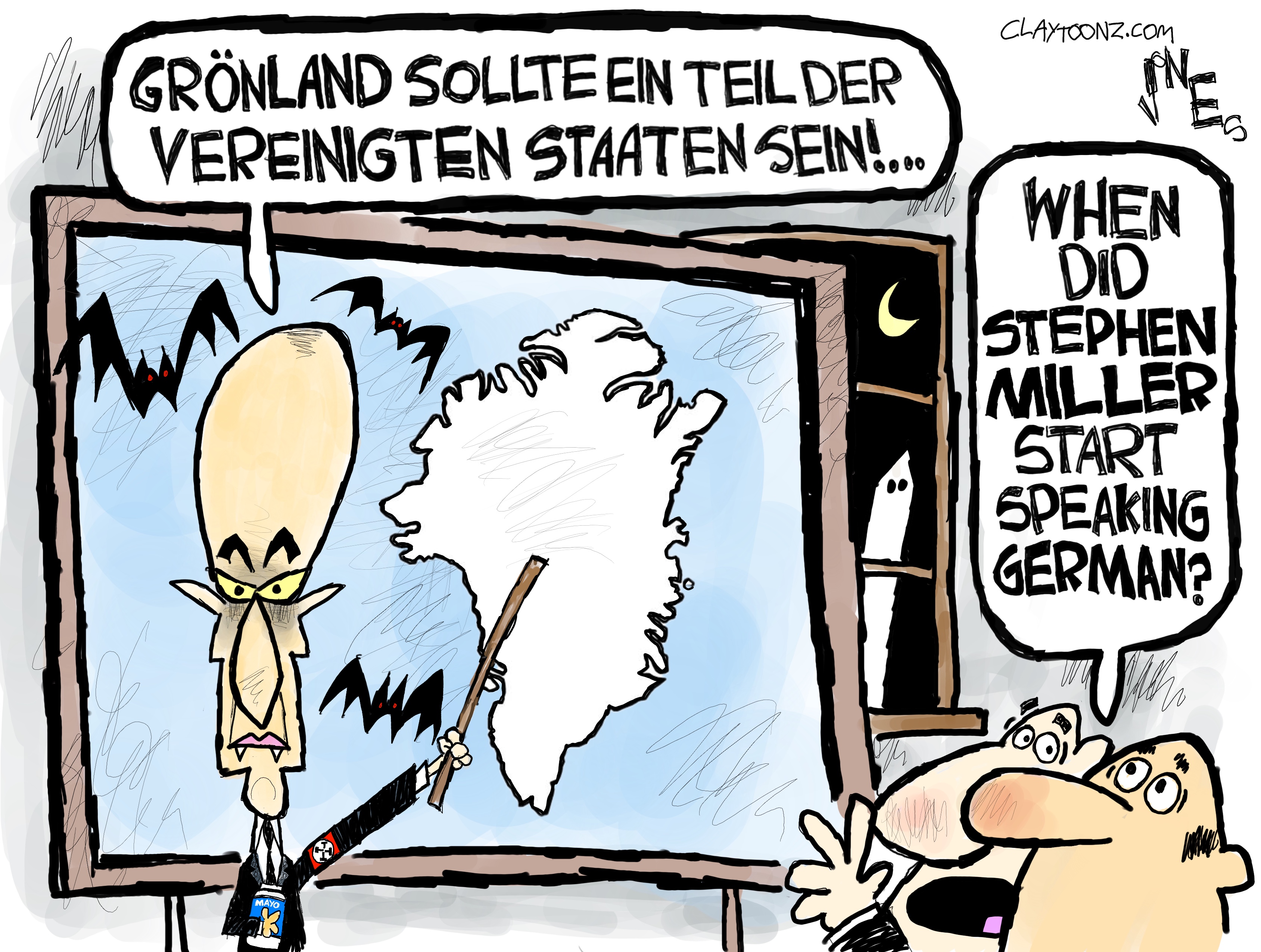
So of course, he asked for more: Denmark should give him Greenland, as if we were living in the age of absolute monarchs, and the rights and desires of 50,000 Greenlanders didn't matter. He said ominous things about acquiring Greenland the easy way or the hard way. Stephen Miller, the ventriloquist who frequently speaks through Trump's mouth, used his own lips to say that no one would fight us for Greenland.
But it turned out that someone would. Several of our (and Denmark's) NATO allies sent troops to Greenland as an "exercise". Not enough troops to repel a US invasion, but enough to possibly make American generals balk at killing allies they are treaty-bound to defend.
So Trump backed down on physical threats and instead threatened to raise tariffs again, breaking the agreement he had just made last summer. A list of European countries would face additional 10% tariffs, rising to 25% if they didn't turn over Greenland.
And Europe held firm, threatening retaliatory tariffs rather than cringing in fear.
So Trump backed down, claiming that he had worked out a "framework of a future deal" with NATO Secretary General Mark Rutte. The framework appears to be what Denmark was offering all along: expanded NATO military bases in Greenland and negotiations about mining rights.
But there is a long-term cost, as Fahreed Zakaria observes in "How Not to Lead":
When I asked a senior European leader whether there was relief that Trump had stepped back from the threat of military action, he said yes. “But we’ve now seen a pattern in his dealings with us,” the leader said. “He treats us with contempt. And even if this crisis gets resolved, we will remember.”
and the regime's "Nazi problem"
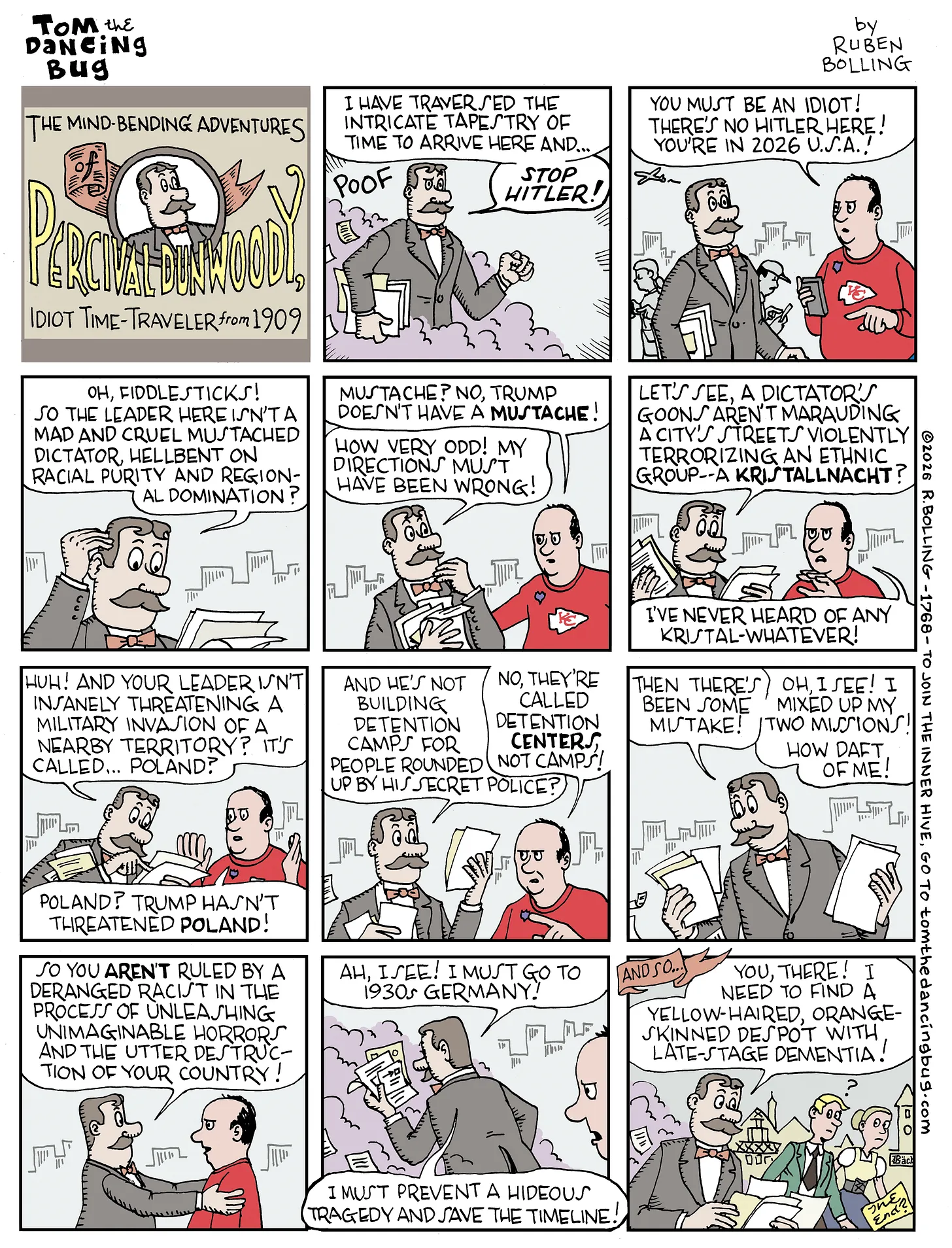
A number of commentators have begun to notice how often the Trump regime echoes white supremacist or even Nazi tropes. The Atlantic reports:
The official social-media channels of the Trump administration have become unrelenting streams of xenophobic and Nazi-coded messages and imagery. The leaders of these departments so far refuse to answer questions about their social-media strategies, but the trend is impossible to miss: Across the federal government, officials are advocating for a radical new understanding of the American idea, one rooted not in the vision of the Founders, but in the ideologies of European fascists.
This framing goes back at least to J. D. Vance's speech about "heritage Americans" at the Claremont Institute in July. But lately it is in virtually every department of Trump's government.
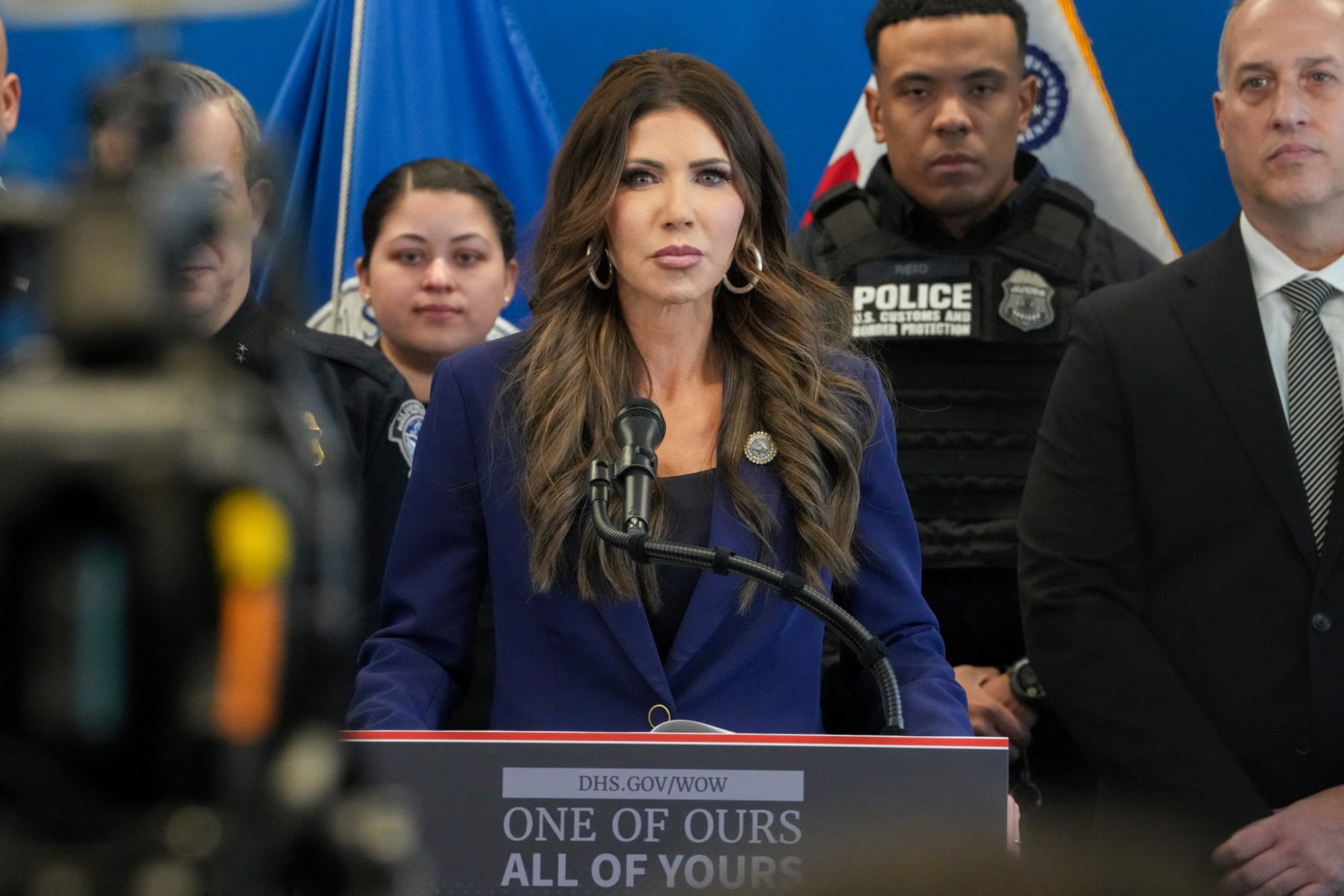
At a press briefing January 8, the day after the murder of Renee Good, DHS Secretary Kristi Noem spoke from a podium sporting the slogan: "One of ours, all of yours." Regime critics widely interpreted this as a reference to the Nazi policy of collective retribution, as when the Czech village of Lidice was destroyed and all its adult males killed after the assassination of SS leader Reinhard Heydrich.
This attribution appears to be inaccurate, in that no one can find a record of the Nazis (in German, Czech, or any other language) using that slogan. But we're left with the question: What was Noem trying to communicate here? Who is "us" and who is "you"? What are we -- I assume I am one of "yours" rather than "ours" -- being threatened with? Brendan Beebe examined the controversy in detail (and fairly, I would claim).
In the context of the Minneapolis incident, “ours” clearly referred to federal agents (and by extension, their political leadership), while “yours” implicitly meant the protesters, community watchdogs, and perhaps local authorities challenging federal actions. The slogan thus served to dehumanize and threaten the latter group – effectively saying their lives and rights are forfeit if they dare challenge federal power.
Beebe noted that Noem's defenders refused to address the question of precisely what she meant.
Notably, few Republican politicians publicly commented on the slogan itself – neither repudiating nor explicitly endorsing it. Their responses mostly mirrored the administration’s talking points: defend the ICE agent, condemn “domestic terrorists” (a term Noem used for the driver and by extension the protesters[17]), and support sending federal reinforcements to Minnesota. By sidestepping the explicit phrase, allies of Noem effectively normalized it through lack of acknowledgement.
The same question could be asked across the board. If the people who made the "Which way American man?" post for the DHS Instagram page or the "Which way, Greenland man?" post for the White House X page weren't trying to echo the classic white supremacist (and antisemitic) book "Which Way Western Man?" -- then what were they trying to do?
and you also might be interested in ...

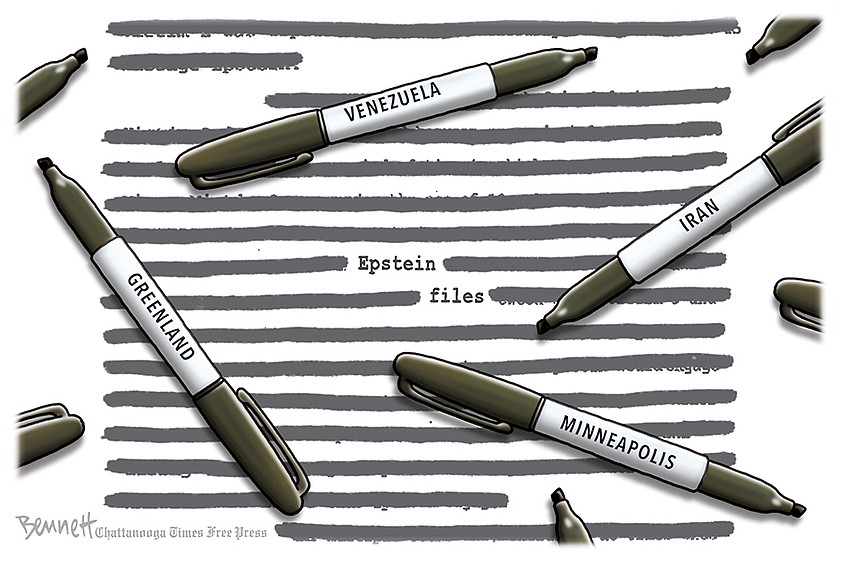
The Epstein files still have not been released. Nor is there any coherent explanation of the delay. When DOJ tries to indict someone Trump wants revenge on, like Jack Smith or Letitia James, they're fond of saying "No one is above the law."
But Trump is. When a law applies to Trump or his lackeys, it means nothing.
So J. D. Vance excused Trump's bad economy by blaming it on Biden, saying "You don’t turn the Titanic around overnight." When I first heard that quote, I thought it must be fake. Surely the Vice President of the United States is not that stupid, because nobody is. If you compare something to the Titanic, it must be sinking. Everybody must know that.
J. D. Vance doesn't. He really said it.
Just to make sure he wasn't taken out of context, I watched a 12-minute clip of the speech he gave Thursday to an audience of manufacturing workers. (He says it at about the 9:30 mark.) As is always the case, fact-checkers must be having a field day with this speech: For example, he lumps the statistical averages in such a way that the impact of COVID falls mainly on Biden, not on Trump, who played a major role in letting the virus get out of control. (Two can play the let's-ignore-COVID game. When Trump handed the economy to Biden, the unemployment rate was 6.4%. When Biden gave it back, unemployment was 4.0%. Now it's 4.4%.)
What's makes the metaphor even worse is that it wasn't some off-the-cuff screw-up in response to a difficult question. The Titanic metaphor was part of Vance's prepared remarks. As one commenter put it: "His speech-writer must hate him."
Trump created the Board of Peace to oversee the reconstruction of Gaza. Its charter makes interesting reading.
The Board is very much a top-down organization, as the charter gives all power to the Chairman. The Chairman invites members to join and can expel them at any time. He appoints the executive board. Decisions are made by majority vote "subject to the approval of the Chairman". Decisions of the executive board are "subject to veto by the Chairman at any time thereafter". There is no procedure for overturning the Chairman's veto. The Chairman is the "final authority regarding the meaning, interpretation, and application of this Charter". There is no provision for removing the Chairman, or a stated time when his term ends.
So who is this chairman? Who else?
Donald J. Trump shall serve as inaugural Chairman of the Board of Peace
Donald J. Trump, personally, by name, is the Chairman. He doesn't hold office by being President of the United States. He holds office because he's Donald J. Trump and his name is written into the charter. When his term as president ends, or even if he gets removed by impeachment, he continues as Chairman of the Board of Peace.
So let's be clear: Any contribution to the Board of Peace is simply a bribe to Trump. He can do anything he wants with it, for as long as he lives. And like a medieval king, he names his own successor.
and let's close with something threatening

BBC Wildlife posted its 2026 award-winning photos. The overall winner was this close-up of a crocodile. I hope to never see anything like this in real life.